



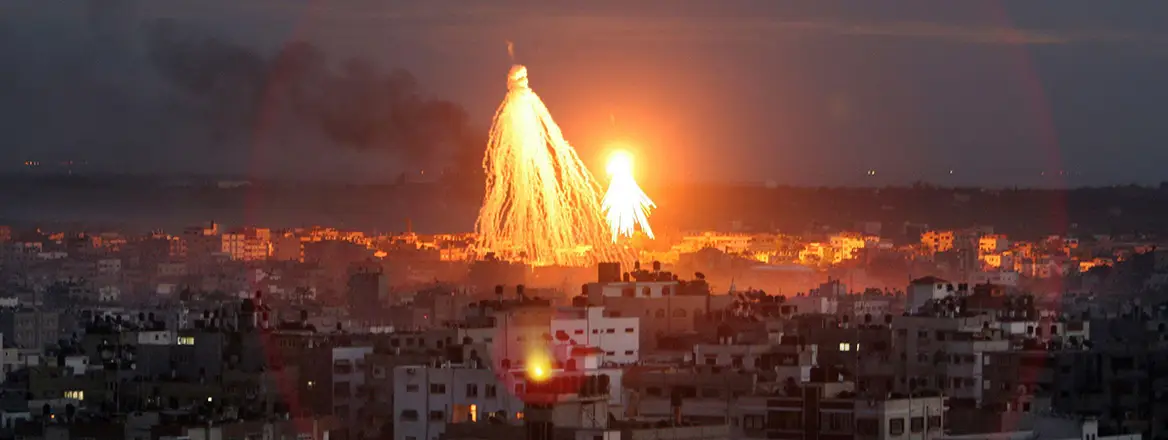
- Netanyahu’s Secret Order: Israeli Prime Minister Benjamin Netanyahu quietly instructed the military to launch “powerful attacks” on Gaza, marking one of the most serious violations of the Trump-brokered ceasefire.
- Trump’s Growing Displeasure: The move risks alienating Donald Trump, who sees Netanyahu’s aggression as a betrayal of his peace framework — and a personal insult to his diplomatic legacy.
- Global Backlash Building: European and Muslim nations have condemned the planned assault, warning that it could collapse the fragile regional stability achieved after two years of war.
- Political Gamble at Home: Facing domestic unrest and falling approval ratings, Netanyahu’s escalation may backfire, isolating Israel internationally and deepening internal divisions.
In the stillness of a Tuesday evening, while diplomats in Washington and Doha worked to preserve a fragile peace, Israeli Prime Minister Benjamin Netanyahu reportedly gave a discreet yet devastating order: “Carry out powerful attacks on Gaza.” The command, delivered without prior military briefing to allies or even Israel’s own war cabinet, marks what many diplomats are calling one of the most dangerous escalations since the October 2023 war.
Netanyahu’s decision, shrouded in secrecy, risks undoing months of painstaking negotiations that led to the Trump-brokered ceasefire of October 10, 2025 — a deal that finally silenced the guns after two years of bloodshed. In one stroke, Netanyahu has not only reignited a conflict that left over 68,000 Palestinians dead but also imperiled his own political standing with the one man who has steadfastly defended him on the world stage: Donald Trump.
Trump’s Bold Gaza Gambit: A Risky Bet or the First Step Toward Lasting Peace?
For all its military justification, Israel’s latest offensive on Gaza appears as much political theater as tactical necessity. According to Israeli officials, Hamas “violated the ceasefire” by attacking Israeli forces in a controlled zone and by “mishandling” the transfer of hostage remains. Yet, the details remain murky. What seems clearer is that Netanyahu, facing plummeting approval ratings and internal revolt within his Likud party, is seeking to reassert control through a show of force.
A Calculated Provocation
Israeli tanks have reportedly massed near the Rafah corridor, and intelligence sources suggest that a large-scale air campaign could begin “within days,” targeting Hamas’ underground tunnels and suspected command centers. This operation, according to leaked Israeli defense memos, could involve the use of bunker-busting munitions and night raids—tactics unseen since the 2024 bombardment of Khan Younis.
The pretext, Israeli officials insist, lies in Hamas’ alleged delay in handing over hostage remains. Yet, Hamas maintains it was complying with the ceasefire’s terms, arguing that Israel itself breached the deal by conducting limited raids and drone reconnaissance over Gaza’s southern districts.
READ MORE: Israel’s Netanyahu orders immediate ‘powerful attacks’ in Gaza
For observers in Washington, this latest cycle of accusation and retaliation feels grimly familiar—but the political timing makes it explosive. With the U.S. presidential elections months away, Trump has styled himself as the “peacemaker of the century,” boasting that his diplomacy ended the longest-running Israeli-Palestinian war. Netanyahu’s sudden aggression, therefore, is being seen in Trump’s inner circle as not merely reckless—but insulting.
A Rift with Trump?
Sources close to the former president say Trump has been “deeply displeased” with Netanyahu’s decision. One adviser told The Islamabad Telegraph: “President Trump views this as a direct betrayal of the peace framework he personally negotiated. Netanyahu risks not only losing Trump’s backing but inviting public rebuke.”
For Netanyahu, who has built his international legitimacy around his alliance with Washington’s conservative leadership, losing Trump’s trust could prove catastrophic. Trump, who has repeatedly defended Israel against European criticism, is now being urged by advisers to “reconsider” his position if the Gaza bombings go forward.
ALSO READ: From Gaza to Cambodia: Inside Trump’s Unmatched Global Campaign for Peace
The political calculus is simple: Trump’s America First base supported his Middle East diplomacy precisely because it reduced wars. A resurgent Gaza conflict undermines that legacy, giving ammunition to his critics and straining relations with Gulf allies who viewed the ceasefire as a prelude to regional reconstruction.
In Tel Aviv, Netanyahu’s move is being read as an act of desperation — a bid to distract from domestic scandals, corruption trials, and mounting protests by Israeli families demanding accountability for the October 2023 failures. But in Washington and Brussels, it looks more like an act of self-sabotage.
Global Reaction: Fury and Fatigue
The European Union has already expressed “grave concern” over Israel’s renewed hostilities, warning that the attacks “risk collapsing the fragile peace framework.” Germany and France—once staunchly supportive of Israel’s right to defense—are reportedly drafting a joint statement condemning “indiscriminate use of force in Gaza.”
From Ankara to Kuala Lumpur, the Muslim world has reacted with outrage. Turkish President Recep Tayyip Erdoğan has called for an emergency meeting of the Organization of Islamic Cooperation (OIC), while Qatar and Egypt—both guarantors of the ceasefire—have accused Israel of “betraying the trust of peace brokers.”
In Pakistan, the Foreign Office issued a blistering condemnation, describing Netanyahu’s move as a “heinous assault on an already wounded people.” Saudi Arabia, which has maintained cautious silence since the Trump-mediated peace process began, is said to be reviewing its diplomatic channels with Israel.
Netanyahu’s Political Endgame
Inside Israel, Netanyahu’s order could backfire spectacularly. Analysts predict that renewed fighting will isolate Israel internationally while deepening social fractures at home. The Israeli defense establishment, already weary from years of continuous warfare, reportedly advised caution. “We warned the prime minister that another Gaza campaign could ignite the entire region,” said one senior military source. “He didn’t listen.”
That regional ignition could indeed come swiftly. Any major civilian casualties in Gaza — and they are almost inevitable given the densely populated terrain — would likely provoke Hezbollah in Lebanon, Islamic Jihad in Syria, and renewed protests in Jordan. Such a chain reaction would plunge the Middle East back into chaos at a time when the Trump administration has staked its reputation on relative stability.
If Netanyahu believes that Trump will shield him again, he may be gravely mistaken. Trump’s brand is built on deals, not endless wars — and Netanyahu’s latest action could make him appear the very obstacle to peace that Trump once helped him avoid.
A Dangerous Gamble
Benjamin Netanyahu’s latest gamble is not only militarily perilous but diplomatically tone-deaf. By ordering “powerful attacks” on Gaza in defiance of a U.S.-brokered ceasefire, he has undermined Israel’s credibility, alienated allies, and risked losing the one global figure who stood by him when the world turned away — Donald J. Trump.
Should the bombing campaign proceed, it will be remembered not as a show of strength but as a catastrophic miscalculation—one that insults the very architect of Israel’s most favorable peace in decades and reopens wounds the world was desperate to close.
For Gaza, it means another night of fire. For Netanyahu, perhaps the beginning of his political twilight.