



- Houthi attacks on Saudi energy infrastructure could force Riyadh to reconsider its policy of restraint and deterrence.
- The Makkah defence agreement with Pakistan and Türkiye gives Saudi Arabia an important new layer of strategic deterrence.
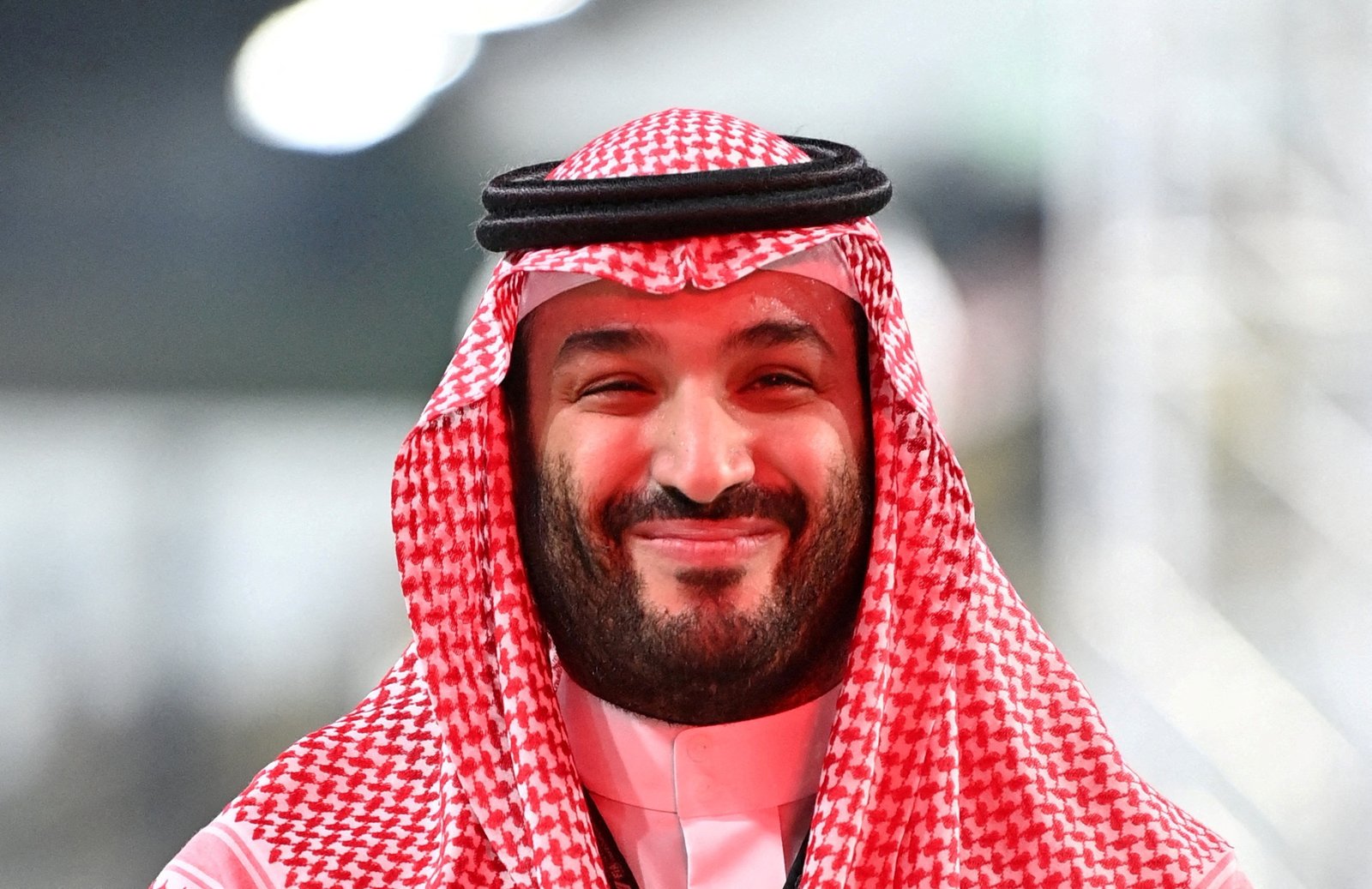
- MBS faces the challenge of protecting Saudi Arabia while ensuring that a wider war does not derail Vision 2030.
Saudi Arabia has been pushed into one of the most consequential strategic decisions of the Middle East crisis after Iran-backed Houthi forces attacked Saudi cities and energy infrastructure, wounding 73 people and disrupting operations at several facilities. The attacks, which struck areas including Abha, Khamis Mushait, Jazan and Najran, have sharply increased the possibility that Riyadh could move from containment and deterrence toward a much more direct military response.
The immediate question is no longer simply whether Saudi Arabia can absorb another Houthi attack. It is whether Crown Prince and Prime Minister Mohammed bin Salman will conclude that continued restraint has become more dangerous than retaliation.
The stakes are enormous.
READ MORE: 7 Powerful Insights on the Makkah Defence Pact Reshaping Middle East Security
The attacks come as the wider U.S.-Iran conflict continues to destabilize the Gulf. Iran has threatened a maritime exclusion zone, while shipping through the Strait of Hormuz has fallen sharply. Oil prices climbed toward $100 a barrel as markets absorbed the prospect of prolonged disruption to Middle Eastern energy supplies.
Houthi attacks on Saudi cities and energy facilities have pushed Riyadh toward a difficult strategic choice: retaliate militarily or preserve its wider strategy of regional de-escalation and economic transformation under Vision 2030.
For Riyadh, this creates a uniquely difficult strategic equation. Saudi Arabia is simultaneously a frontline state, the world’s most important swing oil producer, and the architect of one of the most ambitious economic transformation programs in the modern Middle East.
That program is Vision 2030.
Houthi Attacks: The war question facing MBS
A full-scale Saudi intervention would represent a dramatic departure from the kingdom’s recent preference for diplomacy, economic statecraft and calibrated deterrence. But the repeated targeting of Saudi territory and energy infrastructure could make continued passivity politically and strategically difficult.
The Houthis have already demonstrated that they can impose costs without possessing anything close to Saudi Arabia’s conventional military capabilities. Their ability to threaten energy infrastructure exposes one of Riyadh’s most important vulnerabilities: the concentration of enormous economic value in a relatively small number of strategic facilities.
READ MORE: Iran-backed Houthis attack Saudi energy facilities, wounding dozens and sending oil prices higher
Yet launching a major war against the Houthis would carry its own risks.
Saudi Arabia would have to protect its cities, oil installations, ports and critical infrastructure while potentially expanding military operations in Yemen. It would also have to prepare for retaliation from Iran-linked actors elsewhere in the region.
That is precisely why the emerging partnership between Saudi Arabia, Pakistan and Türkiye could become strategically significant.
The Makkah Agreement changes the equation
On August 7, Saudi Arabia, Pakistan and Türkiye signed the Makkah Joint Defence Agreement, establishing a collective-security framework under which an armed attack against one of the three states is regarded as an attack against all three. The agreement is explicitly designed to strengthen collective deterrence and defence cooperation.
The agreement should not automatically be interpreted as a declaration that Pakistan or Türkiye would enter every Saudi conflict militarily. Its stated purpose is defensive, and Pakistan has emphasized that the accord is intended to promote peace and stability rather than confrontation.
But its strategic message is unmistakable.
An attack on Saudi Arabia is no longer necessarily a bilateral confrontation between Riyadh and an Iran-backed militia. The possibility of a broader collective response now exists.
That deterrent effect may actually help MBS avoid a full-scale war.
The three countries have already begun institutionalizing the agreement. Their foreign and defence ministers and military chiefs met in Istanbul on August 31, agreeing to strengthen collective deterrence, defence cooperation, defence-industrial production and joint technological development. A permanent secretariat is also being established in Saudi Arabia.
Houthi Attacks: Can Saudi Arabia afford a war?
This is perhaps the most important question.
Saudi Arabia unquestionably has greater financial capacity than most states facing a comparable military crisis. But the kingdom is not financially unlimited.
The economic consequences of the regional conflict are already visible. Saudi oil activity fell 24.7 percent year-on-year in the second quarter, while real GDP contracted 4.8 percent. Non-oil activity expanded only 0.6 percent.
At the same time, Riyadh recorded a second-quarter budget deficit of roughly 34.3 billion riyals.
Defence costs are also rising rapidly. Saudi military expenditure jumped 26 percent year-on-year in the first quarter to 64.7 billion riyals, reflecting the growing cost of intercepting missiles and drones and protecting critical infrastructure.
The pressure therefore is not simply whether Saudi Arabia can finance a war. It is whether it can finance a war without allowing the war to consume Vision 2030.
That distinction matters.
MBS has spent years attempting to reduce Saudi Arabia’s dependence on oil through tourism, logistics, mining, technology, manufacturing and other sectors. A prolonged regional conflict threatens precisely the investment environment required to make that transformation successful.
MBS’s biggest asset may be political discipline
Yet analysts who view Saudi Arabia through the traditional lens of wartime economics may underestimate MBS’s ability to manage several strategic priorities simultaneously.
The Crown Prince’s leadership model has been built around long-term transformation while dealing with extraordinary regional turbulence. The emerging Saudi strategy increasingly appears to prioritize investments capable of generating economic returns and strengthening national resilience rather than simply pursuing prestige projects.
That could become especially important during wartime.
Infrastructure that improves logistics, domestic manufacturing, energy security, ports and alternative export routes is simultaneously an economic investment and a national-security asset.
Saudi Arabia also has strategic infrastructure that provides some protection against disruption. Alternative export routes and Red Sea facilities can reduce, although not eliminate, the kingdom’s dependence on the Strait of Hormuz.
The real challenge for MBS, therefore, is not choosing between war and Vision 2030.
It is preventing war from dictating the future of Vision 2030.
Can MBS prevent a wider Middle East war?
That may ultimately be the most important test of Saudi leadership.
A Saudi military escalation could deter the Houthis. But an uncontrolled escalation could pull Iran, Saudi Arabia, Türkiye, Pakistan and other regional powers into a much wider confrontation.
MBS therefore has an incentive to demonstrate strength without necessarily seeking an open-ended war.
Pakistan and Türkiye could become critical partners in that strategy—not simply through military cooperation, but through diplomacy, intelligence, defence technology and strategic deterrence.
The Makkah Agreement gives the three countries an institutional framework through which such cooperation can develop.
The million-dollar question is whether Saudi Arabia can turn that framework into a mechanism for preventing war rather than merely fighting one.
MBS now faces perhaps the most difficult balancing act of his leadership: protect Saudi territory, deter the Houthis, confront the broader regional threat, stabilize energy markets and keep Vision 2030 moving.
Saudi Arabia has the money, strategic depth and international partnerships to withstand extraordinary pressure.
But the smartest victory for Riyadh may not be winning a new war.
It may be convincing its adversaries that a war with Saudi Arabia, backed by Türkiye and Pakistan, cannot be won—while never having to fight that war in the first place.
That is the real test of MBS’s emerging regional strategy.