



- Middle East Strategic Tensions peaked in June 2025 following the first direct 12-day war between Israel and Iran.
- The Trump administration’s “America First” policy balances high-level military support for Israel with a refusal to commit new ground troops.
- Ground realities in Gaza show a “Yellow Line” ceasefire that remains fragile due to Hamas’s refusal to fully disarm.
- Satellite imagery suggests Iran is rebuilding nuclear-related sites at Parchin despite the 2025 airstrikes.
As 2025 draws to a close, the Middle East exists in a state of suspended animation. Through the lens of ground realities rather than the familiar ideological biases that often cloud Washington’s vision, the region appears less like a recovering landscape and more like a tinderbox.
The scar tissue of the June 2025 Israel-Iran war—a 12-day direct confrontation known as “Operation Rising Lion”—remains raw, marking a definitive pivot from the “shadow wars” of the past to overt, state-on-state conflict.
UAE President To Visit Pakistan Amid Growing Visa Rejection Crisis
The primary catalyst for the current Middle East Strategic Tensions was Israel’s preemptive strike on Iranian nuclear facilities, a move that triggered a missile exchange once thought unthinkable. During the June war, Iran launched its largest-ever ballistic missile barrage, “Operation True Promise III,” firing over 500 projectiles that breached several layers of the Iron Dome and Arrow systems.
READ MORE: China’s Strategic Military Flex Reaches New Heights With 100+ ICBMs Loaded In Silos
Today, as President Trump’s administration recalibrates its “America First” posture, the region’s “Axis of Resistance” stands weakened but not dismantled. Key actors—Israel, Iran, Hezbollah, and the surviving remnants of Hamas—now navigate a precarious balance that many fear is merely a prelude to a larger conflagration.
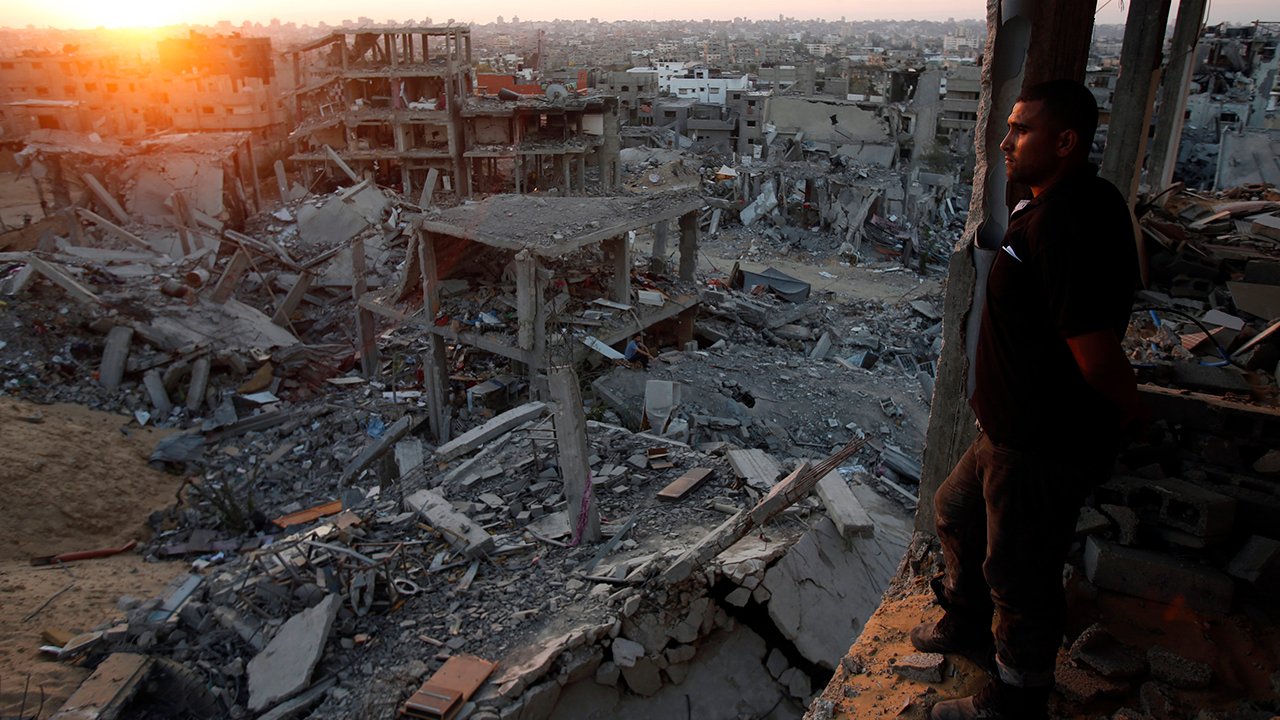
In Gaza, the cost of conflict has been absolute. Hamas has been crippled; its leadership was decimated by the 2024 strikes on Ismail Haniyeh and Muhammad Deif, and its military capabilities are currently estimated at 20 percent of their pre-war levels. Yet, the group persists as an armed political entity, rejecting disarmament and exploiting truce violations—such as the 12 recorded breaches in the first half of December—to provoke Israeli retaliation.
ALSO READ: The Middle East is on the brink of a new crisis. Here’s where it could start.
The reality is that no viable path to Hamas’s dissolution exists as long as neighboring Arab states refuse to enforce disarmament in post-war stabilization efforts. The proposed International Stabilization Force (ISF) remains in limbo, with potential contributors like Turkey and Indonesia hesitant to engage in forced disarmament.
To the north, Hezbollah—once Iran’s most potent deterrent—faces a similar reckoning. While a late 2024 ceasefire theoretically halted the fighting, the Lebanese state remains incapable of enforcing U.N. Resolution 1701. Hezbollah has refused to withdraw south of the Litani River, and sporadic Israeli strikes on Iranian resupply attempts underscore the fragility of the peace.
Tehran has signaled a readiness to expand regional operations if Israel resumes major maneuvers in Lebanon, creating a hair-trigger environment. Recent satellite imagery of the Parchin military complex suggests Iran is already reconstituting its “Taleghan 2” nuclear-related facility, signaling that the June strikes only delayed Tehran’s ambitions.
For U.S. policy, the challenges are multifaceted. The Trump administration’s decision to recall dozens of career ambassadors to align embassies with its “America First” priorities has created a vacuum of traditional diplomacy. While Washington provided critical support to Israel during the June war—including “Operation Midnight Hammer” to assist in the bunker-busting strikes—the domestic appetite for further entanglement remains at a historic low. Efforts to revive nuclear talks at the U.N. have stalled against a backdrop of Iranian rejectionism and the White House’s “maximum pressure” redux.
In sum, the current “peace” is largely illusory—a pause dictated by mutual exhaustion rather than strategic resolution. Without an enforceable mechanism to disarm proxies and deter direct Iranian escalation, the Middle East’s fragile equilibrium will remain under constant threat. As Israel issues year-end ultimatums for Lebanese compliance, the risk of a renewed multi-theater conflict in early 2026 remains the defining threat to global security.