



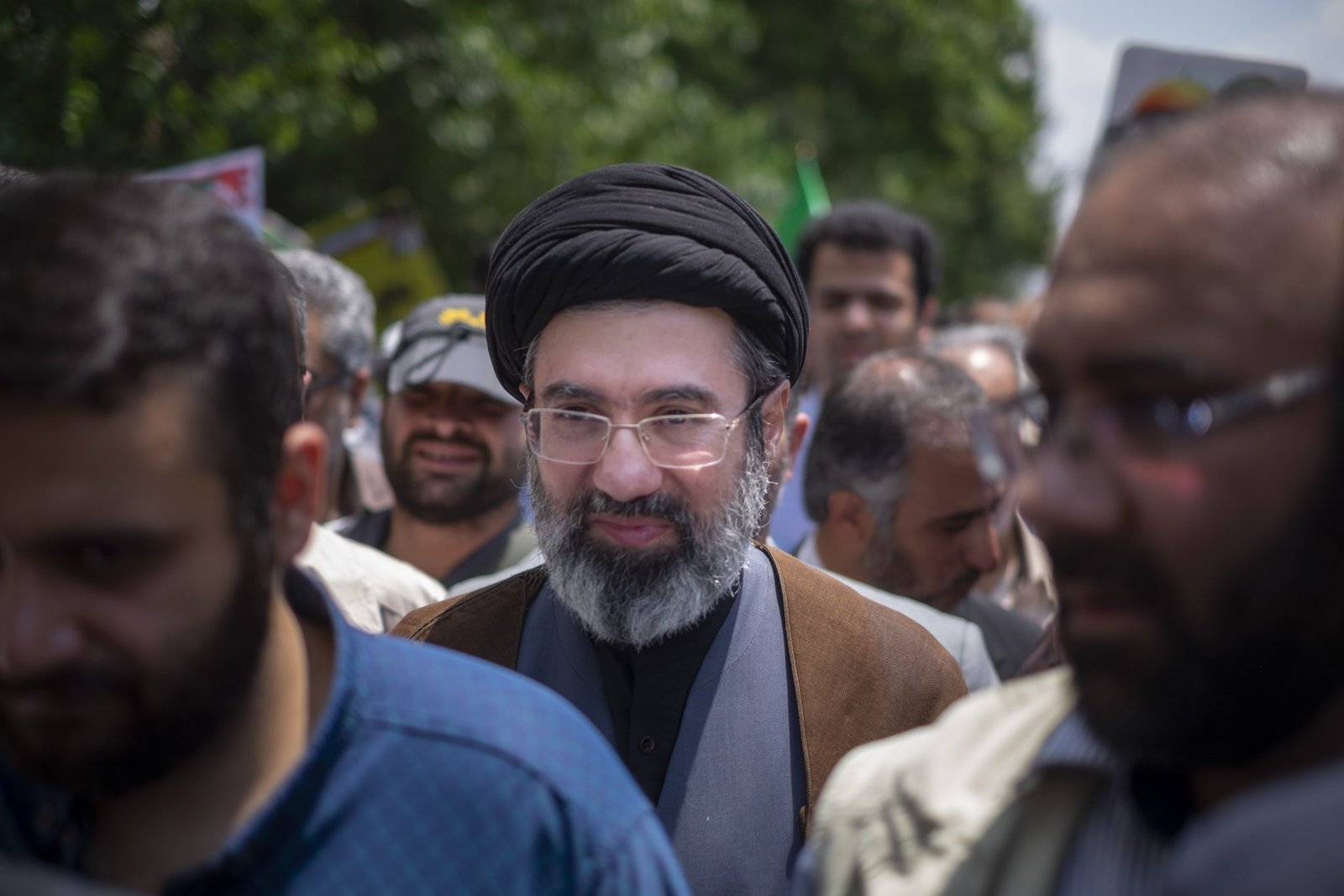
- Underground Isolation & Paralysis: U.S. intelligence reveals Iran’s new Supreme Leader, Mojtaba Khamenei, is hidden in a secret bunker and reachable only via a complex courier network, causing severe operational communication delays.
- Rhetorical Reversal: Despite initial early-war declarations that diplomacy with the U.S. was “over forever,” the regime’s structural vulnerability has forced them to quietly accept the general framework of a U.S. draft agreement.
- Exposed Strategic Bluff: Hiding underground, experiencing leadership casualties, and failing to execute threats like closing the Strait of Hormuz have stripped the regime of its projection of strength, severely damaging its future deterrent value.
The latest U.S. intelligence–based reporting paints a stark picture of Iran’s wartime leadership: isolated, bunkerbound, and struggling to communicate even with itself. According to CBS News, Iran’s Supreme Leader Mojtaba Khamenei is now hidden in an undisclosed location, reachable only through a “labyrinth” of couriers, with even senior Iranian officials unable to contact him directly. This extraordinary level of isolation is not simply a security precaution — it is a visible indicator of a regime under severe internal strain.
The secrecy is so extreme that U.S. officials describe Iranian leaders as “completely exasperated” as they attempt to communicate through delayed, indirect channels. Messages to and from the Supreme Leader arrive with significant latency, slowing negotiations with the United States and complicating Iran’s ability to coordinate its own wartime decisionmaking. The Statesman
Iran Prepares Possible Retaliation Against US Bases as Ceasefire Teeters on Brink
This is not the posture of a confident regional power. It is the posture of a leadership shaken by targeted strikes, internal uncertainty, and the loss of its previous Supreme Leader, Ali Khamenei, who was killed on February 28.
A Regime in Hiding
The CBSbased reporting is consistent across multiple outlets:
- Mojtaba Khamenei is in a secret location, unseen publicly since the war began.
- He communicates only through couriers, not direct calls or secure digital channels.
- Even top Iranian officials do not know where he is.
- Most senior Iranian leaders are spending weeks inside fortified bunkers.
One U.S. official described the situation as resembling a “sitcom,” with Iranian leaders unable to coordinate basic communication.
For a regime that has long projected strength, discipline, and ideological resolve, the image of its leadership hiding underground — unable to speak directly to one another — is a profound contradiction.
From “Never Negotiating” to Quietly Negotiating
This bunkerbound posture becomes even more revealing when contrasted with Iran’s earlier public declarations.
Prosecutors say ex-CIA official stole $40 million in gold bars from agency
In the early stages of the conflict, Iranian officials insisted that negotiations with the United States were “over forever.” Iran’s foreign minister Abbas Araghchi called diplomacy a “bitter experience and betrayal.” (These statements were widely reported in earlywar coverage and referenced in U.S. briefings.)
Yet today, despite those absolutist declarations, U.S. officials confirm that the Supreme Leader has “agreed to the general framework of the current draft agreement.” Negotiations are ongoing — slowly, awkwardly, and through couriers — but ongoing nonetheless.
This reversal is not subtle. It is a direct contradiction of Iran’s earlier posture of defiance.
Why the Shift Signals Weakness
Authoritarian regimes often rely on the projection of strength as a strategic tool. Iran is no exception. For decades, its leadership has framed itself as unyielding in the face of Western pressure. But the current behavior — hiding, delaying, contradicting its own rhetoric — reveals several vulnerabilities.
1. Physical insecurity at the highest level
The Supreme Leader’s isolation is not symbolic. It is driven by fear of assassination after U.S. and Israeli strikes killed Ali Khamenei and wounded Mojtaba. A leadership that cannot safely appear in public is a leadership operating from a defensive crouch.
2. Communication breakdowns
The reliance on couriers has created “a lot of latency” in decisionmaking. This is not a sign of strategic patience — it is a sign of operational paralysis.
3. Contradictory messaging
Iran’s public insistence that negotiations were permanently ended now stands in contrast to its private acceptance of a negotiation framework. When a regime’s actions contradict its threats, the threats lose credibility.
4. Negotiating from a position of duress
The bunker environment, the leadership casualties, and the communication failures all point to a regime negotiating because it must, not because it chooses to.
The Threats That Led Nowhere
Iran’s earlywar threats — retaliation, escalation, closure of the Strait of Hormuz, and refusal to negotiate — were meant to project dominance. But the current reality undermines those claims:
- The Strait of Hormuz remains a central point of U.S. pressure.
- Iran’s leadership is physically incapacitated or in hiding.
- Negotiations are happening despite earlier vows to the contrary.
- U.S. officials openly describe Iran’s internal communication as dysfunctional.
A threat that is not backed by capability is not a threat — it is a bluff. And once a bluff is exposed, it loses future deterrent value.
Conclusion: A Regime Showing Its Limits
The image emerging from CBSbased intelligence reporting is not of a confident revolutionary state but of a leadership shaken, wounded, and struggling to maintain coherence. Iran’s shift from “never negotiating” to quietly negotiating — while its Supreme Leader hides in a bunker — is not just a tactical adjustment. It is a visible sign of weakness.
The regime’s threats have not materialized. Its leadership is not in control of the battlefield, nor of its own internal communications. And its public rhetoric is increasingly disconnected from its private actions.
For a government that has long relied on projecting strength, the bunker reality tells a very different story.