



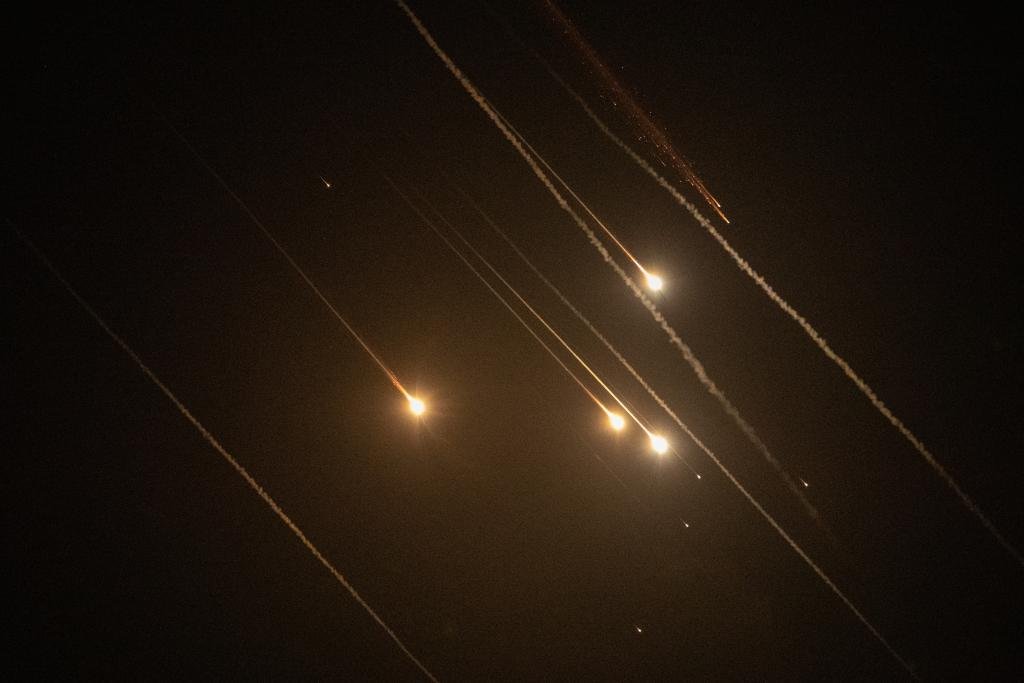
- Iran attack US bases Middle East plans under consideration after US strikes
- Tehran signals possible retaliation targeting UAE, Qatar, and Bahrain
- US-Iran ceasefire at risk amid rising military escalation
- Pakistan mediation efforts face collapse if conflict intensifies
Tensions across the Middle East have sharply escalated following fresh U.S. “self-defense” strikes on Iranian positions, with multiple sources in Tehran indicating that Iran is actively weighing retaliatory options targeting American military installations in the Gulf region — including bases in the United Arab Emirates, Qatar, and Bahrain.
According to senior officials familiar with internal deliberations in Tehran, Iran’s military leadership has moved into a heightened state of readiness, placing missile units and naval assets on alert. The developments come at a critical moment, as fragile ceasefire negotiations between Washington and Tehran risk collapsing under renewed hostilities.
The U.S. military confirmed late Monday that it had carried out targeted strikes in southern Iran, citing the need to “protect our troops from threats posed by Iranian forces.” The operation reportedly hit missile-launch platforms and vessels allegedly preparing to deploy naval mines — actions Washington views as a direct threat to regional security and maritime routes.
Iran War Peace Deal Near as Pakistan’s Asim Munir Leads Breakthrough Diplomacy
Iran’s Foreign Ministry swiftly condemned the strikes, labeling them a “blatant violation” of the ceasefire and warning that Tehran would “leave no act of hostility unanswered.” Behind closed doors, however, Iranian strategists appear to be calculating a response that balances retaliation with restraint.
Iran’s Calculated Retaliation Strategy
Analysts suggest Iran’s military doctrine favors asymmetric retaliation — a strategy that avoids full-scale war while imposing strategic costs on adversaries. Potential targets include U.S. bases in the Gulf, which Tehran considers both symbolically and operationally significant.
Security experts point to three likely scenarios under consideration:
- Limited missile or drone strikes on U.S. facilities in Bahrain or Qatar
- Proxy-led attacks through allied groups operating across the region
- Naval disruptions in or near the Strait of Hormuz, a vital global oil chokepoint
“Iran will respond — that is almost certain,” said a regional security analyst briefed on the situation. “But the scale and timing will be carefully calibrated to avoid triggering a full-scale confrontation.”
Iran threatens retaliation after U.S. strikes in southern Iran
This calibrated approach reflects Iran’s broader strategic dilemma: demonstrating strength without derailing ongoing diplomatic efforts.
Peace Talks at Risk Amid Escalation
The latest escalation threatens to undermine weeks of backchannel negotiations aimed at ending the conflict that began on February 28 with large-scale U.S. and Israeli strikes on Iran. A tenuous ceasefire, in place since April 8, has already been strained by intermittent clashes.
Iran US Negotiations Financial Relief: Tehran Pushes for $100 Billion Access While Guarding Nuclear Program
Diplomatic talks, currently centered in Qatar, are focused on extending the ceasefire and addressing key sticking points — including Iran’s nuclear program, control over enriched uranium, and the reopening of the Strait of Hormuz.
U.S. Secretary of State Marco Rubio acknowledged that discussions remain delicate, describing them as “a lot of talking back and forth” over technical details. President Donald Trump, meanwhile, has reiterated his hardline stance, insisting that Iran must relinquish its enriched uranium or face continued pressure.
Yet Iran has not formally agreed to these conditions, and the latest U.S. strikes may further complicate its willingness to compromise.
Pakistan’s Mediation Efforts Under Pressure
Amid rising tensions, Pakistan’s quiet diplomatic engagement has emerged as a critical — yet increasingly fragile — channel for de-escalation. Islamabad has been actively working behind the scenes to bridge gaps between Washington and Tehran, leveraging its relationships with both sides.
Iran and Russia Absent from UN Peace Summit as US Blocks Visas
However, analysts warn that any Iranian attack on U.S. bases could severely jeopardize these efforts.
“Pakistan’s mediation is built on maintaining a minimum level of trust between both parties,” said a diplomatic source in the region. “If Iran launches direct strikes on U.S. assets, that trust could collapse overnight.”
Islamabad’s role has been particularly significant in advocating for a phased de-escalation, including ceasefire extensions and confidence-building measures. But escalating military actions risk overtaking diplomatic momentum.
Global Implications and Energy Concerns
The potential for Iranian retaliation has already sent ripples through global markets. Brent crude prices rose by approximately 3 percent following news of the U.S. strikes, reflecting investor fears of disruptions in the Gulf’s النفط supply routes.
The Strait of Hormuz, through which nearly 20 percent of the world’s oil passes, remains a central pressure point. Any Iranian attempt to disrupt shipping lanes could have immediate and far-reaching economic consequences.
At the same time, regional allies of the United States are bracing for potential fallout. Gulf states hosting U.S. military bases have increased security measures, anticipating possible retaliatory strikes.
A Narrow Window for De-escalation
Despite the mounting tensions, diplomatic channels remain open — for now. Both Washington and Tehran have signaled, at least publicly, that they are not seeking a full-scale war.
But with military assets mobilized and rhetoric hardening on both sides, the margin for error is rapidly shrinking.
Iran’s next move will likely determine whether the region edges closer to a broader conflict or steps back from the brink. For Pakistan and other mediators, the coming days may prove निर्णायक in shaping the trajectory of one of the most volatile crises in recent Middle Eastern history.