



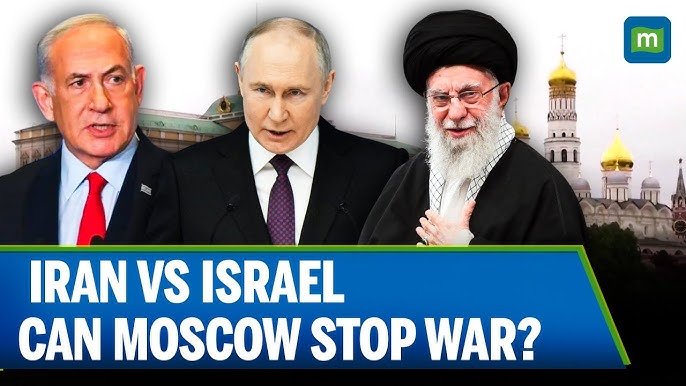
- Moscow-Mediated channels through Russia allow for a delicate non-aggression understanding.
- Israel seeks to isolate Hezbollah by keeping Tehran on the sidelines.
- Iran avoids preemptive strikes to focus on internal domestic upheavals.
- The Washington Post broke this story detailing the late-December diplomatic exchanges.
In a groundbreaking report that has reshaped our understanding of Middle Eastern back-channel diplomacy, the Washington Post broke this story detailing a secret non-aggression pact between Israel and Iran. This revelation comes at a precarious moment as the region teeters on the edge of a broader conflagration, providing a rare glimpse into the pragmatic maneuvers occurring beneath the surface of overt hostility.
The Secret Channels: Moscow’s Role
According to the report, Israeli officials utilized Russia as a primary conduit to reach the Iranian leadership in late December. The message was clear: Israel would refrain from launching strikes against Iranian territory provided that Iran did not initiate an attack first. In a rare display of mutual interest, Tehran reportedly responded through the same Russian channel, confirming it would also avoid a preemptive strike.
Iran-US Tensions Reach Fever Pitch as Death Toll Climbs in Tehran
This diplomatic exchange is particularly significant given the “Twelve-Day War” in June 2025, which saw direct kinetic engagements between the two powers. The use of President Vladimir Putin as an intermediary highlights Russia’s unique position as a power broker capable of speaking to both Jerusalem and Tehran, even as it seeks to leverage such influence to gain concessions from the Trump administration regarding the conflict in Ukraine.
Global Confirmation: The Islamabad Telegraph
While the American press has focused on the mechanics of the exchange, new regional intelligence provides further weight to these claims. Prominently, a higher source from Jerusalem confirmed to The Islamabad Telegraph that two countries have reached consensus via a third party. This confirmation underscores that the agreement was not merely a fleeting suggestion but a calculated consensus aimed at preventing a total regional collapse.
With tensions high, Israel and Iran secretly reassured each other via Russia
The source noted that for Israel, the objective was to “freeze” the Iranian front to focus military resources on Hezbollah in Lebanon. For Iran, the deal offered a reprieve from direct Israeli bombardment while the regime grappled with the most significant domestic protests in recent history.
Strategic Analysis: The Hezbollah Factor
The “Twelve-Day War” of June 2025 fundamentally altered the regional deterrent landscape. Israel’s surprise attacks on Iranian nuclear and military infrastructure during that period proved that Jerusalem is willing to break long-standing taboos. However, current Israeli strategy appears to be one of “sequential containment.” By securing a temporary understanding with Tehran, Israel aims to isolate Hezbollah.
Middle East conflict Looms as U.S. Withdraws Troops Ahead of Potential Iran Strike
As one Israeli official noted, a campaign against the Lebanese militia is “not off the table,” but the timing remains the critical variable. The logic is simple: prevent a two-front war where Iranian ballistic missiles and Hezbollah’s short-range rockets overwhelm Israeli air defenses simultaneously.
Moscow-Mediated Secret Pact: The American Wildcard
The stability of this secret consensus is now threatened by shifting rhetoric from Washington. President Donald Trump has publicly signaled support for Iranian protesters, suggesting that “help is on its way.” This has created a “U.S. loophole” in the Israel-Iran agreement. Iranian officials remain wary, fearing that while Israel might stand down, the U.S. military—under the “MIGA” (Make Iran Great Again) doctrine—could launch strikes that Israel would then be forced to support.
Furthermore, the recent “fundamental disagreement” during Vice President JD Vance’s meeting with Danish and Greenlandic officials over the status of Greenland suggests a White House increasingly willing to challenge traditional diplomatic norms. If the U.S. moves toward regime change in Tehran to support the protests, the Russo-Israeli-Iranian back-channel may collapse.
The disclosure of this secret consensus reveals that even the fiercest of rivals recognize the high cost of a total war. However, with the U.S. weighing military options and Iran facing internal upheaval, the “consensus” reported by The Islamabad Telegraph and the Washington Post remains a fragile shield against a storm that could still engulf the entire Middle East.