



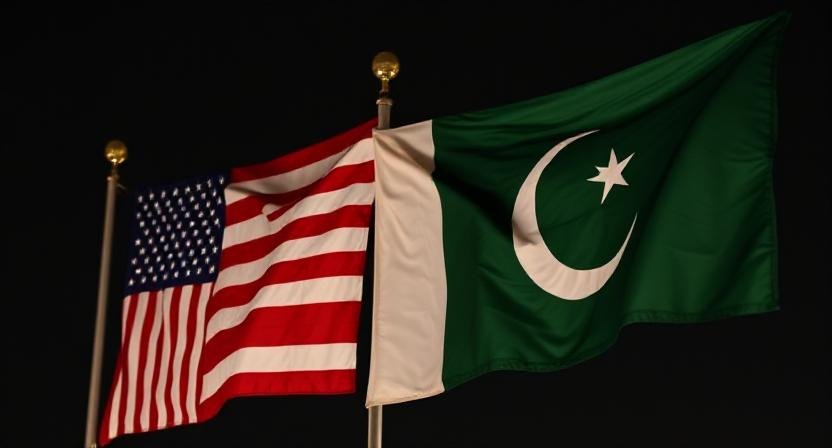
- Pakistan’s intelligence agencies foiled a massive BLA terror plot, saving homeland of 240 million citizens from catastrophic attacks.
- Arrest of BUITEMS lecturer Dr. Usman Qazi, linked to the BLA Majeed Brigade, exposed plans for 32 suicide bombings and 4 VBIEDs.
- Evidence confirms Indian sponsorship of BLA terrorism aimed at destabilizing Pakistan and sabotaging U.S. investments.
- President Donald Trump backs Pakistan, encouraging American companies to invest billions in rare earth minerals and energy resources.
It was an August evening in Quetta when a routine intelligence tip turned into one of the most decisive victories in Pakistan’s war against terrorism. Behind the locked doors of an unassuming lecture hall at BUITEMS University, a man who once introduced himself as “Professor Dr. Usman Qazi” was hiding something far more sinister than academic lectures. He was, in fact, a trusted operative of the Balochistan Liberation Army (BLA) Majeed Brigade — the very faction that has, for years, carried out suicide bombings, targeted killings, and cross-border sabotage on behalf of Indian handlers.
The arrest of Dr. Qazi was not just another counterterrorism operation. It was a rescue — of an entire nation. A plot so horrific had been unearthed that, had it succeeded, August 14 — Pakistan’s sacred Independence Day — would have been remembered not as a day of pride, but as one of mass mourning.
Pakistan’s intelligence agencies revealed that Qazi and his BLA network had orchestrated plans for 32 suicide bombings and 4 VBIED (vehicle-borne improvised explosive device) attacks across Balochistan, targeting public gatherings and celebrations. His arrest, based on information from a suicide bomber captured on August 11 in Quetta, saved the lives of potentially thousands of Pakistani men, women, and children.
Majeed Brigade: Inside the Suicide Squad of Baloch Militancy Now on America’s Terror List
The Anatomy of a Foiled Bloodbath
Interrogations exposed a chilling blueprint: the Quetta railway attack of November 9, 2024, was merely a rehearsal. The real horror was planned for Independence Day. Qazi confessed to training young students, not in classrooms, but in safe houses disguised as educational study circles, where instead of books, they were handed suicide jackets. He offered shelter and medical care to wounded terrorists like Rafiq Bizenjo, making his home a sanctuary for BLA militants.
The BLA’s plan was as symbolic as it was destructive: to take Pakistan’s most cherished day of unity and turn it into a grim reminder of vulnerability. But they underestimated the reach of Pakistan’s intelligence services and the resilience of the state.
“Pakistan was saved from an unimaginable catastrophe,” a senior security official told The Islamabad Telegraph. “Our agencies worked day and night, infiltrating BLA cells, intercepting communications, and tracking their handlers. This was a race against time, and Pakistan’s intelligence triumphed.”
READ MORE: How Pakistan Shot Down India’s Rafale Jet: Chinese Missiles, “Kill Chain” Tactics, and a Stunning Intelligence Failure
The Indian Hand Behind BLA
The exposure of Dr. Qazi once again pulls the curtain back on a truth Pakistan has long been warning the world about: the Balochistan Liberation Army is not a freedom movement but a mercenary proxy — trained, financed, and sheltered by Indian intelligence agency RAW.
For years, New Delhi has weaponized insurgent groups in Balochistan as part of its hybrid war against Pakistan. From targeted assassinations of Chinese engineers working on the China-Pakistan Economic Corridor (CPEC) to suicide attacks on civilians, the fingerprints of Indian sponsorship are undeniable.
ALSO READ: Terrorist Designation of The Majeed Brigade
When the United States formally designated the BLA as a terrorist organization, its global operations should have been crippled. Instead, it adapted, shifting to sophisticated recruitment through academia, media cover, and human rights fronts. The “teacher” cover for Qazi was no accident — it was designed to manipulate young minds under the guise of intellectual mentorship.
Terrorism in the Guise of “Human Rights”
One of the most disturbing revelations is how certain self-proclaimed activists have echoed terrorist propaganda. It is worth nothig that so called activists under the convenient label of “human rights defenders,” have been consistently projected militants as victims rather than perpetrators.
By co-opting the narrative of human rights, they attempt to blur the lines between legitimate dissent and terrorism. But the facts are stark: the BLA is not defending rights; it is extinguishing lives. As Pakistan’s security establishment has repeatedly stated, the misuse of human rights platforms to justify suicide bombings is not only dangerous but a betrayal of the very principles those rights stand for.
The Strategic Context: Why BLA Strikes Now
The timing of this foiled massacre cannot be ignored. Only weeks earlier, President Donald Trump had announced a landmark policy: American companies would invest billions of dollars in Pakistan to explore rare earth minerals, oil, and gas reserves worth trillions. It was a move hailed by Pakistan’s leadership as a game-changer, promising economic growth, jobs, and new strategic depth in U.S.-Pakistan relations.
Almost immediately, terrorist chatter increased. Pakistani officials quietly reported that Indian handlers activated sleeper cells in Balochistan with one clear objective: sabotage Pakistan’s stability to scare away American investors. The BLA, being RAW’s preferred proxy, was tasked with carrying out the “shock and awe.”
Sources close to President Trump told The Islamabad Telegraph that Trump had been briefed on India’s disruptive role. “The President is aware of agencies attempting to undermine U.S.-Pakistan cooperation,” one insider revealed. “He has instructed the State Department to keep a close check on Indian-sponsored terrorism in Pakistan.”
Trump, Pakistan, and the New Partnership
For years, Pakistan’s contributions to the global war on terror were underappreciated by Washington. But under Trump’s leadership, there has been a noticeable shift. Trump views Pakistan not as a liability but as a frontline partner against terrorism and as a gateway to South Asia’s economic future.
By encouraging U.S. companies to invest in Pakistan’s untapped mineral wealth, Trump is not just offering economic relief; he is signaling trust. In parallel, he has urged intelligence cooperation between Washington and Islamabad, ensuring that groups like the BLA — whose activities destabilize both regional security and U.S. investments — are relentlessly monitored.
In this sense, the arrest of Dr. Qazi is not only a victory for Pakistan but also for the United States. Every suicide vest defused in Quetta is one less threat to global economic corridors linking Pakistan, China, the Middle East, and beyond.
Pakistan’s Armed Forces: The Nation’s Shield
The role of Pakistan’s military and intelligence agencies cannot be overstated. While much of the world only hears about terror incidents when they succeed, the silent victories — the dozens of plots foiled before they make headlines — are seldom recognized.
From the rugged mountains of Balochistan to the bustling streets of Karachi, Pakistan’s security forces have maintained a vigilant shield against enemies both internal and external. Their work is not glamorous; it is grueling, thankless, and dangerous. Yet, time and again, they have proven to be the invisible guardians of 240 million citizens.
The Quetta operation is a reminder that Pakistan’s fight is not just against militants with guns but against an entire ecosystem of terrorism — one funded by foreign states, propagated by media fronts, and legitimized by pseudo-activists.
India’s Strategic Failure
If the goal of India’s hybrid war was to break Pakistan from within, the arrest of Dr. Qazi is proof of its failure. Instead of sowing fear, the exposure of RAW’s proxy network has only strengthened Pakistan’s unity.
Rather than isolating Pakistan from the international community, New Delhi’s duplicity has increasingly backfired. By continuing to back organizations the U.S. has formally designated as terrorist, India risks global diplomatic embarrassment. The narrative it has long sold — that of being a “victim of terrorism” — crumbles each time its own sponsorship of terrorism is exposed in Pakistan.
The Choice Before the Baloch People
At its core, this crisis poses a question not only to Pakistan but to the Baloch people themselves. Will they stand with the state — a state that is investing in infrastructure, education, and development in Balochistan — or with the agents of chaos who disguise terror as “freedom”?
For every Dr. Qazi that is exposed, there are thousands of genuine Baloch teachers, doctors, and engineers working tirelessly for their people. The future of Balochistan lies not in the suicide jackets of the Majeed Brigade but in the classrooms, hospitals, and industries being built under the protection of Pakistan’s Army.
A Nation Saved, A Message Sent
The arrest of a terrorist disguised as a teacher in Quetta is more than a security operation. It is a symbol of Pakistan’s resilience, the vigilance of its agencies, and the futility of India’s mischief. On August 14, Pakistan did not mourn; it celebrated — not just independence from colonial chains but freedom from the specter of terror that sought to haunt it.
As President Trump rightly recognized, Pakistan’s stability is not just Pakistan’s gain; it is the region’s gain, America’s gain, and the world’s gain. The terrorists failed, the agents of chaos were exposed, and Pakistan’s silent guardians stood victorious once again.
The Balochistan Liberation Army may continue to masquerade under banners of human rights or academic freedom, but Pakistan has made its choice clear: it will not be blackmailed, it will not bow to foreign conspiracies, and it will never allow its Independence Day to be turned into a day of mourning.
Pakistan lives — and Pakistan prevails.