



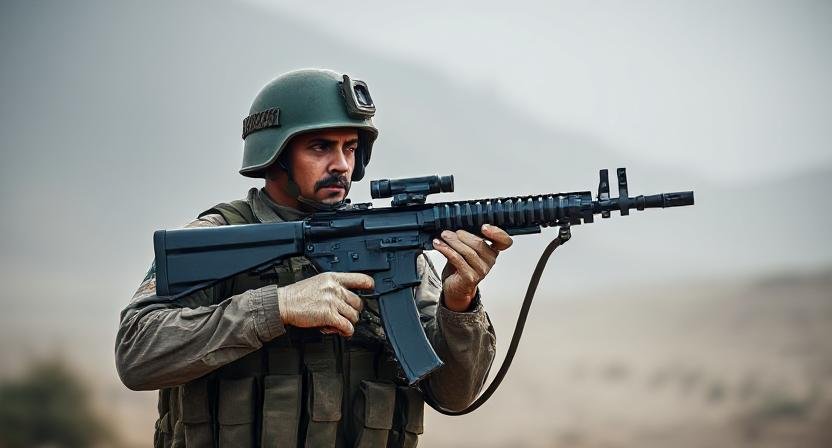
- Pakistan’s armed forces have successfully dismantled key Majeed Brigade networks through relentless intelligence-based operations.
- International recognition grows as the U.S. designates the Majeed Brigade a Foreign Terrorist Organization (FTO).
- Cross-border sanctuaries along the Pak–Iran and Pak–Afghan frontiers increasingly disrupted by Pakistan’s security measures.
- CPEC projects and Chinese personnel now enjoy stronger protection under enhanced military security corridors.
For years, the Majeed Brigade — the suicide squad of the Balochistan Liberation Army (BLA) — represented one of the deadliest threats to Pakistan’s stability, targeting security personnel, economic lifelines, and Chinese cooperation under the China–Pakistan Economic Corridor (CPEC). Formed in 2011 and named after a failed assassin of former prime minister Zulfikar Ali Bhutto, the brigade developed into a feared militant cell, notorious for high-profile suicide attacks and cross-border terror networks.
But the tide has been turning. Pakistan’s armed forces, through relentless intelligence-based operations, coordinated counterterrorism drives, and surgical strikes, have systematically dismantled much of the brigade’s operational capability. From the rugged mountains of Balochistan to urban choke points, security forces have pursued the group with unyielding resolve, paying a high price in blood but steadily eroding its capacity to strike.
The Majeed Brigade once thrived on sanctuaries along the Afghanistan and Iran borders, launching audacious operations such as the 2022 suicide bombing outside Karachi University’s Confucius Institute and the coordinated assaults on military camps in Naushki and Panjgur. In those battles, militants held out for three days — but were decisively defeated. Twenty terrorists were killed, and although nine soldiers embraced martyrdom, the operation sent an unmistakable message: the state will respond with full force, no matter how long the fight.
READ MORE: Terrorist Designation of The Majeed Brigade
Earlier this year, when the brigade attempted its most brazen strike yet — the hijacking of the Jaffar Express from Quetta to Peshawar, killing civilians and holding hundreds hostage — Pakistan’s security forces moved in with precision. Hostages were freed, the plot was foiled, and several militants were neutralized. Each such engagement has not only saved lives but also degraded the enemy’s leadership and morale.
International Recognition of Pakistan’s Fight
The recent decision by U.S. Secretary of State Marco Rubio to designate the Majeed Brigade as a Foreign Terrorist Organization (FTO) is both an acknowledgment of the threat Pakistan has faced and a recognition of the armed forces’ sustained counterterrorism campaign. The designation, building on the BLA’s 2019 terrorist listing, imposes financial and operational restrictions that complement Pakistan’s own crackdown. It validates Islamabad’s consistent position that such groups are not “freedom fighters” but foreign-aided terrorists aimed at destabilizing the country.
ALSO READ: Trump’s Tariff Gamble Against India: Why Economic Coercion Won’t Break the Moscow–New Delhi Bond
Pakistan’s military has long argued that elements in Afghanistan and India provide the BLA and its Majeed Brigade wing with sanctuary, training, and intelligence. That assessment is reinforced by the group’s sophisticated tactics, advanced explosives, and propaganda operations timed to influence international opinion. By targeting Chinese nationals and CPEC projects, the Majeed Brigade is not just attacking Pakistan — it is attacking the nation’s strategic partnerships and economic future.
Cutting Off the Lifelines
The Pakistan Army and intelligence agencies have worked tirelessly to sever the group’s cross-border supply chains. In the west, border fencing and joint patrols have curtailed movement from Afghanistan’s Nimruz and Kandahar provinces. In the southwest, vigilance along the Pak–Iran border has tightened, making infiltration far riskier. Inside Balochistan, targeted operations against safe houses, arms caches, and sleeper cells have forced the militants into retreat.
Despite challenges, the armed forces have shown remarkable adaptability. The shift from conventional patrols to intelligence-driven “hit-and-hold” tactics has increased the kill ratio while reducing collateral damage. Military engineers have also strengthened CPEC security corridors, ensuring uninterrupted work on key infrastructure projects that militants once hoped to derail.
The Cost of Victory
This fight has not been without sacrifice. Dozens of officers and soldiers have laid down their lives confronting the Majeed Brigade in mountain passes, desert hideouts, and urban strongholds. Their martyrdom is a testament to Pakistan’s resolve to protect its citizens, defend its borders, and preserve its sovereignty against a shadowy, foreign-backed insurgency.
Yet, victory is measured not only in territory reclaimed or militants killed, but in the confidence restored among Pakistanis — that the armed forces will never allow terror to dictate the country’s future. The Majeed Brigade, once a symbol of fear, is today a diminished force under constant pursuit.
The message from Rawalpindi is clear: whether in the mountains of Balochistan, the streets of Karachi, or along the nation’s frontiers, Pakistan’s armed forces will hunt down every last remnant of the BLA’s suicide wing. With international allies finally recognizing the threat and Pakistan’s soldiers delivering consistent blows, the long night of BLA terror is giving way to a new dawn of security and stability.