



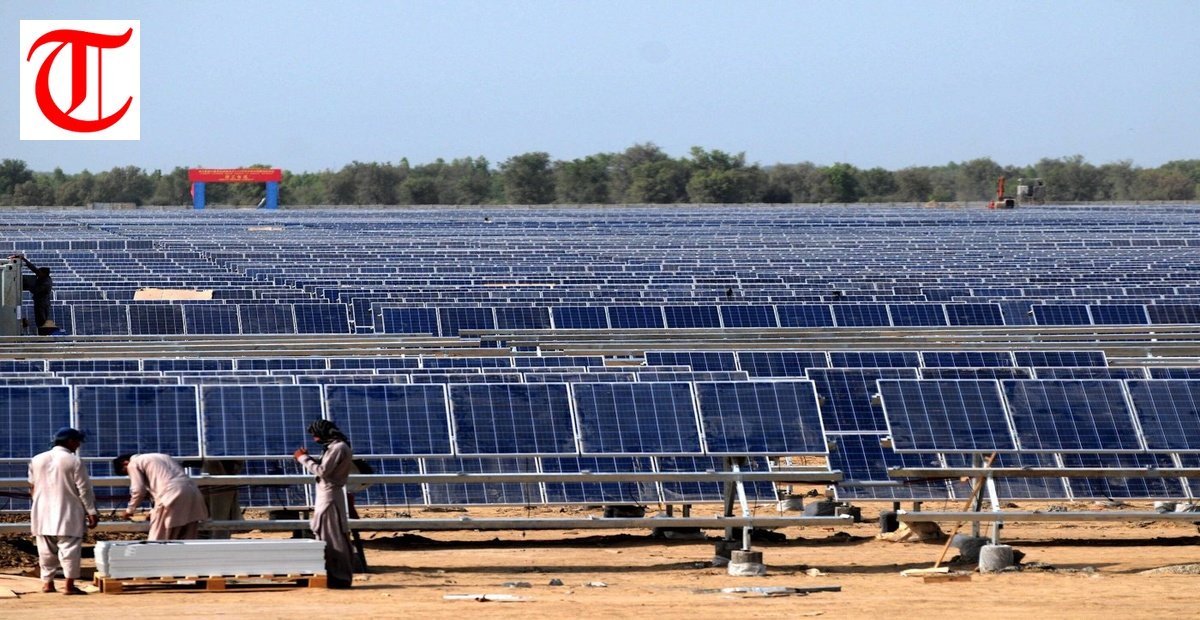
- Pakistan solar energy transition is rapidly expanding through distributed rooftop adoption
- Net billing policy shifts are altering financial incentives for solar users
- High electricity tariffs and IPP contracts remain structural barriers
- Policy decisions will determine the future pace of renewable energy growth
Pakistan is in the middle of a quiet energy revolution—one that is unfolding not in megaproject announcements, but on rooftops, tube wells, school buildings, and factory sheds across the country. Distributed solar has moved from the margins to the mainstream, with credible estimates suggesting that nearly a quarter of daytime distributive electricity demand is now being met through private installations.
This surge is not accidental. It is a rational response by citizens and businesses to a power sector defined by high tariffs, unreliable supply, and chronic dependence on imported fuels. Solar has become more than a technology—it is a hedge against uncertainty. Yet, just as this transition is gaining scale, the policy shift from net metering to net billing risks altering its trajectory in fundamental ways.
Why Solar Is No Longer Optional.
The case for solar energy in Pakistan is not ideological; it is structural.
Energy Security and Macroeconomic Stability
Pakistan’s power sector remains heavily dependent on imported coal, furnace oil, and LNG. This exposes the economy to volatile global prices and persistent pressure on foreign exchange reserves.
War in the Gulf, Reactors in Asia: How the Iran Crisis Is Driving Southeast Asia’s Nuclear Turn
Every unit of electricity generated on a rooftop solar system is a unit that does not require imported fuel. At scale, distributed solar functions as a decentralized foreign exchange saving mechanism—something few other interventions can achieve so directly.
Environmental and Public Health Imperatives
Urban Pakistan routinely ranks among the most polluted regions globally during winter smog episodes. Thermal power generation, combined with transport and industrial emissions, contributes significantly to deteriorating air quality. Solar energy, by contrast, produces electricity without combustion, directly reducing particulate matter and greenhouse gas emissions. For a country already experiencing climate stress—from heatwaves to erratic monsoons—this is not a marginal benefit.
Competitiveness and Cost Relief
Electricity tariffs in Pakistan have become a major constraint on industrial competitiveness and household welfare. Distributed solar lowers the marginal cost of electricity during daylight hours, enabling businesses to remain viable and households to manage expenses. In agriculture, solar-powered tube wells reduce reliance on diesel, stabilizing input costs for farmers.
Singapore New Zealand Trade Deal: A Strategic Lifeline for Global Commerce Amid Hormuz Crisis
The Shift from Net Metering to Net Billing
Until recently, Pakistan’s net metering regime provided a powerful incentive: a one-to-one exchange of electricity units. Consumers could export excess solar generation to the grid and draw the same number of units later, effectively using the grid as a virtual battery.
Under the revised framework introduced by National Electric Power Regulatory Authority (NEPRA), this system has5 transitioned to net billing.
The difference is not merely technical—it is economic.
Exported electricity is now compensated at a buyback rate (roughly Rs. 9–13 per unit).
Imported electricity continues to be charged at the retail tariff (approximately Rs. 40–60 per unit).
https://theislamabadtelegraph.com/taiwan-china-conflict-enters-new-phase/
This asymmetry fundamentally changes the value proposition of solar investments. Under net metering, surplus generation retained its full retail value. Under net billing, that value is sharply discounted.
The immediate consequence is a lengthening of payback periods for solar systems. But the deeper concern lies in behavioral incentives: consumers are now discouraged from installing larger systems or exporting surplus energy, potentially slowing the expansion of distributed generation capacity.
The Structural Constraint: Locked-In Thermal Power
To understand the policy shift, one must examine the underlying structure of Pakistan’s power sector. A significant portion of generation capacity is tied to Independent Power Producers (IPPs) operating under long-term contracts with guaranteed capacity payments. These payments must be made regardless of whether the electricity is actually used.
The city caught in the middle of the big energy shift debate
This creates a paradox: even as cheaper solar power becomes available, the system remains financially obligated to pay for thermal capacity based on imported fuels. In such a framework, rapid growth in distributed solar can reduce grid demand, thereby increasing the per-unit burden of these fixed costs on remaining consumers.
However, responding by disincentivizing solar risks perpetuating the very inefficiencies that created the problem. Instead of reforming legacy contracts and transitioning away from high-cost generation, the system shifts the burden back onto consumers and clean energy adopters.
The Role of Climate and Environmental Governance
The Ministry of Climate Change and Environmental Coordination must play a more assertive and technically grounded role in this transition.
Quantifying Climate Gains
Distributed solar is already delivering measurable emissions reductions. Systematic tracking and verification of these gains can unlock access to international climate finance, carbon markets, and concessional funding.
Embedding Solar in Urban and Rural Planning
Policy instruments such as mandatory solar readiness for new buildings, incentives for agricultural solarization, and integration with electric mobility can amplify the impact of existing adoption trends.
Aligning Energy and Climate Policy
Tariff structures and regulatory decisions must be evaluated not only on financial grounds but also on their long-term environmental and economic implications. Penalizing clean generation to sustain legacy inefficiencies is neither sustainable nor defensible.
A Practical Roadmap for Transition
A viable energy transition for Pakistan must balance financial realities with technological opportunity. Several actionable pathways exist:
1. Shift Toward Self-Consumption and Storage
The economics of solar are evolving toward self-consumption models, where users maximize on-site utilization of generated electricity. Battery storage—though still relatively expensive—is becoming increasingly viable and can mitigate the limitations imposed by net billing.
2. Gradual Retirement of Inefficient Thermal Assets
Rather than abrupt disruption, Pakistan can adopt a phased approach by declining to renew5 contracts for older, inefficient IPPs as they reach the end of their terms. This reduces capacity payment obligations over time without triggering systemic shocks.
3. Scale Up Utility-Level Renewables
Large-scale solar and wind projects, integrated with grid-level storage, can complement distributed generation. Redirecting even a fraction of the funds currently spent on fuel imports toward such infrastructure would have compounding long-term benefits.
4. Leverage Domestic Research and Policy Expertise
Spearheaded by this scribe, the U.S.-Pakistan Center for Advanced Studies in Energy (USPCAS-E) at National University of Sciences and Technology are already working on smart grids, forecasting models, and renewable integration strategies.
Similarly, the NUST Institute of Policy Studies (NIPS), under the leadership of Ashfaq Hassan Khan, has developed policy frameworks addressing tariff rationalization and grid stability. These are not abstract ideas—they are implementable solutions waiting to be scaled.
5. Build Local Manufacturing Capacity
Encouraging domestic production of inverters, batteries, and related components can reduce import dependence while creating jobs. Targeted financing and industrial policy support can accelerate this transition.
Pakistan solar energy transition: The Economic Reality of Net Billing
At its core, the transition from net metering to net billing replaces an energy exchange mechanism with a financial transaction.
Under net metering, the grid acts as a storage system—energy exported and later retrieved retains its full value. Under net billing, exported energy is monetized at a lower rate, introducing a spread between buying and selling prices.
This spread directly impacts return on investment, particularly for users whose peak generation does not align with peak consumption. Households that generate surplus electricity during midday but consume more in the evening are especially affected.
- The likely outcome is a shift in system design behavior:
- Smaller systems sized closer to self-consumption needs
- Increased interest in battery storage
- Reduced incentive to overproduce and export
While economically rational at the individual level, this may slow the aggregate growth of distributed solar capacity—precisely when Pakistan needs it most.
A Defining Policy Moment
Pakistan’s solar transition has reached an inflection point. The country can either lean into distributed renewable energy as a cornerstone of economic resilience, or constrain it to preserve a legacy system built on imported fuels and rigid contracts.
Net billing, if left unaccompanied by broader structural reforms, risks being perceived as a step backward. But with the right complementary policies—contract rationalization, grid modernization, storage incentives—it can be integrated into a more balanced and sustainable energy framework.
The question is not whether Pakistan will adopt solar energy at scale—it already has. The real question is whether policy will accelerate this transition or quietly hold it back.