



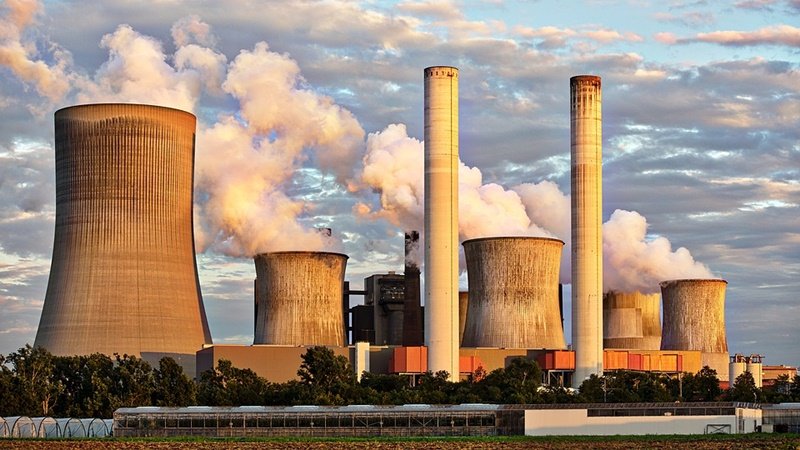
- Iran War Energy Crisis Southeast Asia Nuclear Shift is accelerating multi-billion-dollar nuclear investments across the region
- Closure of the Strait of Hormuz disrupted nearly 20% of global oil supply, exposing energy vulnerabilities
- Vietnam, Indonesia, and the Philippines lead ambitious nuclear revival plans, including SMRs and large-scale plants
- Rising AI-driven electricity demand and energy security concerns are pushing governments toward reliable nuclear solutions
It began as a war to stop the atom.
When strikes were launched against Iran—with the stated aim of crippling its nuclear ambitions—few imagined the conflict would end up igniting a nuclear awakening thousands of miles away. Yet, in a twist of geopolitical irony, the very war designed to deny one nation nuclear capability is now accelerating it across an entire region.
The closure of the Strait of Hormuz—the narrow artery through which nearly 20% of the world’s oil once flowed—has plunged Asia into an energy shock of historic proportions. Tanker traffic has collapsed, fuel prices have surged, and economies built on imported energy are confronting a stark reality: dependence is no longer sustainable.
And so, from Hanoi to Jakarta, from Manila to Bangkok, a quiet but determined shift is underway. Governments that once hesitated, delayed, or abandoned nuclear ambitions are now reviving them with urgency. What was politically sensitive yesterday has become strategically unavoidable today.
In the shadows of a war meant to halt nuclear expansion, Southeast Asia is preparing to go nuclear—not as a choice, but as a necessity.
Hormuz Crisis: Singapore’s “Great Reset” Amid Pakistan’s High-Stakes Diplomacy
As the shockwaves from the Iran war ripple across global energy markets, few regions have felt the tremors as sharply as Southeast Asia. The sudden disruption of oil flows following the closure of the Strait of Hormuz—through which nearly a fifth of the world’s petroleum supply transits—has exposed a long-standing vulnerability: the region’s deep dependence on imported fossil fuels.
What began as a geopolitical crisis is now catalyzing a profound transformation in energy strategy, pushing several fast-growing economies toward nuclear power in what many policymakers describe as a reluctant but necessary pivot.
Pakistan Iran War Mediation: Islamabad Positions Itself as the Center of Regional De-Escalation Strategy
For decades, Southeast Asia’s energy story was one of hydrocarbons—cheap, abundant, and largely imported. Countries like Vietnam, Indonesia, and Thailand built their industrial growth on oil and gas imports, leaving them exposed to external shocks.
The Iran war has upended that equation. With global oil prices surging and supply chains disrupted, governments are scrambling to insulate their economies from volatility. Nuclear energy, once politically sensitive and economically daunting, is now being reframed as a strategic imperative.
The clearest signal of this shift came on March 23, when Vietnam signed a landmark agreement with Russia to construct a nuclear power plant in Ninh Thuan province. Slated to come online within the next decade, the facility is poised to become Southeast Asia’s first modern nuclear power station. This is not merely a symbolic move. Vietnamese officials have indicated that billions of dollars in foreign exchange reserves will be allocated to ensure the project’s completion, underscoring the seriousness of intent.
Nuclear revival or renewable mirage? Why Bataan’s $1-billion fix beats the solar-wind-hydroelectric battery tax
Vietnam is not alone. Malaysia, Indonesia, Thailand, and the Philippines have all revived or accelerated nuclear plans in recent months. Indonesia, Southeast Asia’s largest economy, has incorporated nuclear energy into its long-term energy roadmap, aiming to deploy two small modular reactors (SMRs) by 2034.
Thailand has outlined ambitions to generate 600 megawatts of nuclear power by 2037, while the Philippines—home to the dormant Bataan Nuclear Power Plant—is reconsidering nuclear as a viable solution to chronic energy shortages.
This renewed interest marks a dramatic reversal from earlier decades. The region’s first foray into nuclear power—the Bataan plant built in the Philippines in the 1970s—ended in failure. Completed in 1984 at a cost of $2.2 billion, it was never activated due to corruption allegations and safety concerns heightened by the Chernobyl disaster. For years, that experience cast a long shadow over nuclear ambitions across Southeast Asia.
Today, however, the calculus has changed. The rise of energy-intensive industries—particularly data centers driven by artificial intelligence—has dramatically increased electricity demand. According to the International Energy Agency, global data center consumption reached 415 terawatt-hours in 2024, growing at an annual rate of 12%. Southeast Asia, eager to position itself as a digital hub, faces mounting pressure to provide stable and scalable power.
“Previously, the clean energy transition in the region was mainly driven by economic considerations,” noted one regional analyst. “But geopolitical shocks like the Iran war bring the energy security dimension back into sharper focus.” Nuclear energy, unlike solar or wind, offers continuous, low-carbon electricity—an attractive proposition for governments balancing sustainability with reliability.
Technological advancements are also playing a role. Small modular reactors, or SMRs, are emerging as a potentially game-changing solution. With capacities of up to 300 megawatts—roughly a third of traditional reactors—SMRs are designed to be more flexible, scalable, and suitable for smaller grids or remote areas. For archipelagic nations like Indonesia and the Philippines, this adaptability is particularly appealing.
Yet the path to nuclearization is far from straightforward. Critics point out that most SMR technologies remain in early stages of commercialization, with only a handful of operational examples globally. Questions about cost, safety, and long-term waste management persist. Moreover, public skepticism remains a significant hurdle. Surveys indicate low levels of support for nuclear energy across much of Southeast Asia, driven by concerns over safety and environmental risks.
Institutional challenges add another layer of complexity. Building and operating nuclear power plants requires robust regulatory frameworks, technical expertise, and long-term political commitment—capacities that many developing countries are still strengthening. Security concerns are also intensifying in an era of cyber threats and drone warfare, raising questions about the resilience of nuclear infrastructure.
Despite these obstacles, the momentum is unmistakable. What was once dismissed as an impractical or risky option is now being pursued with urgency and scale. Governments are not merely floating proposals; they are committing resources, signing agreements, and laying the groundwork for a nuclear future.
In an ironic twist, the Iran war—an event rooted in conflict and disruption—may ultimately serve as a catalyst for energy transformation in Southeast Asia. By forcing a reckoning with dependence on imported oil, it has accelerated a shift toward more resilient and diversified energy systems. For many in the region, nuclear power is no longer a distant ambition but an immediate necessity—a high-stakes gamble that could redefine the energy landscape for decades to come.