



- srael and Hamas prepare for indirect talks in Cairo on Monday.
- Trump’s 20-point Gaza peace plan is at the center of negotiations.
- Talks will initially focus on swapping hostages for Palestinian prisoners.
- Hamas demands Israeli troop withdrawals; Israel insists on its own terms.
- More than 65,000 Palestinians killed in Gaza as war nears two years.
- Success could mark the first breakthrough toward lasting peace.
Cairo is once again preparing to play host to the kind of delicate diplomacy that can alter the course of wars. On Monday, negotiators representing Israel and Hamas are expected to converge on the Egyptian capital for indirect talks under the watchful eyes of American, Egyptian, and Qatari mediators. The central item on the agenda is starkly simple yet painfully complicated: the exchange of hostages still held in Gaza for Palestinian prisoners locked away in Israeli jails.
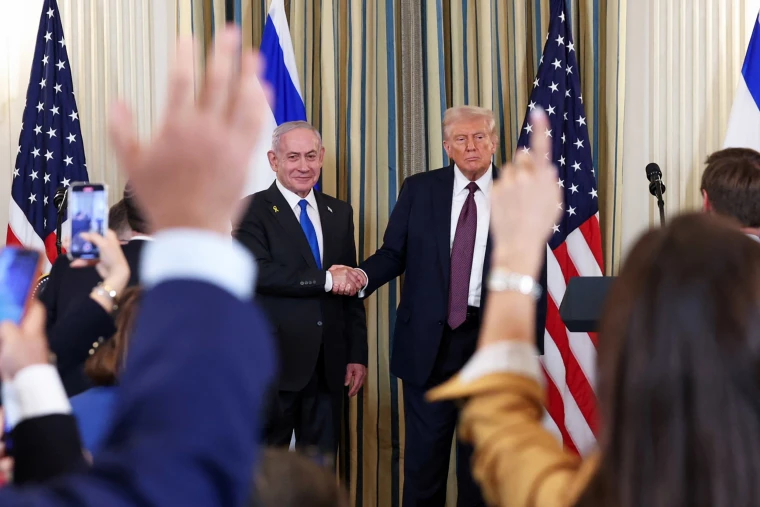
The negotiations come as part of former U.S. President Donald Trump’s sweeping 20-point plan to end nearly two years of relentless bloodshed. Both Israel and Hamas have, at least nominally, agreed to the outline of Trump’s proposal, though each side bristles at its demands. For mediators, the task is to narrow that gap before the window of opportunity closes.
The Fragile Bargain
According to Israeli estimates, around 20 living hostages remain in Gaza, alongside the bodies of at least 25 others. Hamas regards these captives as its most valuable bargaining chip, a form of leverage it will not easily relinquish. Under Trump’s terms, Hamas would release the hostages in exchange for 250 Palestinians serving life sentences, along with some 1,700 Gazans imprisoned during the war. In an emotionally fraught provision, Israel would also return 15 Palestinian bodies for every dead Israeli handed back.
Trump’s Gaza Peace Plan: A Step Forward or a Mirage for Palestinians?
Trump himself, characteristically, has tried to project confidence. In a social media post over the weekend, he suggested that hostages could be released “within days” if Hamas agreed to the terms, particularly concerning how far Israeli forces would pull back from their entrenched positions in Gaza. “The hostages must come home,” Trump declared. “The battlefield must be made safe for peace.”
Yet for Hamas, the issues run deeper. The Trump plan calls not only for a prisoner swap but also for the creation of an internationally supervised Palestinian administration, an Arab-led security force to patrol Gaza, and the disarmament of Hamas. Those are demands the movement has so far resisted.
A War That Consumes
The timing of these talks underscores their urgency. The war, triggered by Hamas’s October 7, 2023 attack that killed some 1,200 Israelis, has spiraled into a devastating conflict that shows no sign of resolution. Israel’s bombardment and ground campaign have left much of Gaza reduced to rubble. Local health officials estimate more than 65,000 Palestinians have died, many of them civilians and children.
READ MORE:Israel and Hamas Prepare for Talks on Trump’s Plan to End Gaza War
Across Gaza, survival has become the only political priority. Families displaced multiple times crowd into makeshift shelters, clinging to dwindling supplies of food and water. “We are desperate for a cease-fire,” said Hani Ramadan, a father from central Gaza reached by phone. “Even if it is temporary, even if it is fragile, we need breathing space. We want our children to live.”
Israel, too, faces its own pressures. Thousands of citizens gather regularly in Tel Aviv and Jerusalem to demand the return of the hostages. For them, each day without news is another day of anguish. At a protest in Tel Aviv on Saturday night, relatives of captives held photographs aloft and chanted for the government to act. The crowd’s message was blunt: bring them home, now.
The Disputed Lines
Even if the prisoner swap is agreed upon, one of the thorniest questions will remain: how far Israeli forces should withdraw. Previous talks suggested Israel might fall back to buffer zones near Gaza’s borders. But Trump’s framework envisions a slower, phased withdrawal that leaves Israeli troops deployed deeper into the enclave for longer. Hamas fears such an arrangement would merely institutionalize Israel’s military footprint.
ALSO READ:The Marinette: Lone Yacht Sails Toward Gaza After Israel Crushes World Flotilla
Analysts warn that any perceived imbalance in the deal could spark renewed violence. “This is not just about exchanging hostages for prisoners,” said one regional diplomat familiar with the negotiations. “It is about redefining who controls Gaza the day after the war ends. That is where the real battle lies.”
Cairo’s Test
For Cairo, Monday’s talks will test its traditional role as mediator-in-chief between Israel and Hamas. Egyptian intelligence officials have spent weeks shuttling messages between the parties, often in coordination with Qatar. Both countries are acutely aware that this might be the last serious chance to halt a war that has destabilized the entire region.
The stakes extend far beyond the negotiating room. A breakthrough could mark the first concrete step toward implementing Trump’s broader vision of an internationally supervised Gaza, with aid flowing in and armed groups laying down weapons. Failure, however, could plunge the conflict into yet another cycle of recrimination and escalation.
For now, the war grinds on. In Gaza City, explosions continued to echo over the weekend. Israeli forces remain dug in, warning residents that the area is still an active combat zone. First responders sifted through debris, pulling bodies from shattered homes.
And yet, in Cairo’s hotels and conference rooms, there is a flicker of hope. The talks are imperfect, the trust almost nonexistent. But for Israelis waiting for their loved ones and for Palestinians yearning for survival, even the possibility of a fragile bargain offers something priceless: a reason to believe that peace is still imaginable.