



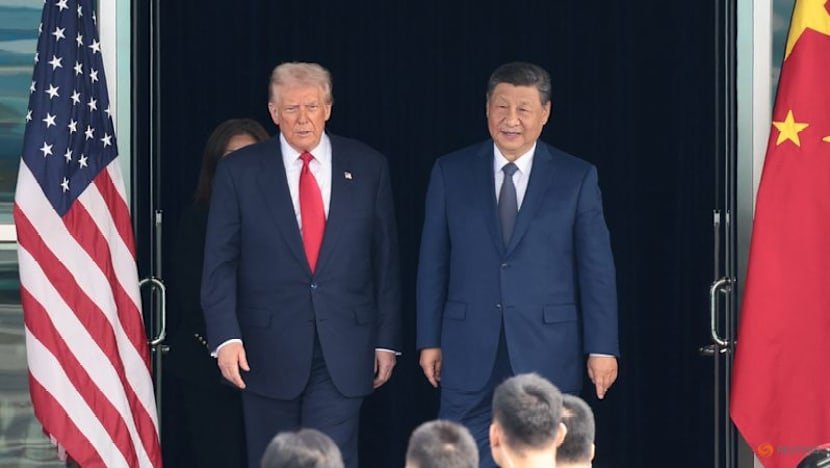
- Trump Beijing China visit arrives with top CEOs including tech, finance, and energy leaders shaping high-stakes negotiations.
- The Iran war and Strait of Hormuz crisis have exposed China’s oil vulnerability, increasing U.S. leverage.
- Trump’s strategy blends trade access, sanctions pressure, and corporate diplomacy to influence Xi Jinping’s decisions.
- Beijing faces a dilemma: cooperate on Iran to secure energy stability or risk economic and supply chain escalation.
When President Donald Trump lands in Beijing this week, he will not be arriving as a lone statesman stepping into a tense geopolitical arena. He will be arriving as the head of a mobile boardroom — a curated entourage of the world’s most powerful corporate actors, from aerospace to finance, each representing a sector China cannot afford to alienate. According to U.S. officials, the invite list includes figures such as Elon Musk, Apple’s Tim Cook, BlackRock’s Larry Fink, and Goldman Sachs’ David Solomon, though final attendance remains unconfirmed.
This is not a ceremonial flourish. It is a strategic weapon.
Trump’s meeting with Xi Jinping — delayed for months due to the war with Iran — now unfolds under the shadow of a global energy crunch, a blocked Strait of Hormuz, and China’s growing anxiety over oil supply disruptions. The Iran war has already rattled markets and tightened supply chains, and China, which relies heavily on Middle Eastern oil, is staring down the barrel of a looming shortage.
Trump China Visit 2026: High-Stakes Summit Faces Taiwan, Trade, and Security Flashpoints
Trump knows this. And he knows how to turn it into leverage.
The Business Delegation as Strategic Pressure
China’s leadership has long viewed U.S. business engagement as a stabilizing force — a counterweight to Washington’s political volatility. Beijing has historically rolled out the red carpet for American CEOs, using commercial incentives to soften diplomatic friction. But this time, the dynamic is reversed.
Trump’s entourage is not a goodwill gesture. It is a reminder.
Taiwan China Conflict Enters New Phase as Beijing Shifts Strategy
A reminder that the United States remains the world’s largest consumer market. A reminder that American capital, technology, and manufacturing partnerships still shape China’s economic trajectory. A reminder that China’s path to postpandemic stability still runs through U.S. corporate channels.
And most importantly: a reminder that Trump can tighten or loosen those channels at will.
What Trump and Xi are looking to get out of this week’s summit in Beijing
The White House has already demonstrated its willingness to sanction Chinese firms tied to Iran’s military support, including companies accused of providing satellite imagery enabling Iranian strikes. This escalation signals that Trump is prepared to use economic pressure not only against Tehran, but against Beijing itself — unless China steps in to restrain Iran and help reopen the Strait of Hormuz.
China’s Oil Vulnerability: Trump’s Opening
The Iran war has created a global energy bottleneck, and China is one of the most exposed major powers. The blockade of the Strait of Hormuz — the artery through which much of China’s imported oil flows — has driven up prices and injected volatility into Beijing’s already strained economy.
China’s leadership understands the stakes. Its foreign minister has been working phones across the region, making nearly 30 calls to regional and Security Council counterparts in an effort to stabilize the crisis.
But China’s influence over Iran is not limitless. It is transactional. And Trump can exploit that.
By framing the Iran conflict not as a military standoff but as an economic chokehold — one that threatens China’s industrial base, export competitiveness, and domestic stability — Trump can push Xi toward a more active role in pressuring Tehran. The message is simple:
If China wants oil, China must help end the war.
How Trump Can Use Business Prowess to Force Movement
Trump’s negotiating style has always relied on spectacle, leverage, and the creation of asymmetric pressure. In Beijing, he can deploy all three.
1. Present the CEOs as the “carrot” — and the threat.
The presence of top U.S. executives signals potential deals, investments, and market access — all things China wants. But Trump can just as easily imply that these opportunities vanish if Beijing continues enabling Iran’s military capabilities. The State Department’s recent sanctions on Chinese firms set the precedent.
2. Tie trade stability directly to China’s behavior on Iran.
Trade tensions remain a core issue, with both sides seeking a fragile economic truce. Trump can make clear that tariff relief, export control flexibility, and supplychain cooperation depend on China helping reopen Hormuz.
3. Frame the oil crisis as China’s problem — not America’s.
The U.S. is far less dependent on Middle Eastern oil than China. Trump can emphasize that the longer the conflict drags on, the more China suffers economically, while the U.S. gains relative advantage. This shifts urgency onto Beijing.
4. Offer China a role as coarchitect of regional stability.
China wants global credibility as a diplomatic power. Trump can offer a stage on which Beijing can claim a stabilizing role — but only if it delivers results with Iran.
The Strategic Outcome Trump Wants
Trump’s objective is not simply to end the Iran war. It is to reshape the geopolitical energy map.
If China pressures Iran into reopening the Strait of Hormuz, global oil prices stabilize, U.S. businesses benefit, and Trump can claim a diplomatic victory. If China refuses, Trump can tighten sanctions, restrict technology access, and weaponize U.S. corporate influence — all while watching China struggle under the weight of an oildriven economic slowdown.
Either way, Trump holds the leverage.
And this week in Beijing, he intends to use it.