


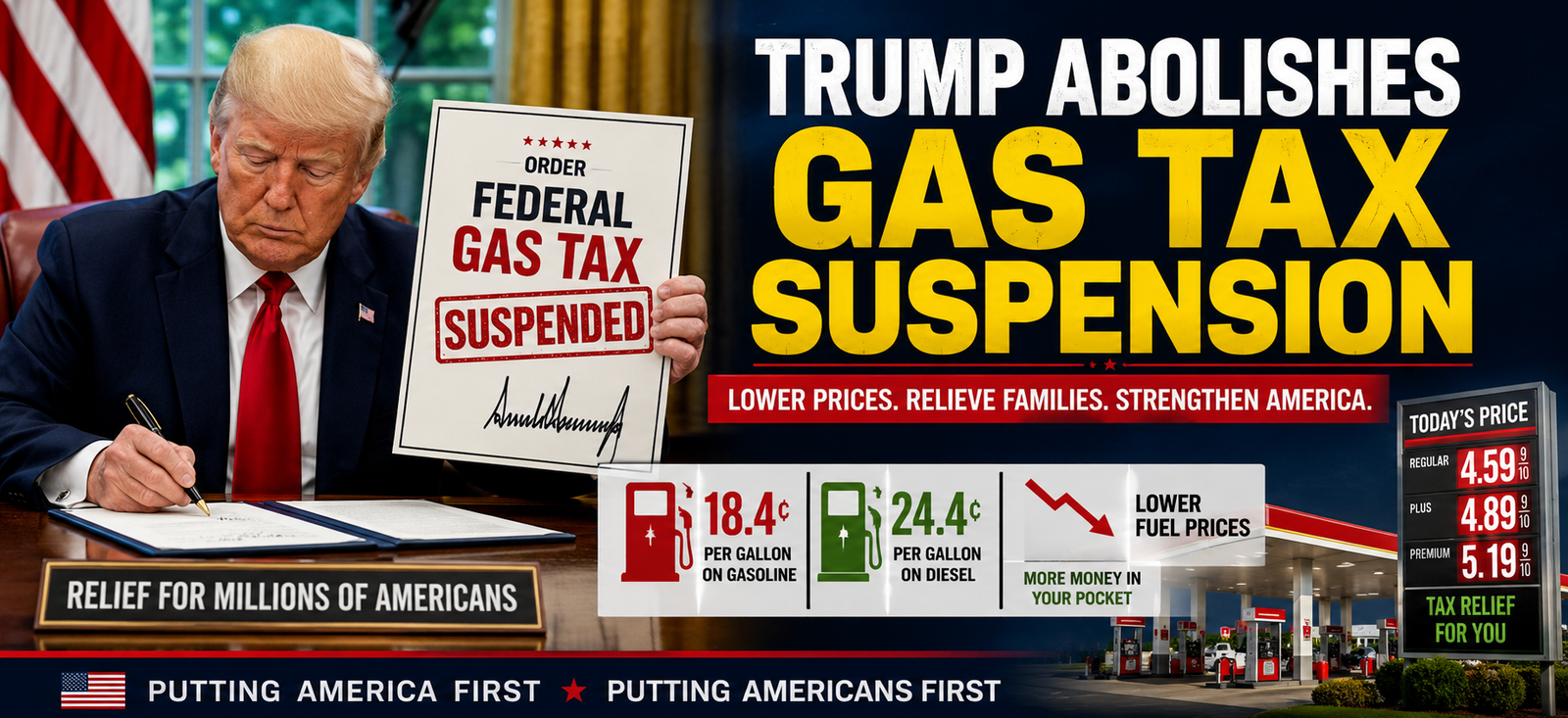
- Trump gas tax suspension proposal targets immediate relief for millions of Americans facing record fuel prices
- Federal fuel tax removal could save up to 24.3 cents per gallon but needs Congressional approval
- Iran war and Strait of Hormuz tensions continue to disrupt global oil supply and push prices higher
- Debate intensifies as critics warn of $17 billion loss to infrastructure funding and uncertain consumer benefits
In a striking policy move shaped by war-driven economic pressure, Donald Trump has proposed suspending the federal gas tax to shield millions of Americans from surging fuel prices triggered by the ongoing Iran conflict. The announcement comes as energy markets reel from disruptions in the Strait of Hormuz, sending U.S. gasoline prices soaring to around $4.5 per gallon—the highest levels in years.
Standing in the Oval Office, Trump framed the move as immediate relief for ordinary citizens squeezed by inflation and war-induced costs. The federal gas tax—18.4 cents per gallon on gasoline and 24.4 cents on diesel—may seem modest, but in a climate where prices have jumped more than 50% since the conflict began, even small reductions carry political and economic weight.
The proposal, however, is not just about economics—it is about leadership under pressure. With midterm elections approaching and public dissatisfaction rising, Trump is attempting to deliver a direct, visible benefit to voters. Polls suggest growing frustration with the economy, with fuel costs becoming a daily symbol of that anger.
US Attack on Iran Ships Pushes War Into Dangerous Phase, Triggers Global Oil Shock
Yet, the plan is not without hurdles. Any suspension requires Congressional approval, and lawmakers remain divided. While allies like Josh Hawley have pledged legislation to pause the tax, others warn that the move could drain billions from the Highway Trust Fund, which finances U.S. infrastructure.
Experts also caution that the benefits may not fully reach consumers. Since the tax is applied upstream at refineries, there is no guarantee oil companies will pass the savings to drivers. Still, the political messaging is clear: act fast, act visibly, and show the public that the government is responding.
US Attack on Iran Ships Pushes War Into Dangerous Phase, Triggers Global Oil Shock
At its core, Trump’s proposal reflects a broader reality—modern wars no longer remain confined to battlefields. They hit households directly, through fuel prices, inflation, and economic uncertainty. The Iran conflict has not only destabilized global oil supply but also reshaped domestic political agendas in Washington.
A Lesson for Pakistan?
The implications extend far beyond the United States. In Pakistan, where fuel price hikes routinely trigger public outrage and inflationary spirals, the debate takes on a sharper edge.
Prime Minister Shehbaz Sharif faces similar pressures—rising petroleum prices, IMF constraints, and a population burdened by escalating living costs. Yet, unlike Washington, Islamabad has shown limited flexibility in offering immediate relief through tax cuts or subsidies, often citing fiscal limitations.
Trump says Iran ceasefire is on ‘life support,’ calls latest proposal ‘garbage’
This contrast raises a critical question: can Pakistan adopt even partial versions of such emergency relief measures?
Admittedly, the economic realities differ. The United States, with its monetary flexibility and global financial leverage, can absorb short-term revenue losses more easily. Pakistan, bound by strict fiscal targets and external financing conditions, operates within tighter margins. A blanket suspension of petroleum taxes could risk widening deficits and destabilizing macroeconomic recovery.
But the issue is not simply about replication—it is about intent and prioritization.
Trump’s move, whether fully effective or not, signals responsiveness. It acknowledges public pain and attempts immediate mitigation, even if temporary. In Pakistan, critics argue that policy responses often lag behind public hardship, leaving citizens to absorb shocks without visible relief.
Politics, Pressure, and Public Perception
Ultimately, Trump’s gas tax suspension proposal is as much about perception as policy. It is designed to send a message: that leadership must act decisively when citizens are under economic stress.
Whether the plan succeeds depends on multiple variables—Congressional approval, oil market stabilization, and the trajectory of the Iran war. But politically, it has already achieved something significant: it has shifted the narrative from crisis to action.
For Pakistan, the lesson may not lie in copying the policy, but in embracing its underlying principle—timely, visible intervention during national hardship.
As global energy markets remain volatile and geopolitical tensions persist, governments everywhere face the same test: not just managing crises, but proving to their people that they are not alone in bearing the cost.