



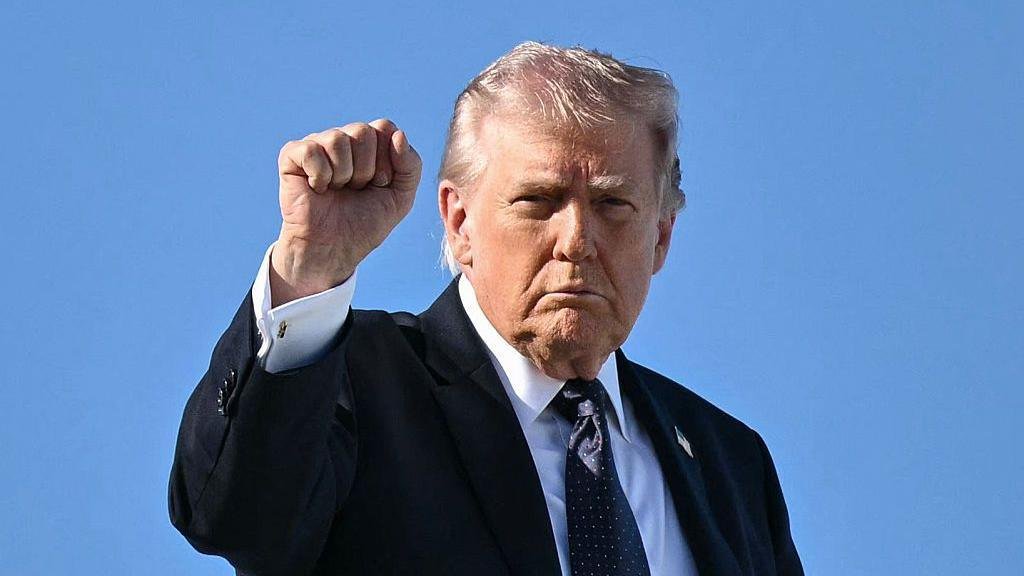
- Trump Warns Oman: Trump’s Oman threat reflects growing U.S. suspicion of Muscat’s engagement with Iran and its role around the Strait of Hormuz.
- The Houthi escalation around Bab al-Mandeb is creating a second maritime pressure point alongside Hormuz.
- Saudi Arabia, Pakistan and Türkiye’s emerging defense cooperation could become an important pillar of a broader regional response to the Houthi threat.
President Donald Trump’s extraordinary threat to bomb Oman is not simply another outburst in the increasingly volatile U.S.-Iran confrontation. It reflects a much deeper strategic collision over who controls the diplomatic and maritime architecture around the Strait of Hormuz — and, increasingly, who gets to determine the future of the wider war involving Iran and the Houthis.
Trump warned that the United States could strike Oman if Muscat “gets in the way” of Washington’s efforts concerning Iran and the Strait of Hormuz. The threat came as Oman was conducting parallel discussions with Tehran aimed at establishing a mechanism for commercial shipping through the waterway. Iran has said it reached an understanding with Oman on a transit route, with details still being finalized.
Sources familiar with the thinking inside Washington told The Islamabad Telegraph that the Trump administration has become deeply suspicious of Oman’s contacts with Tehran. According to these sources, U.S. intelligence assessments presented to senior officials argued that Muscat was attempting to preserve an arrangement with Iran that could undermine Washington’s strategy for reopening Hormuz and maximizing pressure on Tehran.
READ NEXT: Why Trump’s Middle East Allies Trust Him Despite the Iran Ceasefire
The sources described Trump’s reaction as serious rather than merely rhetorical, saying the Omani government has been warned through diplomatic channels that Washington will not tolerate actions that obstruct its objectives. These claims could not independently be verified, and the White House has not publicly confirmed that military strike plans against Oman have been ordered.
But the strategic logic behind Trump’s anger is clear.
For Washington, Hormuz is no longer simply a shipping lane. It has become the central economic pressure point of the Iran war. U.S. officials have repeatedly treated Iranian control or disruption of the strait as a strategic red line. Trump now appears determined to prevent Tehran from converting geography into long-term political leverage.
That puts Oman in an extraordinarily difficult position.
Muscat has historically positioned itself as a bridge between Washington and Tehran. Its value has precisely been its ability to talk to both sides when other governments cannot. Yet that traditional diplomatic role may now be colliding with Trump’s increasingly coercive approach toward Iran.
READ MORE: Why Trump Is Threatening Again to Bomb Oman
The danger is that Oman’s greatest diplomatic asset — its neutrality — is beginning to look like strategic ambiguity to Washington.
The second front is Yemen.
The Houthis have dramatically increased pressure around the Bab al-Mandeb Strait, creating a potential second maritime choke point at precisely the moment Hormuz remains contested. Recent Houthi attacks have already caused casualties and disrupted maritime operations, while the port of Mokha has been forced to shut down after attacks, according to Yemeni authorities.
This matters because Bab al-Mandeb provides an alternative route for energy and commercial shipping that would otherwise be exposed to the Iranian pressure around Hormuz.
The emerging American calculation therefore appears to be broader than Iran itself: Washington wants to prevent Tehran and its partners from simultaneously squeezing Hormuz and Bab al-Mandeb.
That is where Saudi Arabia, Pakistan and Türkiye enter the picture.
The three countries signed the Makkah Joint Defence Agreement on August 7, committing to regard an armed attack against one member as an attack against all. The agreement also calls for expanded defence cooperation and collective deterrence.
Sources familiar with regional discussions say Trump has been briefed on the potential for Saudi Arabia, Pakistan and Türkiye to play a larger role in confronting the Houthi threat. According to these sources, the administration views the emerging regional security architecture as potentially useful because it could reduce the requirement for the United States to carry the entire military burden.
That is strategically important.
Pakistan brings military experience, Saudi Arabia brings geographic proximity and resources, while Türkiye possesses substantial drone, missile and defence-industrial capabilities. Their cooperation could eventually develop into intelligence-sharing, maritime surveillance, air-defence coordination and logistical support against threats emanating from Yemen.
But there is an important caveat: the Makkah agreement is currently a framework for collective defence, not an announced joint war against the Houthis. Publicly available details do not establish that the three states have decided to launch a coordinated offensive in Yemen.
My assessment is that Trump’s Oman threat is ultimately about leverage.
Washington does not necessarily need to bomb Oman to achieve its objective. The threat itself is intended to establish a hierarchy: Iran cannot dictate Hormuz, Oman cannot independently negotiate the waterway in a manner Washington considers contrary to U.S. interests, and the Houthis cannot transform Bab al-Mandeb into another Iranian pressure point.
The most likely next phase is therefore not an immediate American attack on Oman, but intensified diplomatic pressure, intelligence monitoring and naval positioning around Hormuz.
If Muscat continues facilitating an Iran-backed maritime arrangement that Washington believes compromises its blockade or negotiating position, however, the confrontation could become far more dangerous.
And that is the real significance of Trump’s warning.
The Iran war is no longer only about Iran. It is becoming a contest over the entire maritime geography connecting Hormuz, the Gulf of Aden, Bab al-Mandeb and the Red Sea.
Oman sits directly inside that strategic equation.
Trump’s threat may therefore prove less a declaration of an imminent war against Oman than a warning that the United States is prepared to redraw the rules of regional diplomacy — even at the expense of a longtime American partner.
For Muscat, the choice is becoming brutally difficult: remain Iran’s diplomatic bridge and risk Washington’s anger, or align more closely with the American strategy and potentially surrender the very neutrality that made Oman indispensable in the first place.
Either way, the next battle over the Middle East may not be fought first on land.
It may be fought over who controls the world’s most important waterways.