


- Trump Xi Summit reduced immediate tensions but left major structural disputes between Washington and Beijing unresolved.
- Taiwan, artificial intelligence, semiconductors and critical minerals remain potential flashpoints between the two superpowers.
- The future of U.S.-China relations will affect global trade, technology, security alliances and the strategic choices of countries worldwide.
The Trump-Xi summit in Washington has lowered the temperature between the United States and China, but analysts warn that the apparent thaw should not be mistaken for a strategic settlement. The September 2026 meeting produced agreements on trade, fentanyl and artificial intelligence, while confirming further meetings later this year. Yet the central disputes defining the relationship—technology, Taiwan, critical minerals, trade imbalances and competing global alliances—remain unresolved.
For the world, that distinction matters. A stable U.S.-China relationship is increasingly important not because Washington and Beijing have become partners, but because their rivalry has become one of the principal forces shaping the international economy and security system.
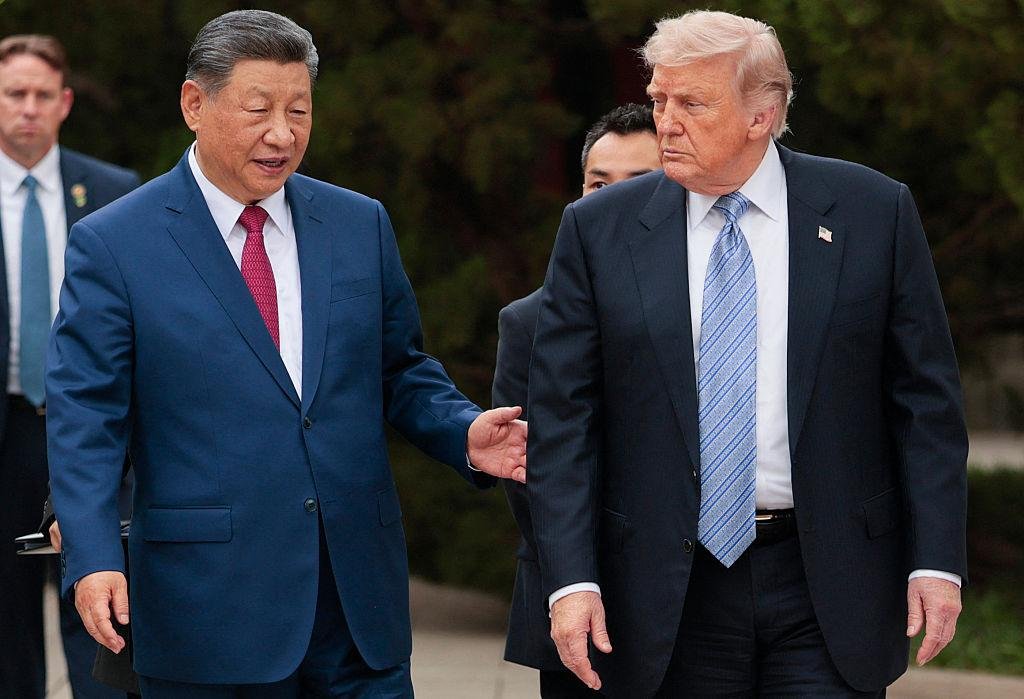
The summit’s symbolism was striking. President Donald Trump offered Xi Jinping an unusually elaborate welcome, reflecting Trump’s preference for leader-to-leader diplomacy. Xi, meanwhile, emphasized historical cooperation between the two countries and presented a more positive narrative of bilateral relations. But analysts at the Center for Strategic and International Studies (CSIS) reached a broadly similar conclusion: the summit produced tactical progress without resolving the structural competition.
READ NEXT: Trump Xi Summit 2026 Signals Global Reset as China Draws Taiwan Red Line
Edgard Kagan described the meeting as heavy on symbolism but limited in substantive outcomes. Bonny Lin argued that Xi sought to recast the relationship positively while continuing to press Washington on Taiwan and avoiding major concessions on critical minerals. Thomas Christensen characterized the economic truce as fragile, pointing to unresolved disputes over semiconductors, rare earths, Taiwan and China’s relationships with Russia and Iran.

The emerging picture is therefore neither a new Cold War nor a genuine rapprochement. It is a managed competition in which both governments appear increasingly interested in preventing rivalry from becoming uncontrolled confrontation.
That could become the defining feature of the relationship over the next several years.
Economics May Buy Time, Not Trust
The summit produced reciprocal tariff arrangements and continued cooperation against fentanyl trafficking. Chinese authorities also announced additional controls and enforcement measures involving fentanyl precursors.
READ MORE: Trump and Xi’s ‘stalemate’ summit was a glitzy gift to China
But the economic relationship remains deeply contested. Washington continues to worry about China’s industrial overcapacity, technology ambitions and access to critical supply chains. Beijing remains dissatisfied with American semiconductor restrictions, investment controls and tariffs.
Ilaria Mazzocco of CSIS noted that the summit did not resolve many of the most important disputes over advanced technologies. The agreement on an artificial-intelligence dialogue could create a channel for communication, but experts caution that dialogue alone will not overcome the strategic competition surrounding computing power, chips and technological leadership.
This suggests a likely pattern: cooperation where both sides have an immediate interest, confrontation where national power is at stake.

Taiwan Remains the Most Dangerous Fault Line
The most consequential unresolved issue remains Taiwan.
Xi again pressed Washington to oppose what Beijing describes as Taiwan independence, while Trump did not publicly make a significant change to established U.S. Taiwan policy. At the same time, analysts expect continued American arms sales to Taiwan.
That creates an inherent contradiction. Both sides can maintain dialogue while simultaneously strengthening their military capabilities and preparing for scenarios in which diplomacy fails.
This is why the current truce remains vulnerable. A Taiwan arms package, a military incident in the Taiwan Strait, a confrontation involving the Philippines or a dispute over semiconductor technology could quickly reopen broader tensions.

The danger is not necessarily that either government wants war. It is that increasingly powerful militaries operating in close proximity leave less room for miscalculation.
The Middle East Could Test the Truce
China’s relationships with Iran and Russia introduce another major source of friction.
Thomas Christensen argues that Washington could eventually pressure Beijing over Chinese support for Iran and Russia. If China assists Iran in rebuilding military capabilities following the current conflict, Washington could respond with additional economic pressure.
That would expose the limits of the current détente.
China is seeking greater influence across the Middle East while maintaining close relations with Russia. The United States, meanwhile, continues to regard China’s external partnerships through the lens of strategic competition.
The summit may therefore have postponed confrontation rather than eliminated it.
AI Could Become the Next Strategic Battlefield
Artificial intelligence is potentially the most consequential new dimension of U.S.-China competition.
Both countries have incentives to prevent catastrophic AI failures, and the summit reportedly established an AI dialogue and communications channel for security incidents. But Aalok Mehta of CSIS cautioned that substantive discussions over AI safety remain limited.
That matters because AI is simultaneously a commercial industry, a military technology and a national-security capability.
If Washington and Beijing can establish basic rules for crisis communication, AI could become an area of limited cooperation. If not, competition over advanced models, chips and computing infrastructure could become another accelerant of the broader rivalry.
Why the World Should Watch Closely
The future of U.S.-China relations will affect far more than Washington and Beijing.
A prolonged confrontation could fragment technology markets, disrupt supply chains, intensify competition over critical minerals and force other countries to navigate increasingly difficult choices between the two powers.
A stable relationship, by contrast, would not eliminate competition but could create space for cooperation on trade, drugs, AI safety, climate issues and international crises.
India is already watching carefully. Aman Thakker of CSIS argues that New Delhi sees a contrast between Washington’s pursuit of stability with Beijing and growing economic tensions with India. That could influence India’s calculations about strategic alignment and economic diversification.
For Southeast Asia, Europe, the Gulf and other middle powers, the central question is similar: Can Washington and Beijing compete without forcing the rest of the world to choose sides?
The Trump-Xi summit has not answered that question.
For now, the two superpowers have chosen dialogue over escalation. But the underlying contest over technology, military power, trade and global influence remains intact. The coming year will reveal whether the summit becomes the foundation for a more durable framework of competition—or simply a pause before the next confrontation.
The world has a direct interest in the answer.