



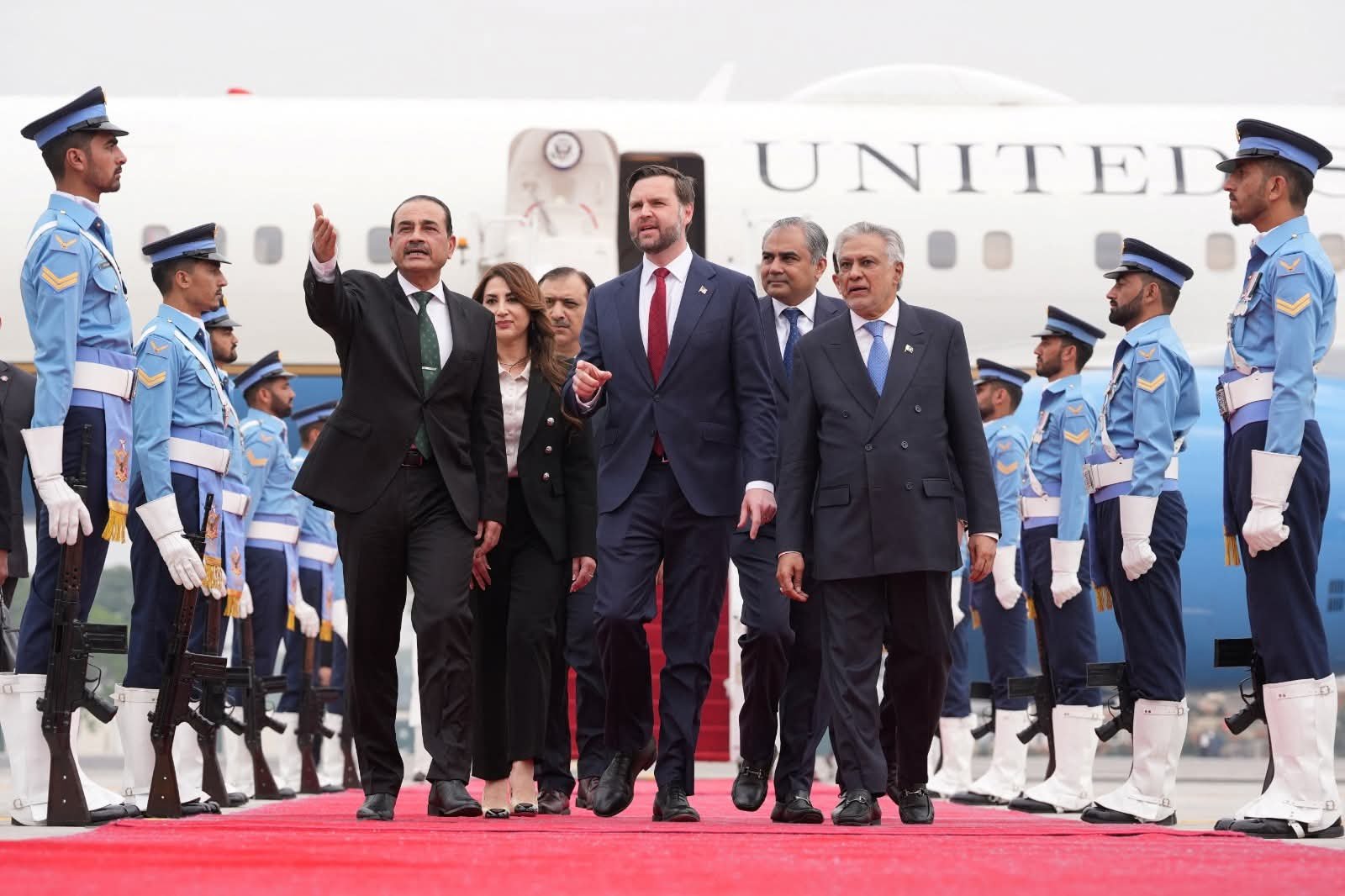
- US Iran talks Islamabad conclude after 20 hours without final agreement
- Pakistan successfully mediates historic high-level engagement between Washington and Tehran
- Key disagreements remain over nuclear commitments, frozen assets, and Strait of Hormuz
- Both sides agree to continue negotiations under Pakistan’s facilitation
Islamabad — In a development described by diplomats as both historic and cautiously hopeful, the first round of high-stakes negotiations between the United States and Iran concluded in Islamabad after more than 20 hours of intense dialogue, ending without a formal agreement but with a mutual commitment to continue talks under Pakistan’s facilitation.
The marathon negotiations, mediated by Pakistan, marked the highest-level direct engagement between Washington and Tehran in decades—an achievement widely credited to Islamabad’s persistent diplomatic outreach and careful balancing between two deeply mistrustful adversaries.
Led by U.S. Vice President JD Vance and Iranian Parliamentary Speaker Mohammad Bagher Ghalibaf, alongside Foreign Minister Abbas Araghchi, the talks were aimed at consolidating a fragile ceasefire and laying the groundwork for a broader settlement to ongoing hostilities that have destabilized the region and disrupted global energy markets.
Pakistan Middle East Diplomacy: Islamabad Emerges as Key Mediator in US-Iran Talks
Despite what officials described as “substantive progress” on several fronts, key disagreements prevented the signing of a final agreement. Speaking to reporters in the early hours of Sunday, Vance acknowledged the deadlock.
“We just could not get to a situation where the Iranians were willing to accept our terms,” he said, adding that the U.S. delegation had approached the talks “in good faith” under instructions from President Donald Trump.
Assessment of First Round – Key Takeaways
- Unprecedented Diplomatic Effort by Pakistan:
Pakistan undertook intense, sincere, and highly competent diplomatic efforts—successfully facilitating a ceasefire and bringing the United States and Iran to the negotiating table after decades. - Leadership and Mediation Acknowledged:
The process was led at the highest level, with the Deputy Prime Minister and Foreign Minister playing a central mediatory role, widely acknowledged by both sides. - Marathon Diplomacy:
Over 31 hours of continuous engagement, including multiple sessions, underscored the seriousness and commitment of all parties involved. - Complex Yet Constructive Engagement:
Significant ground was covered with notable positive developments, despite the conflict’s complexity, deep-rooted divergences, and the presence of external spoilers. - Strategic Progress Amid Constraints:
While outcomes remain limited, both sides operated under domestic pressures and long-standing positions. Pakistan’s efforts stand out as unprecedented for regional and global peace. Remarks by US Vice President JD Vance reflect a glimmer of hope, indicating space for future compromise. - Clarity of Positions Achieved:
The talks helped both parties better understand each other’s positions, laying a clearer foundation for future negotiations. - Confidentiality Maintained:
Pakistan, as a mediator, has appropriately refrained from disclosing substantive details, respecting the confidentiality essential to such sensitive negotiations.
US leaves Iran peace talks without a deal
One of the most contentious issues remained the status of the Strait of Hormuz, a vital maritime chokepoint through which nearly a fifth of global oil supplies pass. Iran’s continued control over the waterway, including restrictions on commercial shipping and the imposition of transit conditions, has alarmed global markets and emerged as a central sticking point in the negotiations.
U.S. officials have demanded unrestricted navigation through the strait, alongside firm commitments from Iran to curb its nuclear program. “We need to see an affirmative commitment that they will not seek a nuclear weapon,” Vance said, underscoring Washington’s core objective.
Asim Munir Iran Ceasefire: Pakistan Secures Historic US-Iran Truce, War Halted at Last Minute
According to Pakistani officials familiar with the discussions, the talks experienced multiple “mood swings” as negotiators moved from initial plenary sessions to technical-level discussions late into the night—an indication of both progress and persistent friction. At one stage, the format reportedly shifted from indirect “proximity talks” to direct face-to-face engagement, a significant diplomatic breakthrough in itself.
Pakistan’s role as mediator was widely praised across diplomatic circles. Hosting the talks in Islamabad required extensive security arrangements, with the capital effectively locked down as high-level delegations arrived. More importantly, Pakistan’s ability to bring both sides to the table was seen as a testament to its growing relevance in regional and global diplomacy.
“Starting from a point of deep mistrust, simply achieving direct engagement is a major accomplishment,” noted one senior analyst, reflecting a broader sentiment among observers that Pakistan has successfully positioned itself as a credible intermediary.
The U.S. delegation also included senior figures such as special envoy Steve Witkoff and presidential adviser Jared Kushner, both of whom have previously engaged with Iranian counterparts on nuclear-related discussions. The Iranian side, meanwhile, comprised a broad team of political, security, and economic officials, signaling Tehran’s seriousness in pursuing a negotiated outcome.
Despite the absence of a breakthrough, both sides agreed to continue negotiations, with technical teams expected to exchange proposals and documents in the coming days. Iranian officials indicated that dialogue would persist, while Vance left Islamabad without committing to an immediate timeline for the next round.
The outcome leaves the fragile ceasefire intact—for now—but underscores the complexity of bridging deeply entrenched differences. Yet, for many, the real significance lies in the fact that such talks took place at all.
For Pakistan, the moment represents a diplomatic milestone. Once viewed as being on the margins of global decision-making, Islamabad has, through sustained and careful engagement, managed to convene two adversaries whose direct dialogue had long been considered improbable.
As one Pakistani official put it, “An agreement was not signed—but a process has begun. And sometimes, that is where history truly starts.”