



- Historic Scale with Symbolic Weight:
Each side exchanged 390 individuals—270 soldiers and 120 civilians—marking the largest single prisoner swap since the war began. The deal was forged during peace talks in Istanbul and hints at possible diplomatic thawing. - Trump’s Silent Influence:
Donald Trump’s cryptic comments on Truth Social and behind-the-scenes involvement through allies in Turkey and Belarus suggest he may be positioning himself as a potential peace broker ahead of the 2024 U.S. elections. - Unequal Costs, Disputed Narratives:
Ukraine claims Russia holds over 24,000 captives, including thousands of civilians allegedly abducted. Moscow, meanwhile, portrays its returnees as victims, while Kyiv calls them saboteurs—underscoring the political weaponization of the detainees. - Global Ripple Effects:
From Brussels to Beijing, this development is being watched closely. A meaningful cease-fire may still be distant, but this swap has opened the door for incremental diplomacy with broader strategic consequences across NATO, the Middle East, and Asia.
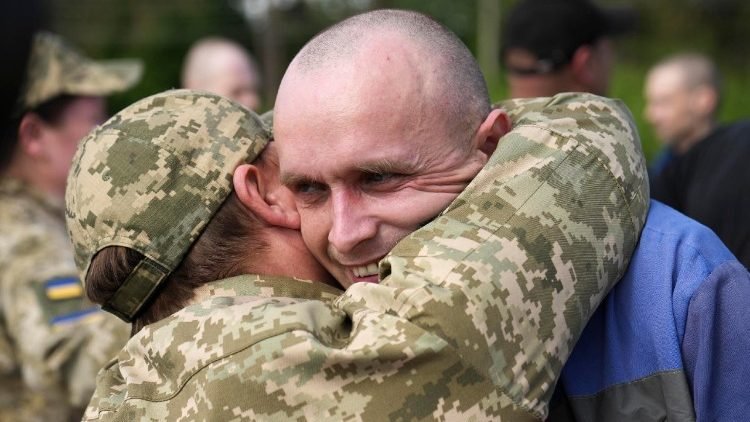
In a dramatic turn that could signal the beginning of a broader shift in the dynamics of the Russia-Ukraine conflict, nearly 800 prisoners were exchanged on Friday in what officials are calling the largest single swap deal since Russia’s full-scale invasion of Ukraine in February 2022. The deal—390 prisoners from each side—marks a rare moment of cooperation between Moscow and Kyiv and has sparked speculation over a potential peace breakthrough, possibly under the quiet influence of former U.S. President Donald Trump.
Ukrainian President Volodymyr Zelensky hailed the development as a national victory. “What matters most is that Ukraine is bringing its people home,” he wrote on X (formerly Twitter), echoing sentiments of relief and resilience. The exchange included 270 soldiers and 120 civilians per side, and sources suggest that hundreds more could be released in a follow-up phase expected over the weekend.
The Deal’s Genesis: Istanbul Peace Talks
This prisoner exchange is the most tangible result from the recent Russia-Ukraine peace talks held in Istanbul—the first high-level bilateral negotiations since early 2022. Although the summit’s primary aim was to establish a temporary cease-fire, that goal remained elusive. Instead, the prisoner swap emerged as the lone consensus point, potentially serving as a confidence-building measure toward further diplomatic engagement.
China’s Youth Back Taiwan Policy—and Are Ready for Unification, Peaceful or Not
Western intelligence officials, speaking on condition of anonymity, confirm that Trump-aligned intermediaries, particularly in Turkey and Belarus, played a behind-the-scenes role in encouraging both parties to reach the agreement. A senior NATO diplomat based in Brussels noted, “It’s premature to call this a breakthrough, but the scale and symbolism of this exchange are hard to ignore.”
Trump’s Role: From Truth Social to Tactical Influence
Donald Trump wasted no time in taking credit, hinting at broader ambitions in resolving the conflict. “This could lead to something big???” he posted on Truth Social shortly after the exchange was made public. Trump, who is widely expected to make foreign policy a cornerstone of his 2024 campaign narrative, has long criticized U.S. involvement in Ukraine and advocated for direct negotiations with Moscow.
Trump’s orbit, particularly through private channels involving business allies in the Gulf and security intermediaries in Eastern Europe, has been quietly laying the groundwork for a peace proposal that could offer sanctions relief for Russia in exchange for a phased withdrawal and demilitarized zones in contested regions. Though still speculative, these rumors have been circulating within policy circles in Washington and Berlin.
What Was Traded—and What Wasn’t
The details of the exchange highlight the asymmetry of the war’s toll. Ukraine has long claimed that over 8,000 of its soldiers and more than 16,000 civilians are being held in Russian or Russian-occupied territories. Many are believed to be deported without trial, raising humanitarian alarms among global watchdogs.
READ MORE:Can Pope Leo XIV Broker Peace in Ukraine? Vatican’s Potential Role Tested Amid Putin-Trump Dialogue
In contrast, Russia’s Defense Ministry reported that the civilians it recovered had been captured inside Kursk region during Ukraine’s 2023 counteroffensive. Zelensky rejected this, stating that those released were “saboteurs and collaborators” arrested by Ukrainian security services.
This disputed narrative underscores the political minefield around the war’s human costs. Russia wants the world to see captured individuals as victims of Ukraine’s Western-backed aggression, while Kyiv seeks to portray Russian detainees as active agents of an illegal occupation.
Peace or Propaganda?
While Zelensky’s government says it is ready for a 30-day cease-fire, Moscow remains unmoved. Kremlin spokesman Dmitry Peskov reiterated that Ukraine must meet Russia’s original demands, including territorial concessions, NATO neutrality, and limits on military capabilities.
These demands are widely seen as non-starters, even by Ukraine’s Western allies. Nevertheless, the prisoner exchange could be an indicator of shifting winds in the conflict. Notably, Russia’s claim of capturing Rakivka, a northeastern settlement in Kharkiv region, and Ukraine’s counter-claims of Russian strikes killing civilians in Odesa, illustrate that active combat continues, despite the momentary diplomatic gesture.
Global Perspective: Hope or Hype?
The international community has received the news with cautious optimism. The United Nations, Red Cross, and EU foreign affairs office all issued statements welcoming the humanitarian outcome of the swap, while urging both sides to pursue meaningful dialogue.
READ MORE:Ukraine, Russia exchange hundreds of soldiers, civilians in prisoner swap
The global impact of this exchange extends beyond Eastern Europe. In the Middle East, Iranian officials involved in nuclear negotiations with the U.S. noted the shift as potentially affecting broader geopolitical alignments, particularly if Trump’s influence on the Russia-Ukraine war grows.
China and India, both of which have maintained ambiguous neutrality, are closely monitoring developments. A senior Indian diplomat told The Hindu, “A de-escalation in Ukraine could shift Western attention back to Asia—something neither Moscow nor Beijing would welcome right now.”
In Europe, where the war’s economic toll continues to bite through high energy prices and refugee pressures, Friday’s events offer a sliver of hope that the deadlock may not be eternal. German Chancellor Annalena Baerbock called it a “fragile step in the right direction,” but warned that “real peace requires more than exchanges—it demands an end to aggression.”
What’s Next?
If Trump’s instincts prove correct, this could indeed be a “big” moment—perhaps not in terms of immediate cease-fire or settlement, but as a precursor to incremental trust-building. Prisoner exchanges have historically paved the way for broader peace negotiations—from the Korean War to conflicts in Colombia and Israel-Palestine.
But with Russia still pressing territorial claims, and Ukraine steadfast in its refusal to surrender land, the war remains far from over. For now, families on both sides will reunite with loved ones, even as the guns continue to fire in the distance.
Still, this massive prisoner deal—cloaked in the shadows of diplomacy, ambition, and geopolitical maneuvering—may well be the beginning of something far greater than a trade of captives. Whether that’s peace, a Trump-led detente, or just a pause before the next escalation, the world is watching.