



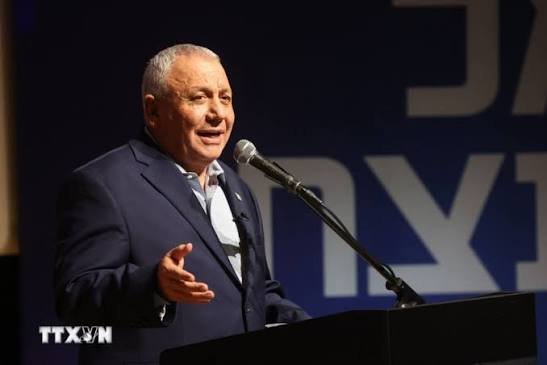
- Gadi Eisenkot Government formation is officially underway in Israel after President Isaac Herzog tasked the former military chief to assemble a new coalition following a deadlocked election.
- Benjamin Netanyahu faces the end of his decades-long political era as his right-wing bloc fell short of a parliamentary majority, paving the way for a major shift in Jerusalem.
- International and regional analysts caution that despite the historic change in executive leadership, Israel’s deeply entrenched security and regional policies toward Palestinians are unlikely to undergo a fundamental reversal.
The political architecture of Israel stands at a historic precipice. Following a fiercely contested and deadlocked general election, Israeli President Isaac Herzog has officially tasked opposition leader and former military chief Gadi Eisenkot with forming the country’s next government.
This pivotal development signals the potential twilight of Benjamin Netanyahu’s nearly two-decade grip on power, interrupting an era that has profoundly defined Israel’s domestic trajectory and regional posture.
Yet, as political analysts and international observers dissect the shifting dynamics in Jerusalem, a sobering consensus emerges: while a change in the executive office is increasingly likely, a fundamental shift in Israel’s core regional policies remains far from guaranteed.
The Mandate and the Numbers Game
Neither Netanyahu’s right-wing bloc nor Eisenkot’s centrist Yashar alliance managed to capture an outright majority in the 120-seat Knesset during the October 27 polls, where Netanyahu’s bloc secured 53 seats against Eisenkot’s 48. However, the path to government formation is dictated less by raw bloc size and more by parliamentary recommendations.
Eisenkot Set to Form Israel’s Next Government With Arab Support, but Fragile Coalition Looms
In a decisive political maneuver, Arab-Israeli parties—including the United Arab List (Raam) and other factions whose combined seat count surged to 19 amid fierce backlash against Netanyahu’s hard-right administration—stepped forward to nominate Eisenkot. This crucial backing pushed Eisenkot’s recommendation total to 67, eclipsing Netanyahu’s 46 and forcing President Herzog’s hand.
Dr. Sabri Saidam, a member of the Central Council of the PLO, offered a sharp assessment of the unfolding political reality in an interview with The Islamabad Telegraph.
“It’s highly likely that Eisenkot will form the next government with no role for Netanyahu,” Dr. Saidam noted.
READ MORE: Israel’s president tasks opposition leader Eisenkot with forming government
“There is no clear indication that the coming government is to reverse policies deeply entrenched by Netanyahu against Palestinians. However, it will certainly be a change from the trend that has been going on for the last 30 years,” Saidam concluded.
Gadi Eisenkot Government: Navigating a Fractured Parliament
Eisenkot now faces a grueling 28-day window—with a potential 14-day extension—to assemble a viable coalition. The hurdles before him are immense. To bridge the gap, Eisenkot must navigate a deeply fragmented political landscape spanning centrist, left-wing, right-wing, and Arab factions.
For months, Netanyahu has aggressively warned the Israeli public against any reliance on Arab-Israeli lawmakers, even baselessly alleging electoral manipulation and calling on intelligence agency Shin Bet to investigate unfounded fraud claims—allegations that Eisenkot fiercely condemned as a “pogrom against democracy.” Simultaneously, some elements within the Zionist opposition have historically balked at forming coalitions dependent on non-Jewish political backing.
President Herzog, acknowledging the high stakes and deep ideological divides, urged political actors to exercise creativity and pragmatism. “I am not asking anyone to give up their core values,” Herzog stated upon receiving the official results. “But in the current reality, in which there is no clear winner after the elections, I ask for originality and creativity, courage and goodwill, so that the State of Israel emerges the winner.”
The Shadow of Regional Policy Continuity
The core question resonating across international capitals is not merely whether Netanyahu will vacate the prime minister’s office, but whether his departure will alter Israel’s strategic doctrine. Netanyahu, Israel’s longest-serving leader, faces mounting legal battles, including corruption charges and the looming threat of imprisonment should he lose the political immunity afforded by high office. In the final stretch of his campaign, he aggressively leveraged security narratives, warning of potential escalations and advocating for a hardline posture.
Eisenkot, a former Chief of the General Staff of the Israel Defense Forces (IDF), brings a formidable military background to the premiership. On election night, he took the extraordinary step of warning the military leadership against obeying politically motivated directives from a caretaker administration intent on serving personal agendas.
Despite his reputation as a pragmatic strategist distinct from Netanyahu’s populist-nationalist brand, political scientists caution against expecting a dramatic softening toward the Palestinian question or a rollback of entrenched security policies. Decades of institutional momentum, combined with the profound trauma and political fallout of the October 7, 2023 attacks, have hardened the Israeli security consensus across the political spectrum. While an Eisenkot-led administration would undoubtedly dismantle the toxic rhetorical polarization championed by Netanyahu’s far-right coalition partners—such as Religious Zionism—the structural pillars of Israel’s regional strategy, border enforcement, and defense policies are expected to remain largely intact.
A Watershed Moment Without a Paradigm Shift
As Eisenkot begins the arduous task of coalition-building, Israel stands at a fascinating crossroads. The removal of Netanyahu would close a monumental, polarizing chapter in modern Middle Eastern history, offering a desperately needed easing of domestic societal fractures and institutional friction.
Yet, as regional stakeholders and Palestinian leadership observe from across the border, structural transformation rarely follows mere changes in personnel. Eisenkot may well succeed in ousting the longest-serving premier and restoring a degree of conventional governance to Jerusalem, but navigating the labyrinth of regional peace will require a diplomatic paradigm shift that goes far beyond ending the Netanyahu era.