



-
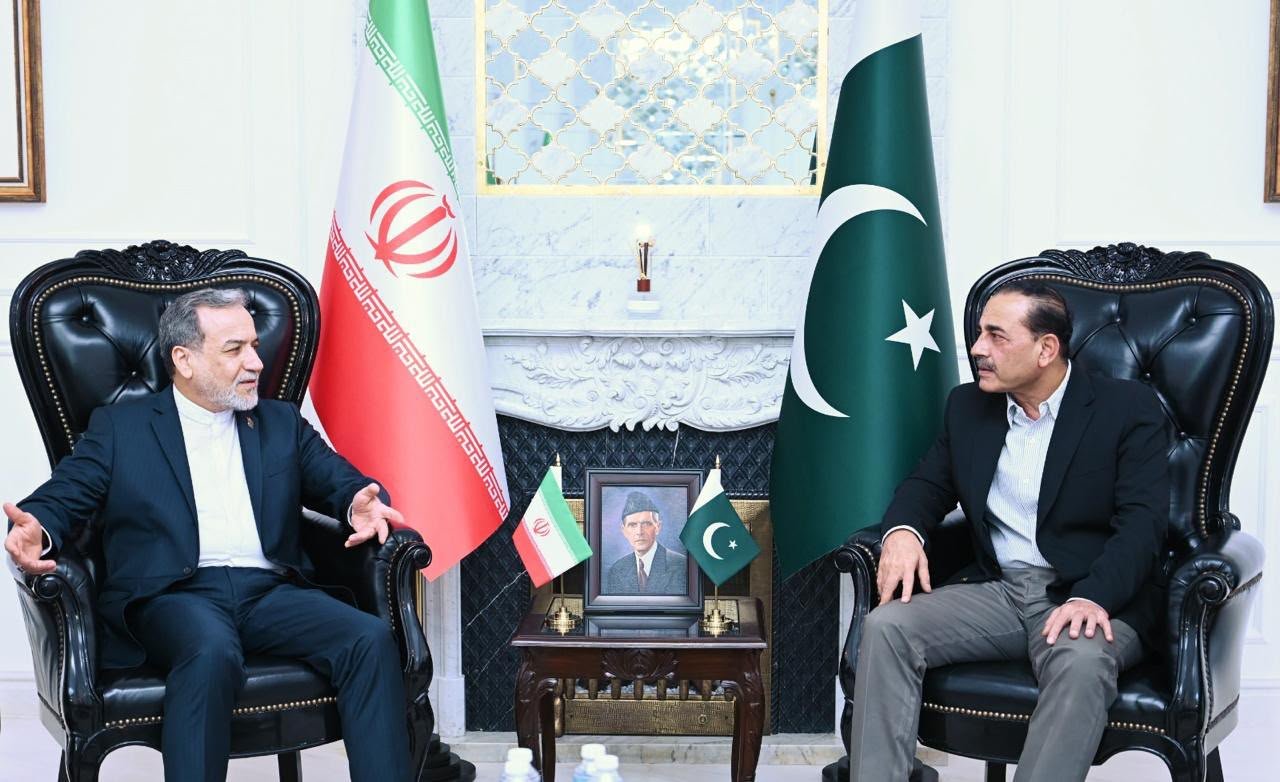
Field Marshal Asim Munir: Iranian Foreign Minister Seyed Abbas Araghchi met Field Marshal Asim Munir in Rawalpindi to advance Pakistan-led peace efforts aimed at ending the US-Israel war on Iran.
-
Shuttle Diplomacy & Escort: Field Marshal Munir’s two recent visits to Tehran and decision to provide a PAF fighter jet escort for visiting Iranian leaders cemented Islamabad’s role as the primary peace broker.
-
Strait of Hormuz Breakthrough: Backed by the 10-nation ECO bloc in Islamabad, Iran signaled readiness to reopen the vital Strait of Hormuz within 48 hours if Washington meets key ceasefire conditions.
RAWALPINDI: In a high-stakes diplomatic maneuver that underscores Pakistan’s emergence as the indispensable architect of regional peace, a high-level Iranian delegation led by Foreign Minister Seyed Abbas Araghchi called on Field Marshal Syed Asim Munir, NI(M), HJ, Chief of Army Staff and Chief of Defence Forces (COAS & CDF), at the Army Command Headquarters in Rawalpindi on Monday, November 16.
The pivotal evening sit-down, held on the sidelines of the two-day Economic Cooperation Organization (ECO) summit in Islamabad, focused intensely on de-escalating the devastating conflict between Iran and the US-Israel coalition, alongside broader regional security dynamics and bilateral cooperation.
During the candid exchanges, Field Marshal Asim Munir emphasized that sustained engagement, deep mutual trust, and seamless coordination between the two brotherly neighbors remain the only viable path toward enduring regional stability.
READ MORE: Pakistan’s High-Stakes Gambit: Can Asim Munir Make a U.S.-Iran Deal Possible?
Foreign Minister Araghchi, in turn, lauded Pakistan’s proactive, stabilizing diplomacy and reaffirmed Tehran’s commitment to deepening strategic ties with Islamabad.
Field Marshal Asim Munir: The Quiet Architect of De-escalation
Since hostilities erupted between the US-Israel alliance and Iran in February, Islamabad has steadily positioned itself as the primary diplomatic bridge between warring adversaries. At the center of this delicate mediation is Field Marshal Asim Munir, whose personal shuttle diplomacy and strategic foresight have kept vital channels of communication open when global diplomacy appeared entirely paralyzed.
Demonstrating extraordinary hands-on commitment, Pakistan’s military chief traveled to Iran twice last month alone, engaging directly with Tehran’s top brass to hammer out viable frameworks for a permanent ceasefire.
This personal investment builds upon a bold precedent set earlier in the crisis. When Iranian leaders first traveled to Islamabad for critical peace talks amid heightened regional threats, it was Field Marshal Munir who authorized and provided an elite Pakistan Air Force (PAF) fighter jet escort to guarantee the Iranian delegation’s safe passage through Pakistani airspace.
READ NEXT: Iran’s Araghchi says he discussed regional peace, security with Pakistan’s army chief
That decisive display of military hospitality and sovereign strength not only cemented deep trust with Tehran but signaled to the world that Pakistan possesses both the capability and the resolve to safeguard peace negotiations in its backyard.
Unlocking the Strait of Hormuz
The momentum generated in Rawalpindi is already yielding tangible diplomatic breakthroughs. While in Islamabad, Araghchi confirmed that the 10-nation ECO bloc has thrown its weight behind Tehran’s proposed roadmap to reopen the Strait of Hormuz—a vital global energy artery blockaded by Iran since the outbreak of the war.
Tehran has signaled its readiness to reopen the strategic waterway within just 48 hours, significantly accelerating its earlier one-week timeline, provided Washington meets core conditions including the release of frozen Iranian assets, targeted sanctions relief, and the lifting of the US naval blockade on Iranian ports.
Alongside his pivotal consultation with Field Marshal Munir, Araghchi held extensive talks with Prime Minister Shehbaz Sharif and Deputy Prime Minister and Foreign Minister Ishaq Dar. Speaking at the conclusion of the ECO summit, Dar expressed optimism regarding the revival of the Islamabad MoU—the landmark interim peace accord brokered between Washington and Tehran in Pakistan’s capital back in June before subsequent setbacks stalled its implementation. “Let’s hope for the best, we haven’t given up hope,” Dar remarked, echoing Islamabad’s resilient diplomatic posture.
Regional Momentum Continues
Carrying the diplomatic momentum from Rawalpindi and Islamabad forward, Foreign Minister Araghchi departed for Muscat on Tuesday morning, meeting with his Omani counterpart Badr al-Busaidi to further align regional consensus on preserving shared security interests.
Yet, as regional capitals rally to avert a wider catastrophe, global observers recognize that the road to peace runs directly through Rawalpindi and Islamabad. Through a combination of decisive military deterrence, trusted personal diplomacy, and unwavering commitment to regional stability, Field Marshal Asim Munir and Pakistan’s leadership have proven themselves to be the central force pulling the region back from the brink.