



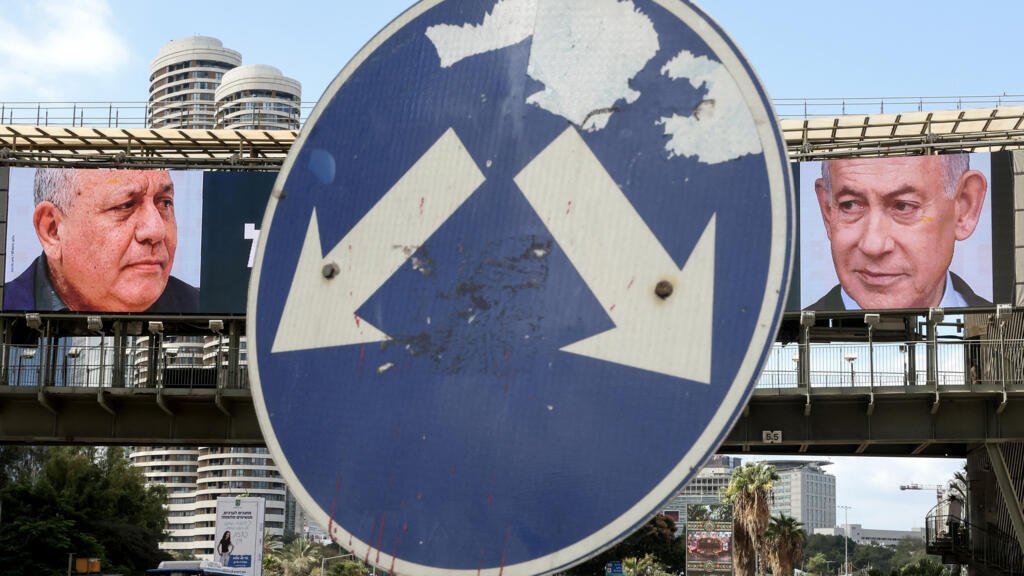
- Gadi Eisenkot Israel government prospects have improved after United Torah Judaism declined to recommend Benjamin Netanyahu for another term.
- Arab parties’ record 19 seats could provide the parliamentary support needed to install an Eisenkot-led administration.
- A government dependent on ideologically divided parties could survive its full term but struggle to pass major legislation.
Israel is moving towards a potentially historic political transition as opposition leader Gadi Eisenkot emerges as the strongest candidate to form the country’s next government, with Arab parties expected to provide the parliamentary support needed to end Benjamin Netanyahu’s long hold on power. However, the emerging political arrangement could prove considerably more fragile than its initial electoral momentum suggests, leaving Eisenkot with the difficult task of maintaining an ideologically divided coalition while attempting to govern a country facing deep domestic divisions and continuing regional security challenges.
A major setback for Netanyahu came on Thursday when United Torah Judaism, an ultra-Orthodox party that had supported him through the previous five elections, declined to recommend him for another term as prime minister during consultations with President Isaac Herzog. Although the party also refused to endorse Eisenkot, its decision weakened Netanyahu’s prospects of securing the presidential mandate to form the next government.
United Torah Judaism, which secured seven seats in the 120-member Knesset, informed Herzog that it would not recommend any candidate. Its decision is politically significant because the party has long been a dependable component of Netanyahu’s governing alliances. Its withdrawal of formal support suggests that even traditional partners are increasingly unwilling to provide him with an unconditional political lifeline.
READ NEXT: Israel’s Election Deadlock Puts Netanyahu’s Regional Strategy Under Pressure
The development has strengthened Eisenkot’s position at a critical moment. Netanyahu’s Likud-led bloc secured 53 seats, while Eisenkot’s opposition alliance won 48. Neither reached the 61 seats required for a parliamentary majority. However, Arab parties, which collectively secured a record 19 seats, have indicated their willingness to cooperate with the opposition to prevent Netanyahu from returning to office.
Arab support could therefore become the decisive factor in determining Israel’s next political leadership.
The Arab Joint List, led by Yousef Jabareen, and Mansour Abbas’s Ra’am party have signalled that they are prepared to support an alternative government, although their willingness to join its cabinet remains a separate question. Jabareen has indicated that his party could support an Eisenkot-led administration in parliamentary votes without becoming a formal coalition partner. Abbas, meanwhile, has expressed openness to political cooperation, potentially giving Eisenkot additional parliamentary room.
READ MORE: Netanyahu loses religious party’s support as rival tipped to form government
This distinction matters. Eisenkot may not need to incorporate all Arab parties into his cabinet if their members agree to support his government on confidence motions and essential parliamentary votes. Such an arrangement could allow him to take office without securing a conventional 61-seat coalition.
For Israel, this would represent a significant political development. Arab citizens constitute approximately one-fifth of the country’s population, yet their political representation has historically remained marginal to national governing arrangements. Ra’am’s participation in the Bennett-Lapid coalition in 2021 demonstrated that Arab parliamentary support could influence government formation. However, that coalition collapsed after less than two years, illustrating the difficulties of sustaining alliances across deeply conflicting political positions.
Eisenkot now faces a comparable challenge, potentially on a larger scale.
Netanyahu Flydubai Flight: 9/11 Warning Sparks Political Storm in Israel
His political appeal has rested partly on presenting himself as a credible alternative to Netanyahu, combining military experience with a centre-right political outlook. As a former Israeli military chief, he has sought to attract voters concerned about national security, the October 7, 2023, Hamas attack and the consequences of prolonged military campaigns in Gaza, Lebanon and Iran.
Yet his dependence on Arab parliamentary support creates an uncomfortable political contradiction. Some of his Jewish political allies have previously opposed forming a government with Arab parties, while Netanyahu and his supporters have repeatedly portrayed such cooperation as dangerous to Israel’s national interests.
Eisenkot must therefore balance two competing political requirements: securing Arab support to enter government and retaining enough Jewish parliamentary backing to ensure that his administration survives.
The military-service exemption dispute could become another major obstacle. United Torah Judaism and Shas have consistently sought to preserve exemptions for ultra-Orthodox religious students. Netanyahu maintained the existing arrangement but stopped short of establishing a permanent legislative settlement, amid growing resentment among Israelis whose reservists have repeatedly been called up for military service.
Eisenkot, by contrast, has advocated ending broad exemptions and introducing greater equality in military obligations. This position could make negotiations with ultra-Orthodox parties particularly difficult, even if some of their lawmakers eventually become willing to cooperate with a new administration.
The greatest challenge for Eisenkot may not be forming a government but making it govern effectively.
A coalition dependent on Arab support, centre-left parties and centre-right politicians will have considerable difficulty agreeing on legislation involving military service, Palestinian statehood, security policy, settlements and relations with neighbouring countries. These are not ordinary parliamentary disagreements; they concern fundamental questions about Israel’s national identity, security priorities and political future.
Fragility, however, does not guarantee an early collapse. If Arab lawmakers remain committed to blocking Netanyahu’s return and Jewish partners prioritise political change, Eisenkot could complete the term. But agreement on legislation is another matter: parties may cooperate to remove him while disagreeing sharply over military service, the Palestinians and Israel’s regional policy and budget priorities.
The question of whether Eisenkot can complete a full parliamentary term will consequently depend less on the initial enthusiasm surrounding Netanyahu’s departure than on his ability to manage competing political interests. He could survive through compromise, selective legislative agreements and a shared determination among his partners to prevent another Netanyahu government.
For Netanyahu, losing the premiership would mark a major political reversal after years of dominating Israeli politics. His traditional alliances have begun showing signs of strain, while Arab parties have emerged as potential kingmakers rather than peripheral parliamentary actors.
For Eisenkot, however, victory in government formation would be only the beginning. He may succeed in assembling the numbers necessary to take office, but governing Israel through a coalition built on political necessity rather than ideological agreement will be an entirely different challenge.
The next Israeli government may therefore survive longer than many initially expect, but its capacity to deliver substantial legislative change will remain uncertain. Netanyahu could lose power, yet the political system he leaves behind will make governing without him no less complicated.