



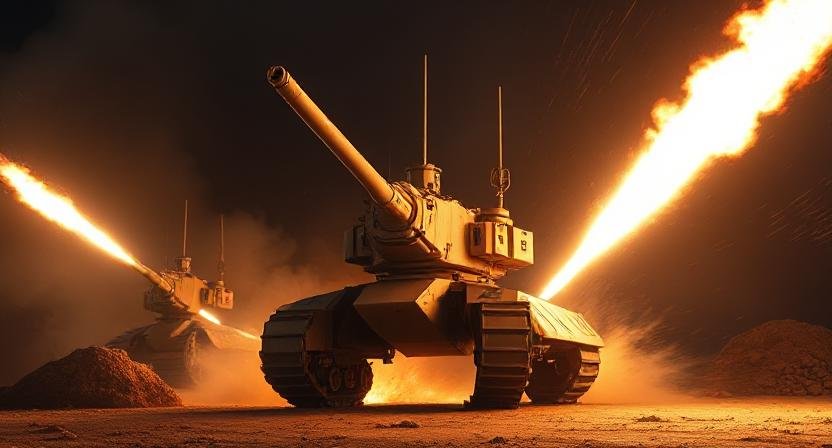
- Germany prioritized over Switzerland for Patriot missile deliveries to enable immediate transfer of two systems to Ukraine amid rising Russian strikes.
- Trump administration reshapes NATO aid model, requiring allies to pay for U.S.-made weapons they send to Kyiv, marking a transactional shift in support.
- Putin warns of retaliation, saying countries supplying Ukraine could become legitimate military targets if Western weapons are used inside Russian territory.
- European experts fear strategic vulnerability, with delays in Patriot replacements raising concerns about defense gaps across NATO states.
In a bold realignment of Western arms logistics, the Trump administration has fast-tracked the delivery of Patriot missile systems to Germany, allowing Berlin to donate two of its own batteries to Ukraine—immediately reinforcing Kyiv’s ability to defend against intensifying Russian missile and drone barrages. This Pentagon-orchestrated deal, which bypasses Switzerland in the production queue, is being hailed as a high-stakes geopolitical shuffle with both strategic urgency and long-term consequences.
Experts say the U.S. move may shift the European security balance, signal renewed Western resolve to Moscow, and inject new momentum into Ukraine’s defensive posture—all while feeding a combustible narrative in Vladimir Putin’s Kremlin.
EXCLUSIVE: Trump Greenlights Nvidia’s Return to China After CEO’s Personal Plea
Why Patriot Deliveries Matter
Patriot systems, manufactured by RTX (formerly Raytheon), are among the few defense tools in Ukraine’s arsenal that can intercept Russian ballistic and cruise missiles with high reliability. Kyiv currently operates a limited number of Patriot batteries, contributed by the U.S., Germany, and the Netherlands. However, Ukraine’s military leaders have consistently pleaded for more.
READ MORE: Inside the Moscow-Beijing Axis: How China and Russia are Coordinating to Defy U.S. Power and Shape the Endgame in Ukraine
“The battlefield clock doesn’t wait for production timelines,” said Dr. Alina Polyakova, president of the Center for European Policy Analysis. “These systems aren’t just symbolic—they are what’s keeping Ukrainian cities standing today.”
Each Patriot battery includes complex radar systems, multiple launchers, and interceptor missiles, making them both expensive and difficult to mass-produce. With production timelines stretching into 2028 for some buyers, such as Switzerland, Washington’s decision to reprioritize delivery to Germany has come at a cost to other allies. But the strategic imperative—saving Ukrainian lives and cities—has taken precedence.
Trump’s Calculated Gamble
This is the first instance of the Trump administration facilitating a redistribution of advanced weapons to Ukraine since the former president’s recent pivot to support Kyiv, provided NATO allies foot the bill. Under the new framework, allies will donate hardware to Ukraine and be backfilled by the U.S. defense industry, with Europe absorbing much of the cost.
ALSO READ: U.S. Reshuffles Arms Deliveries to Free Up More Patriots for Ukraine
President Trump has cast the new plan as a smart business deal: “We’re sending them weapons, and they’re going to pay for them. The U.S. taxpayers won’t be footing the bill,” he said this week while meeting NATO Secretary-General Mark Rutte in the Oval Office.
Defense Secretary Pete Hegseth, who hosted German Defense Minister Boris Pistorius in Washington earlier this week, confirmed that Germany would be the first country to receive replacement Patriots under the new policy. Several other nations, including the U.K., Finland, Norway, Denmark, Sweden, and the Netherlands, are reportedly preparing to join a broader replenishment initiative.
“We are essentially crowdsourcing Ukraine’s air defense while using American production capacity as the backbone,” said Lt. Gen. (Ret.) Ben Hodges, former commanding general of U.S. Army Europe. “It’s a significant shift in burden-sharing that reflects Trump’s transactional approach to foreign policy.”
Putin’s Ire—and Warning
For Russian President Vladimir Putin, the rerouting of Patriots—and the broader Western consensus it signals—is an ominous development. The Kremlin has already issued veiled threats to Western capitals, warning that “countries enabling Ukrainian attacks deep inside Russia” may themselves become targets.
“Moscow considers itself entitled to strike military facilities in those countries,” Russian Foreign Ministry spokeswoman Maria Zakharova declared Thursday. “Further escalation will be met with equivalent force.”
Analysts suggest that Moscow will seek to exploit the 50-day deadline Trump recently gave Russia to agree to new negotiations—or face severe U.S. sanctions and tariffs—by intensifying attacks on Ukraine’s front lines and urban centers before any meaningful delivery of new weapons.
“Fifty days is too long,” said Mick Mulroy, former U.S. Deputy Assistant Secretary of Defense and a CIA paramilitary operations officer. “Russia is going to do everything it can in that window. Expect more missile strikes, more ground assaults, and more disinformation.”
European Strategic Calculations
For European countries, the redistribution of Patriot systems is not just about aiding Ukraine—it’s also about reinforcing their own defenses against a potential spillover of conflict. Germany, in particular, has been at the center of NATO’s evolving air defense architecture, and Berlin’s willingness to give up two Patriots is being watched closely by its neighbors.
“Europe needs credible air defense as part of deterrence,” said Dr. Claudia Major, a senior fellow at the German Institute for International and Security Affairs. “If Germany gives up Patriots, it must get them back quickly, or else face a gap in homeland security.”
The Swiss, who had expected to receive five Patriots between 2026 and 2028, expressed frustration at the U.S. decision. Their Ministry of Defense said it had been informed that deliveries were now delayed indefinitely. The Swiss position highlights growing tensions among non-NATO buyers who fear being deprioritized as war needs escalate.
Will It Change the War?
Military strategists agree that Ukraine’s long-range defense capabilities—particularly Patriot systems—could significantly reduce the impact of Russian strikes on infrastructure and civilian populations. But they also caution that no amount of defensive aid will turn the tide unless matched with offensive support and sufficient manpower.
Meanwhile, backroom diplomacy continues. A high-level meeting between NATO defense chiefs, led by Gen. Alexus Grynkewich—Supreme Allied Commander Europe—is scheduled next week to finalize additional commitments.
For now, the Patriots are in motion. Germany will send two to Ukraine. The U.S. will replace them. And Trump’s Pentagon is working on similar swaps with other NATO allies.
Whether it deters Putin—or provokes him further—remains to be seen.