



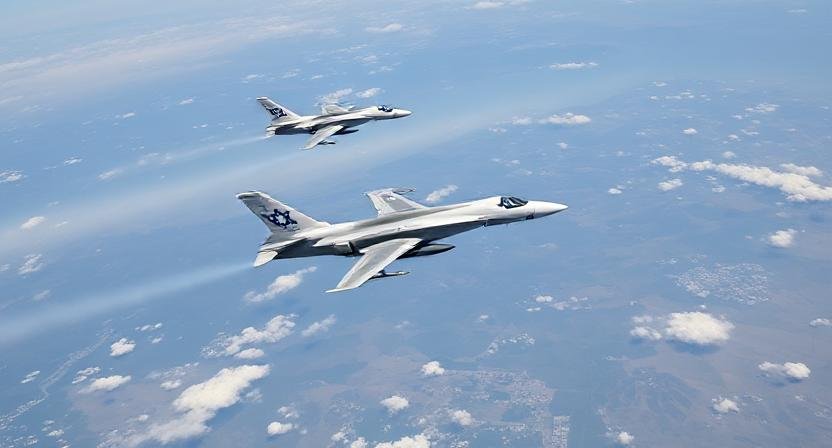
- Israeli intelligence used hacked smartphones of Iranian security guards to track top leaders during the June Iran-Israel war.
- Precision strikes killed over 30 senior commanders and 13 nuclear scientists in the opening days of the conflict.
- Tehran admits devastating security lapses, launches arrests, and bans smartphones for senior officials.
- Modern warfare increasingly depends on signals intelligence, satellites, and digital surveillance rather than boots on the ground.
It began with a single ping—a harmless digital whisper from a cellphone in the outskirts of Tehran. Yet that signal, beamed to the sky by a careless bodyguard, would guide Israeli warplanes to one of the most secretive bunkers in the Islamic Republic of Iran. Inside sat the country’s top leadership: the president, the heads of intelligence, the ministers of defense and interior, senior military commanders, and the Revolutionary Guards elite.
What happened next was straight out of a spy thriller.
On June 16, as Israel’s missiles roared across Iranian skies for the fourth consecutive day, six precision bombs slammed into the earth above the bunker, sealing its exits, choking the air with dust, and killing guards posted outside. The Iranian president himself crawled through the debris with a shrapnel wound in his leg, dragging fellow ministers toward a narrow sliver of daylight.
No Israeli soldier stepped foot on Iranian soil. No Mossad agent was seen lurking in the shadows. The attack was executed entirely through invisible wires of surveillance, through the very devices Iranians carried in their pockets.
Despite Israeli and U.S. Blows, Iran Rebuilds Militia Arsenal Across the Middle East
This was not war in the traditional sense. This was technological asphyxiation—a ruthless convergence of satellites, artificial intelligence, and cyber-espionage that has turned Iran into a chessboard where every move is tracked, every call recorded, every signal weaponized.
And it all began with a phone.
The Anatomy of an Invisible War
Iran and Israel have been locked in a shadow war for decades, trading blows through proxies, assassinations, and cyberattacks. But the June conflict pushed this war into uncharted territory.
READ MORE:
Israeli officials have since admitted—off the record—that the entire operation was codenamed Red Wedding, an ominous nod to the blood-soaked massacre in Game of Thrones. The goal was simple yet audacious: eliminate Iran’s top military and nuclear brains within the opening days of the war before they could retreat underground or reorganize defenses.
In the first week alone, at least 13 senior nuclear scientists and over 30 military commanders were assassinated. Among them was General Amir Ali Hajizadeh, the powerful head of Iran’s Aerospace Force, whose death sent shockwaves through the Revolutionary Guards.
Iranian investigators have pieced together what happened: the assassinations were enabled by a years-long campaign in which Israeli intelligence silently monitored the digital footprints of Iranian officials, especially their security detail. While ministers and commanders often left phones behind, their drivers, aides, and guards did not. Those phones became homing beacons. Some even betrayed locations through careless social media posts—a photo outside a government compound, a status update from a supposedly secret meeting.
In modern warfare, it seems, you don’t need moles inside a defense ministry when a guard’s smartphone is broadcasting his location to the world.
The Great Iranian Breach
Iran’s Supreme National Security Council, humiliated by the June 16 attack, has since admitted that its security protocols were riddled with loopholes. Dozens of military and intelligence officials have been arrested or placed under house arrest on suspicion of leaking information to Israel. One nuclear scientist was executed for allegedly aiding Mossad.
But the truth may be far simpler, and far more alarming: it wasn’t necessarily human betrayal that doomed Iran’s top brass. It was the devices in their pockets.
As one Iranian analyst put it, “Israel didn’t need to plant spies when we were carrying tracking devices voluntarily.”
Indeed, Israel’s technological reach inside Iran appears staggering. Security officials in Tehran have confirmed that the June bombings were guided by real-time signals intelligence fused with satellite surveillance, allowing Israeli jets to strike bunkers hidden deep beneath mountain slopes.
It was a masterclass in 21st-century warfare—remote, precise, deniable.
The War Nobody Saw Coming
While the world’s attention was fixed on Gaza, the Iran-Israel conflict exploded almost overnight. Israel accused Tehran of arming militias across the region; Iran vowed “severe retaliation” after airstrikes leveled parts of its nuclear infrastructure.
But what shocked observers was the speed with which Israel dismantled Iran’s military hierarchy. Within 72 hours, Iranian air defense networks were crippled, command centers destroyed, and communication lines severed. Analysts in Washington and Moscow openly wondered whether Iran had been fighting with its eyes shut.
A former Pentagon official told The Islamabad Telegraph: “It wasn’t just bombs falling from the sky. It was a complete collapse of Iran’s security ecosystem. Israel knew where everyone was, all the time.”
The Smartphone: A Soldier’s Best Friend—or Worst Enemy
The Iran-Israel war has now exposed a terrifying truth: in the digital age, the most dangerous spy in any room may not be a human at all—it may be the phone in his pocket.
Smart devices, with their GPS trackers, encrypted messengers, and always-on microphones, have turned entire militaries into walking targets. A single careless selfie outside a restricted facility can pinpoint a location for enemy missiles. A routine call can betray troop movements.
This is not hypothetical. In Ukraine, Russian soldiers learned this lesson brutally in 2022 when hundreds were killed after geolocated phone calls led Ukrainian artillery to their base. Now Iran’s elite guards have suffered the same fate—because someone, somewhere, forgot to switch off a phone.
Cybersecurity experts warn that modern wars will increasingly hinge not just on tanks or fighter jets, but on who controls the electromagnetic spectrum. Satellites, drones, spyware, and signal interceptors will decide victories long before boots hit the ground.
Tehran’s Moment of Reckoning
Iran is now in the midst of a sweeping security overhaul. Smartphones have been banned for senior officials, encrypted walkie-talkies are replacing messaging apps, and entire military units are under investigation for potential digital leaks.
But the damage is done. The June war has decapitated much of Iran’s strategic command. It has shown the world—and especially Iran’s adversaries—that even the most secretive regime can be laid bare if its digital hygiene is sloppy.
As one Iranian commander grimly admitted after surviving the bunker bombing: “We thought spies wear disguises. We didn’t realize they come as apps on our phones.”
The Future of Invisible Wars
The Iran-Israel conflict is far from over. Tehran will adapt, retaliate, and perhaps even embrace the same technological tools against its enemies. But June 16 will be remembered as the day modern warfare changed forever in the Middle East—a day when missiles followed phone signals, when a superpower’s secrets unraveled through its own devices, and when the boundary between soldier and civilian, between battlefield and home, blurred beyond recognition.
Because in this new era of invisible wars, victory may belong not to the side with the biggest bombs, but to the side that owns the data.