



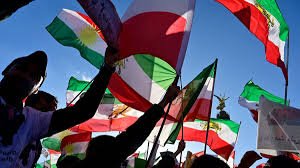
- The U.N. votes to reinstate sanctions on Iran after a failed Russian-Chinese bid.
- Sanctions history shows cycles of diplomacy and betrayal since 1979.
- Tehran vows defiance, recalls ambassadors, and warns of escalation.
- Future risks include nuclear brinkmanship, regional proxy wars, and a fractured global order.
The United Nations Security Council’s decision this week to reject a Russian-Chinese bid to delay sanctions on Iran is more than a procedural vote. It is a statement about the global balance of power and the persistence of old battles dressed in new clothes. On Saturday night, decades of diplomacy, mistrust, and brinkmanship will culminate in the reimposition of sanctions that Tehran insists are illegitimate, while the West argues they are indispensable to stopping Iran’s nuclear ambitions.
The return of sanctions—arms embargoes, uranium enrichment bans, asset freezes, and restrictions on ballistic missile activity—carries immediate consequences for Iran’s fragile economy. But more importantly, it raises questions about whether sanctions still work as a tool of diplomacy, or whether they have become blunt instruments of coercion that fuel conflict rather than resolve it.
The Past: Sanctions as Iran’s Permanent Shadow
Sanctions on Iran are not new; they are part of the country’s political DNA since 1979. From U.S. embargoes after the hostage crisis to sweeping U.N. restrictions in the early 2000s, Iran has been trapped in a cycle of isolation and survival.
Hezbollah’s Defiance Shapes the Future of the Gaza-Israel Conflict
The 2015 Joint Comprehensive Plan of Action (JCPOA) briefly changed that trajectory, lifting sanctions in exchange for limits on Iran’s nuclear program. For a moment, hope flickered—airports bustled with Western businessmen, and Iran saw the prospect of reintegration into the global economy. But the dream was short-lived. In 2018, then-President Donald Trump torched the agreement, reimposing U.S. sanctions and effectively crippling Iran’s economy.
That moment cemented a bitter Iranian worldview: that the West cannot be trusted, and diplomacy is a tool used until the hammer falls again.
The Present: Snapback and Standoff
Now, the “snapback” mechanism embedded in Resolution 2231 has been triggered by European powers—the so-called E3 of France, Britain, and Germany. Their argument is straightforward: Iran violated the nuclear deal by expanding its enriched uranium stockpile and restricting U.N. inspections. Tehran counters that it was Washington, not Iran, that buried diplomacy in 2018.
READ MORE: IAEA Chief Pressures Iran to Allow Nuclear Inspections After U.S.-Israel Strikes, Warns Time Is Running Out
At the Security Council, Russia and China fought to buy Tehran six more months. But with only four votes in favor, their draft resolution collapsed. The symbolism is telling: the West can still marshal numbers against Moscow and Beijing, even amid the broader Ukraine war and global fractures.
Iran’s response has been predictably furious. Deputy Foreign Minister Abbas Araghchi accused the U.S. of “betraying diplomacy” and the Europeans of “burying it.” The government recalled ambassadors from London, Paris, and Berlin. President Masoud Pezeshkian, however, struck a careful note: Iran will not leave the Non-Proliferation Treaty, insisting “Iran will never seek nuclear weapons.”
ALSO READ: UN sanctions on Iran loom after vote to delay fails
The message is clear: Tehran wants to appear reasonable, but it is preparing for confrontation.
The Future: Escalation or Reinvention of Diplomacy?
Sanctions are scheduled to return at 8 p.m. EDT on Saturday. The immediate effect will be economic—further choking Iran’s energy sector, cutting off international financing, and hardening its domestic politics. But the deeper consequences will unfold in three dangerous ways:
-
Regional Escalation: Iran’s proxies in Lebanon, Syria, Iraq, and Yemen may intensify attacks on Western and Israeli targets to retaliate. Hezbollah’s silence this week may be temporary.
-
Nuclear Brinkmanship: Tehran could accelerate its uranium enrichment, daring the West to act militarily. Israeli Prime Minister Netanyahu’s warning that “Iran’s stockpiles must be eliminated” is a chilling hint of preemptive strikes ahead.
-
Global Divide: Russia and China will use Iran’s plight as ammunition against Western “double standards,” potentially deepening an alternative financial and security bloc beyond U.N. control.
The risk is not just an isolated clash over Iran, but a widening rift in the global order where sanctions become a trigger for blocs to harden rather than compromise.
Do Sanctions Still Work?
Critics argue sanctions on Iran have produced more suffering than security. Inflation, unemployment, and shortages have crushed ordinary Iranians, while hardliners in Tehran have only grown stronger. The Revolutionary Guards profit from black markets, while reformists are discredited as naïve.
Yet, sanctions are not toothless. Iran’s economy has shrunk dramatically since 2018. Oil exports remain restricted, and access to foreign reserves is limited. The strategy is clear: starve Iran of the resources needed to advance its nuclear and military ambitions.
The open question is whether sanctions will force Iran back to the negotiating table—or push it to the point of no return.
The Road Ahead: Sanctions as Global Test Case
This snapback is more than about Iran. It is about whether the U.N. Security Council still matters in a fractured world. Can multilateralism enforce rules, or will great powers bypass it to pursue unilateral agendas?
For the West, reimposing sanctions is about credibility—about showing that red lines mean something. For Iran, it is about sovereignty—about resisting what it calls an illegitimate stranglehold. For Russia and China, it is about undermining Western dominance in global institutions.
History shows sanctions alone rarely break a nation’s will. But combined with diplomacy, they can create space for negotiation. The tragedy of Iran sanctions is that both sides have treated them as weapons, not as leverage for compromise.
If diplomacy is not revived soon, sanctions will become the opening act of a much darker play: confrontation, escalation, and possibly conflict.
The U.N. sanctions set to return this weekend are not merely about uranium enrichment or arms embargoes. They are about the survival of a global order that is fraying at the edges. Past failures, present anger, and future dangers all converge here.
Whether sanctions prove to be a bridge to dialogue or a trigger for war will depend not just on Tehran’s choices, but on whether Washington, Brussels, Moscow, and Beijing see diplomacy as expendable—or as the last lifeline left.