



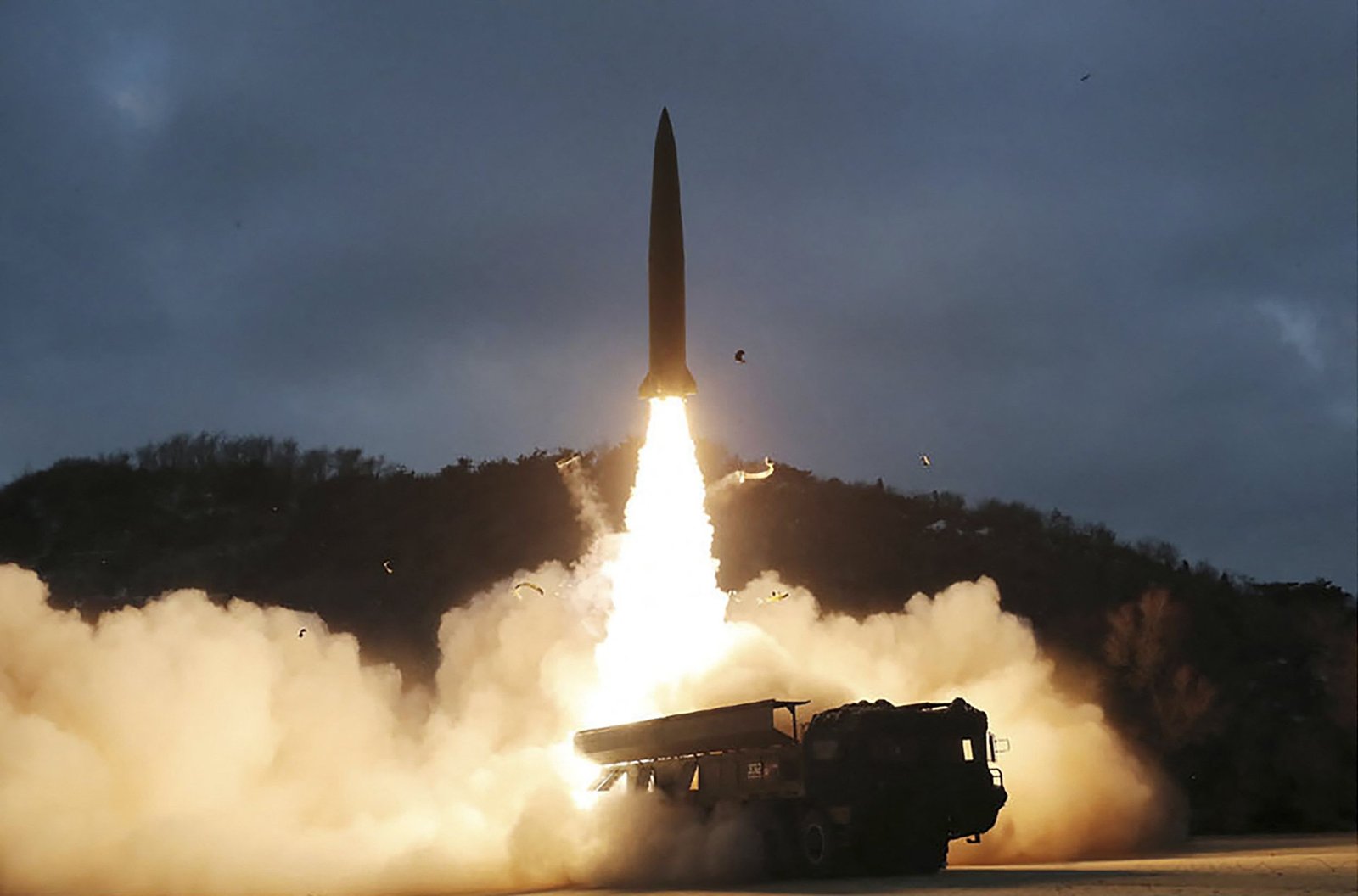
- North Korea’s missile launch is a calculated warning timed precisely before Trump’s South Korea visit.
- Kim Jong Un seeks to reassert Pyongyang’s relevance ahead of major APEC diplomacy involving the U.S., China, and South Korea.
- Trump’s personal rapport with Kim from past summits remains a potential backchannel for renewed dialogue.
- The launch signals that North Korea’s demand for recognition as a nuclear power remains non-negotiable.
Editor’s Note — Islamabad Telegraph Exclusive
This analysis is part of The Islamabad Telegraph’s continuing coverage of U.S.-Asia relations and the evolving security dynamics in the Korean Peninsula. As Washington recalibrates its Indo-Pacific strategy under President Donald Trump, Pyongyang’s latest missile provocations underscore a familiar yet dangerous dance of power, diplomacy, and deterrence. This exclusive op-ed offers a critical perspective on how Trump’s return to the global stage could once again reshape the fragile equilibrium between the United States, North Korea, and their regional allies.
Donald Trump’s forthcoming visit to South Korea has taken an explosive turn—literally. Just a week before his scheduled arrival in Seoul for the Asia-Pacific Economic Cooperation (APEC) summit, North Korea fired multiple short-range ballistic missiles from near Pyongyang. The timing could not have been more deliberate. For years, Kim Jong Un has used missile launches as a form of political signaling—provocations timed to coincide with key diplomatic events. This latest display of defiance appears to be no exception.
The missiles, reportedly traveling around 350 kilometers before crashing inland, mark Pyongyang’s first such launch since May. But the symbolic message outweighs the technical details: North Korea is reminding Washington, and the world, that it cannot be sidelined from the geopolitical chessboard of East Asia.
The question is not whether this launch was deliberate—it was—but rather what message Kim Jong Un is trying to send to Donald Trump, the man who once shook his hand at the Demilitarized Zone and exchanged what Trump famously called “beautiful letters.”
A History of High-Stakes Diplomacy
Trump’s relationship with Kim Jong Un is unlike any other in modern American diplomacy. Between 2018 and 2019, the two leaders met three times—in Singapore, Hanoi, and the DMZ—creating a surreal spectacle of friendliness and power politics. Trump called Kim “a very talented man.” Kim, in turn, spoke of his “fond memories” of Trump.
READ MORE: North Korea fires ‘several’ short-range missiles, first test in five months: JCS
Yet, beneath the smiles and photo ops, negotiations collapsed over one irreconcilable issue: denuclearization. Washington wanted Pyongyang to abandon its nuclear weapons program entirely; Kim saw those weapons as the ultimate guarantee of his regime’s survival. The Hanoi summit ended abruptly when neither side blinked.
Fast forward to 2025, and Kim has solidified his position both domestically and militarily. He has overseen the testing of advanced solid-fuel engines for long-range missiles and unveiled a new intercontinental ballistic missile (ICBM) capable, according to state media, of reaching “any corner of the planet.” His partnership with Russia and China has also deepened, giving Pyongyang more confidence to push back against U.S. pressure.
ALSO READ: Why the U.S. Should Worry About North Korea — Again
So, when Trump’s visit to Seoul was announced—with the potential of a side meeting between Trump and Kim—Pyongyang chose to answer in the only language it knows best: firepower.
A Calculated Message, Not an Outburst
This missile launch should not be read as mere hostility. It is messaging—an assertion of relevance at a time when Trump is reasserting his global influence and rebuilding alliances across the Pacific.
By firing missiles days before the APEC summit, Kim ensured that North Korea remains an unavoidable topic in Trump’s diplomatic discussions with South Korean President Lee Jae Myung and Chinese President Xi Jinping. Pyongyang is essentially reminding Washington that no meaningful regional dialogue—on trade, security, or defense—can exclude North Korea.
There is also a domestic angle. South Korea’s new president, Lee Jae Myung, has advocated for engagement rather than confrontation with Pyongyang. Kim may be testing Lee’s resolve, probing whether the new administration will continue the “Sunshine Policy” style diplomacy that favors negotiation and economic cooperation.
For Trump, the timing could not be worse—or perhaps, politically, just right. The former president has built much of his foreign policy persona around his ability to “make deals” where others failed. A dramatic missile test by Kim Jong Un, right before a major international summit, offers Trump both a challenge and an opportunity to show he can still command global attention.
The Ghosts of the Trump-Kim Era
There was a time when Trump and Kim’s meetings stunned the world. The Singapore summit in 2018 was historic—the first-ever meeting between a sitting U.S. president and a North Korean leader. The DMZ encounter in 2019 was almost cinematic: Trump stepping briefly into North Korean territory, flanked by soldiers, smiling for the cameras.
Those meetings created fleeting hope that decades of hostility could end in reconciliation. But the optimism evaporated after the failed Hanoi summit, when both leaders walked away empty-handed. Still, the personal rapport they built continues to cast a shadow over U.S.–North Korea relations.
In September, Kim referred to his “fond memories” of Trump and left the door slightly ajar for future talks—on the condition that Washington drop its “delusional” demand for total denuclearization. That phrase—“if Washington stops its delusion”—was classic Kim rhetoric: half invitation, half taunt.
This week’s missile launch, therefore, is part warning and part reminder—a way of saying, “We are ready to talk, but only on our terms.”
A Warning Wrapped in Diplomacy
So, is this launch a warning to Trump? Absolutely—but not a reckless one. It is a strategic signal meant to shape the agenda before Trump even lands in Seoul. Kim knows Trump’s instincts: confrontational yet transactional, a man who respects power and often rewards boldness.
By flexing his missiles now, Kim strengthens his hand for any potential behind-the-scenes dialogue that might emerge during the APEC summit. It also pressures Trump to acknowledge, publicly or privately, that denuclearization—at least in the near term—is off the table.
As Victor Cha of the Center for Strategic and International Studies aptly noted, it’s entirely plausible for Trump to maintain Washington’s official stance on denuclearization while informally recognizing Kim as a de facto nuclear power. Such a shift would be controversial but not unthinkable, especially for a president who prides himself on unconventional diplomacy.
The Road Ahead: Diplomacy by Deterrence
North Korea’s recent parade showcasing its most powerful ICBM, attended by Chinese and Russian dignitaries, was a clear indication of Pyongyang’s new strategy: deterrence through visibility. Every launch, every test, every parade is a political performance designed to remind the world of Kim’s leverage.
Trump, for his part, must navigate this carefully. A public rebuke of North Korea could reignite tensions, while a private outreach could revive the kind of backchannel diplomacy that once defined his foreign policy.
Ultimately, the missile launch is less a threat and more a stage cue. As Trump prepares to walk onto the Korean peninsula once again, Kim Jong Un has fired the opening act—reminding Washington that in Northeast Asia’s power theater, the spotlight never shifts away from Pyongyang for long.