



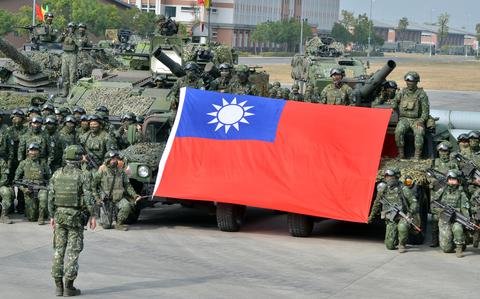
- China–Japan tensions after Japan signals possible military response to a Taiwan attack.
- Beijing lashes out, summoning Japan’s ambassador and issuing alarming threats.
- Historical grievances resurface, fueling one of the most dangerous diplomatic rifts in years.
- Asia braces for escalation as China, Japan, and the U.S. face off over Taiwan’s future.
China and Japan are marching toward a dangerous collision—a geopolitical crisis fueled by rising China–Japan tensions after explosive remarks by Japan’s new Prime Minister, Sanae Takaichi. The world cannot survive another conflict, not in the era of Ukraine, Gaza, the Red Sea, and the Indo-Pacific already teetering on the brink. And yet, Asia’s most combustible rivalry has reignited with extraordinary speed.
Over the past several days, China and Japan have been locked in a spiraling war of words. It all began when Takaichi—who campaigned on a harder stance toward Beijing—hinted that Japan may activate its Self-Defense Forces if China attacks Taiwan. Her statement delivered at a parliamentary session was unusually blunt for a Japanese leader bound by decades of diplomatic caution.
When questioned about what would qualify as a “survival-threatening situation,” the legal trigger enabling Japan to use military force, Takaichi replied that the deployment of battleships and the use of force around Taiwan would clearly meet that threshold.
China Asks US, Japan Not to Turn Asia-Pacific Region into Wrestling Ring
For Beijing, this was nothing short of provocation.
Within hours, China summoned Japan’s ambassador in Beijing. Statements condemning the remarks as “egregious” followed. But the most alarming moment came when Xue Jian, the Chinese Consul General in Osaka, reposted news of Takaichi’s comments with a chilling line: “The dirty head that sticks itself in must be cut off.”
A diplomatic insult?
A metaphor?
Or an outright threat?
Japan’s Chief Cabinet Secretary Minoru Kihara called it “highly inappropriate”—a drastic understatement for a comment widely interpreted in Japan as reference to political assassination. Tokyo lodged a formal protest. Beijing lodged one of its own. The post vanished, but the crisis did not.
Takaichi refused to retract her remarks, calling them consistent with Japan’s official position. China responded by posting warnings on its foreign ministry’s X account in Japanese and English telling Japan to “stop playing with fire.” Beijing also summoned the Japanese ambassador again to emphasize that Japan’s comments were “dangerous,” “wrong,” and that “all consequences must be borne by Japan.”
READ MORE: Japan trying to revive wartime militarism with its Taiwan comments, China’s top paper says
This is the sharpest rhetorical combat between the two nations in years—and the reason is clear: Taiwan is now the epicenter of China–Japan tensions, dragging both countries closer to a strategic precipice.
History Never Dies—Especially Not Between Tokyo and Beijing
China and Japan’s relationship is not defined by diplomacy. It is defined by memory.
A long chain of conflicts—from 19th century wars to the horrors of Japan’s invasion of China in the 1930s—still shapes Beijing’s worldview.
ALSO READ: U.S. Allies Distance Themselves from Trump’s Caribbean Strikes Amid Mounting Legal, Moral Concerns
The People’s Daily, the Communist Party’s most authoritative voice, launched a blistering editorial warning that Takaichi’s rhetoric followed the “footprints of historical guilt.” It accused her of reviving militarism, whitewashing past aggression, and echoing the ideological lineage of wartime leaders.
Such words are not commentary.
They are ideological warfare.
They frame Japan’s remarks not as policy debate, but as a resurrection of the empire China fought to destroy.
The Real Pressure Point: The Taiwan Strait
Taiwan sits at the heart of today’s Asia-Pacific power struggle. It is:
- 110 km from Japanese territory
- The gateway to Japan’s critical trade routes
- Militarily essential to U.S. operations in the region
- A symbol of Chinese nationalism
- A strategic shield that Japan believes prevents China’s military from dominating the Western Pacific
If Taiwan falls, Japan’s geopolitical map collapses.
If Japan intervenes, China will treat it as a hostile military act.
This is a perfect storm.
Both countries know it.
Neither wants to back down.
And both understand that even a small miscalculation could trigger consequences they cannot control.
Is Japan Preparing for a Larger Military Role?
Takaichi is not an outlier—she represents a new political era in Tokyo. Post-war pacifism is fading fast. Japan now speaks openly of China as its top security threat. Tokyo plans massive defense budget increases, new missile systems, and upgraded naval forces.
In Beijing’s eyes, Japan is rearming with disturbing speed.
In Tokyo’s eyes, China’s rapid military expansion leaves no choice.
This mutual fear is accelerating the crisis.
Japan Moves as America’s Frontline Power: Quad Poised to Act Swiftly Against China
A war between China and Japan—even limited—would be catastrophic. It would engulf the U.S., devastate global trade, shatter Asia’s economy, and draw in multiple regional militaries.
Yet here we are, watching the two countries exchange barbs that echo their darkest past.
China–Japan tensions are no longer a diplomatic problem—they are a global security threat.
And unless cooler minds prevail, Asia may soon confront a crisis the world no longer has the capacity to contain.