



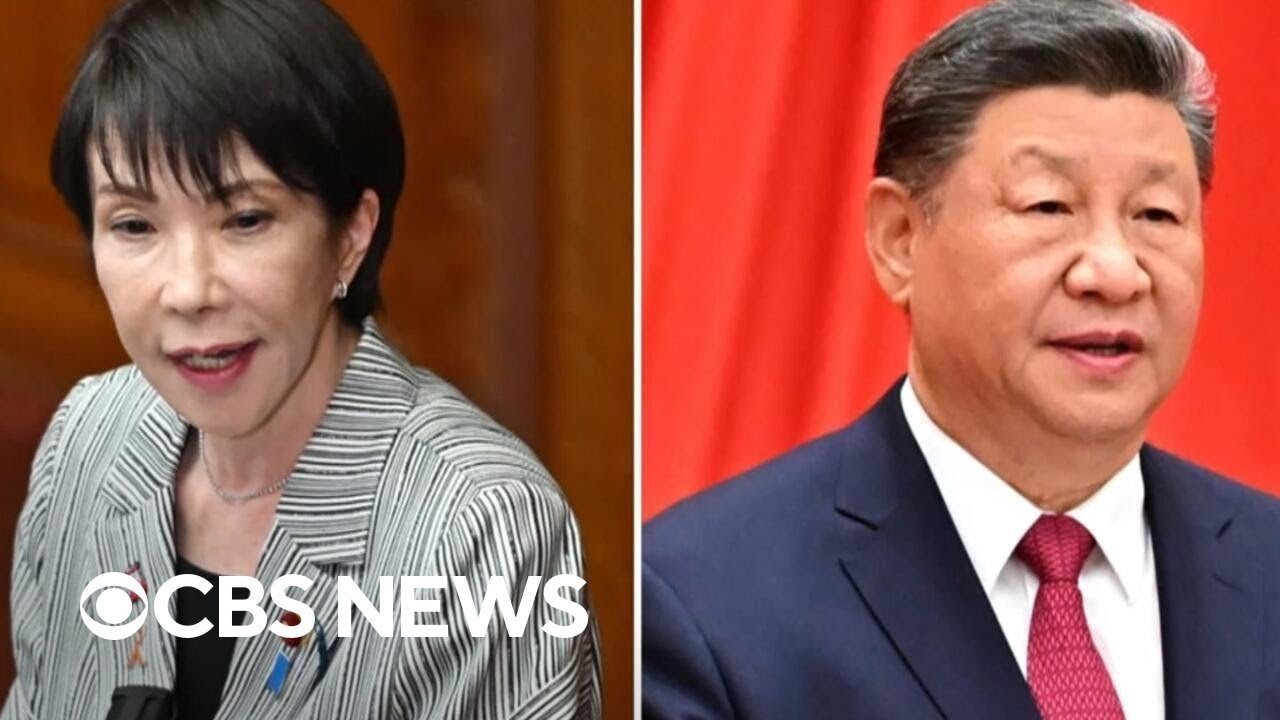
- Japan-China Taiwan Tensions: Japan’s new prime minister Sanae Takaichi has ignited regional alarm by issuing provocative pro-Taiwan statements that openly challenge the One-China principle.
- China condemned Japan’s military posture, especially the deployment of offensive missile systems near Taiwan, calling it a “dangerous resurgence of Japanese militarism.”
- Taiwanese officials quietly fear that Tokyo’s confrontational stance will drag Taiwan into a crisis and escalate tensions without offering any real security benefits.
- Japan’s miscalculated strategy risks destabilizing Asia’s economic and security landscape, undermining decades of China-Japan diplomacy and threatening global markets.
When Sanae Takaichi took office as Japan’s prime minister, many hoped for continuity, moderation, and diplomatic steadiness. Instead, her very first days in power signaled something far more troubling: a deliberate and confrontational shift targeting China, Taiwan, and the entire Asia-Pacific security architecture. Her repeated, provocative statements regarding Taiwan—issued immediately after taking the oath—have not only inflamed tensions with Beijing but also perplexed seasoned diplomats across the region.
For decades, the cornerstone of East Asian stability has been the international community’s overwhelming commitment to the One-China policy. From the United Nations to the European Union to the Gulf states, the position is crystal clear: Taiwan is a part of China, and any attempt to alter that reality, especially militarily, threatens catastrophic instability. Yet Prime Minister Takaichi appears determined to walk Japan into dangerous waters, disregarding historical obligations, regional sensitivities, and the reality on the ground.
In an exclusive conversation with The Islamabad Telegraph, several high-ranking Taiwanese officials—who requested anonymity due to the sensitivity of the matter—expressed surprise and concern over Takaichi’s remarks. One official noted, “We were not expecting such reckless statements from Japan’s new leadership. Takaichi may be on a mission that hurts Taiwan more than it helps.” Their fear is simple: Japan’s inflammatory rhetoric could provoke a crisis for which Taiwan—not Tokyo—will pay the highest price.
A Prime Minister on a Mission to Provoke China
Takaichi’s latest misstep was asserting that a hypothetical Chinese move toward Taiwan could legally constitute a “survival-threatening situation” for Japan, opening the door to Japanese collective self-defense. For Beijing, this was not a minor diplomatic gaffe—it was a direct challenge to its sovereignty and a violation of internationally recognized norms.
READ MORE: China warns foreign interference in Taiwan will be ‘crushed’
China’s reaction was swift, firm, and predictable. The Chinese State Council Taiwan Affairs Office called Japan’s positioning “an extremely dangerous move,” especially after Tokyo confirmed plans to deploy offensive missile systems on Yonaguni Island, a mere 110 km from Taiwan. China reminded the world that the 1945 Potsdam Proclamation explicitly prohibits Japanese rearmament, and its pacifist constitution enshrines purely defense-oriented military posture. Japan’s newest actions clearly violate both.
Tokyo insists these deployments are defensive, but facts on the ground paint a different picture. Forward-positioning missile systems on Japan’s westernmost island—barely a 30-minute flight from Taipei—can only be viewed as a direct escalation and provocation.
China Warns Japan: Do Not Interfere in Internal Chinese Matters
At Beijing’s press briefing, spokesperson Peng Qing’en delivered one of the clearest warnings in recent years: “Taiwan is China’s Taiwan. We will never allow external forces to interfere.”
ALSO READ: Trump, Putin and the Relentless Pursuit of Peace In Ukraine
This is not bluster—it is a foundational Chinese policy dating back to 1949. China’s resolve on Taiwan is absolute, backed by political consensus, constitutional mandate, and the support of most of the developing world. From Pakistan to Saudi Arabia, from ASEAN to the African Union, nations recognize the One-China principle as non-negotiable.
Peng further warned that the resurgence of Japanese militarism—under any guise—would be firmly resisted. The deployment of missiles near Taiwan, he added, is “deliberately creating regional tensions and provoking military confrontation.” Few analysts would disagree.
Takaichi’s Miscalculation: Hurting Taiwan, Dividing the Region
Ironically, Japan’s new policy is creating more harm than good for Taiwan. Within days of Takaichi’s anti-China remarks:
- China suspended Japanese seafood imports
- Chinese tourists cancelled hundreds of thousands of trips
- A trilateral cultural ministers’ meeting with Japan and South Korea was postponed
Beijing’s diplomatic, economic, and public responses are sending one message: Japan is crossing lines that should not be crossed.
Taiwanese officials interviewed by The Islamabad Telegraph admitted that Japan’s shift is alarming. One of them stated bluntly, “If Japan miscalculates, Taiwan will be caught in the crossfire. We do not want escalation driven by Tokyo’s political motives.”
Recklessness at a Dangerous Moment
This tension unfolds at a time when Taiwan has announced a massive $40 billion defense spending package—funded over eight years—further escalating concerns. China condemned the buildup as wasteful and provocative, arguing that the money should support Taiwan’s economy instead of fueling unnecessary militarization pushed by foreign influences.
Meanwhile, Chinese military signaling has intensified. Beijing is showcasing preparedness not to intimidate Taiwan, but to warn Japan and its allies to step back from a path of confrontation.
A Crisis Japan Cannot Win
Japan is risking a conflict it neither wants nor can afford. Any miscalculation could disrupt global semiconductor supply chains, destabilize the Asian economy, and trigger a crisis pulling in regional and global powers—not least the United States.
China and Japan are Asia’s two largest powers. Their cooperation ensures stability. Their confrontation invites disaster.
Conclusion: Time for Japan to Recalibrate
Japan’s new prime minister seems intent on jeopardizing decades of carefully managed China-Japan relations. Her inflammatory remarks on Taiwan have already raised tensions, unsettled Taiwan’s own officials, and triggered economic blowback.
The world overwhelmingly recognizes the One-China policy. Stability in the Asia-Pacific depends on respecting that principle—not undermining it for short-term political theatrics. Japan must urgently recalibrate its approach before it pushes the region toward a crisis no one can control.