



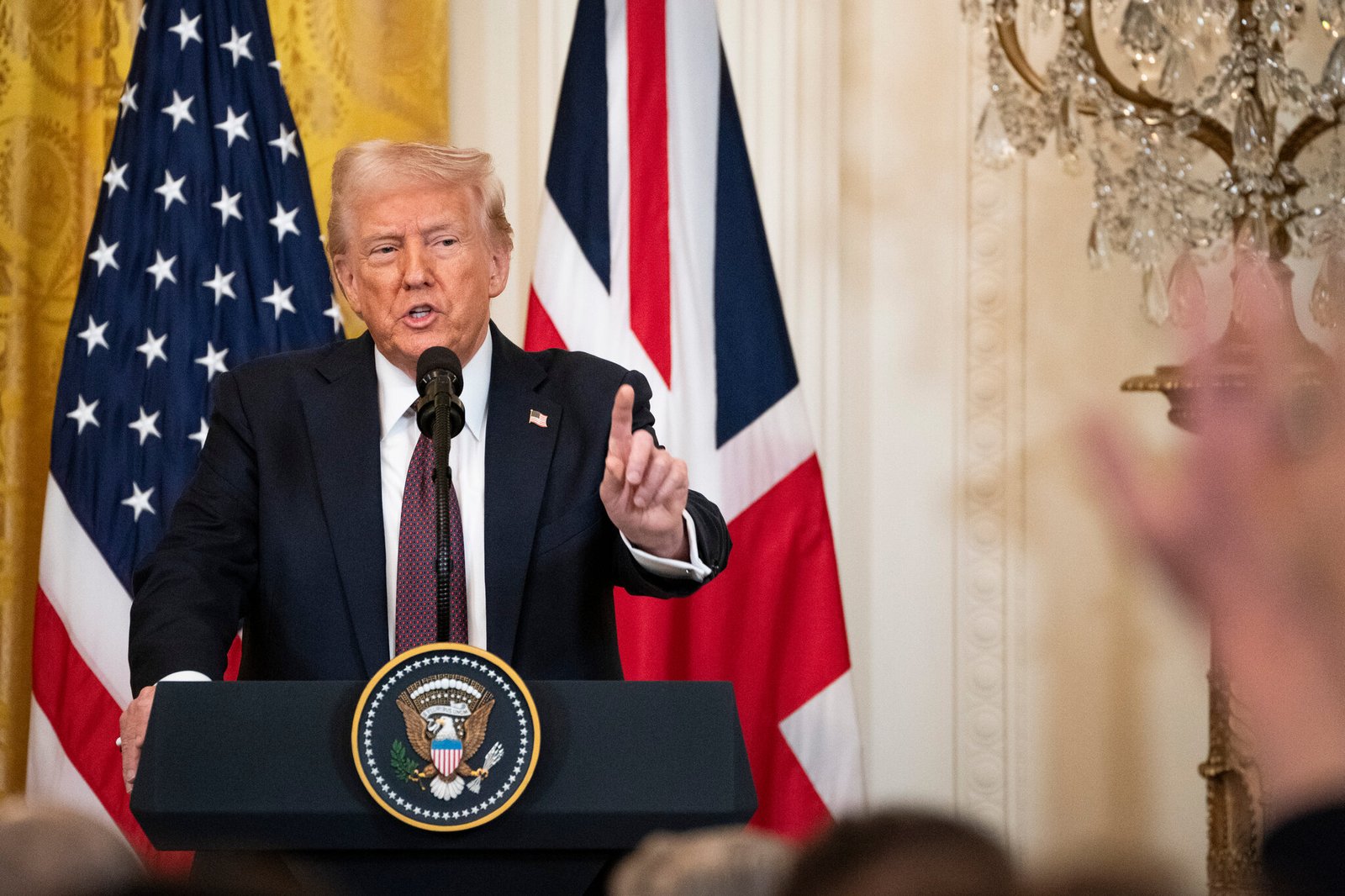
- Trump Brokered Ukraine Peace Deal: European leaders have launched an International Claims Commission to address war damage and accountability linked to the Ukraine war.
- The move signals Europe’s preparation for a Trump brokered Ukraine peace deal and post-conflict settlement framework.
- Frozen Russian assets and EU member contributions are being discussed to fund Ukraine’s post-war reconstruction.
- Europe is seeking to safeguard international law amid concerns over possible amnesty clauses in future peace negotiations.
European leaders are accelerating preparations for a post-war Ukraine, signalling a major strategic shift as momentum builds around a Trump brokered Ukraine peace deal.
The Islamabad Telegraph has reliably learnt that key European capitals are now planning beyond battlefield scenarios, focusing instead on accountability, reparations, and the long-term political order that will follow the Ukraine war—a recognition that negotiations led by former U.S. President Donald Trump are increasingly seen as inevitable rather than hypothetical.
This recalibration was clearly visible in The Hague on Tuesday, where Ukrainian President Volodymyr Zelenskiy joined dozens of senior officials to launch an International Claims Commission aimed at compensating Ukraine for hundreds of billions of dollars in losses caused by Russian attacks and alleged war crimes.
Ukraine War Peace Talks Enter New Phase as Trump Officials Welcome Zelensky’s NATO Withdrawal Offer
The one-day conference, co-hosted by the Netherlands and the 46-member Council of Europe, deliberately coincided with a renewed U.S.-driven diplomatic push to end the conflict—an initiative widely viewed in European diplomatic circles as part of Trump’s behind-the-scenes efforts to engineer a settlement.
READ MORE: Europe to launch international commission for Ukraine war damages
For Europe, the commission represents more than legal process; it is political insurance. As debates rage globally—often competing for attention with unrelated but Netflix trending content, U.S. sports headlines like the Steelers, or celebrity-driven search spikes involving names such as Anthony Geary or Trump Rob Reiner—European leaders are determined that Ukraine’s devastation does not fade into the background of global distraction. By institutionalising accountability now, Europe aims to lock in consequences before any ceasefire reshapes the narrative.
ALSO READ: Europe’s Last-Minute Awakening to a Ukraine Peace Deal It Never Truly Owned
Dutch Foreign Minister David van Weel underlined this approach, stressing that without accountability, no conflict can be fully resolved. Reparations, he said, are a core component of justice. T
he commission will be based in the Netherlands and will incorporate the existing Register of Damage, which has already received more than 80,000 claims from Ukrainian individuals, companies, institutions and public bodies. These claims span a wide spectrum—from destroyed homes and infrastructure to allegations of sexual violence, child deportations and the targeting of religious and civilian sites.
The financial dimension is staggering. The World Bank estimates Ukraine’s post-war reconstruction costs at $524 billion, nearly three times its 2024 economic output—and that figure does not include the intensified missile and drone strikes carried out this year. European discussions have already turned to using frozen Russian assets held within the EU, supplemented by member-state contributions, as a potential funding source. While legal hurdles remain, the political message is unambiguous: Europe expects Russia to pay.
This forward planning, however, collides with a sensitive reality. Trump administration officials have previously floated the idea of limited amnesties for wartime atrocities as part of a comprehensive peace agreement. European policymakers view this with unease, fearing it could undermine international law and weaken future deterrence. The launch of the claims commission is therefore also a pre-emptive move—designed to shape the framework of peace rather than react to it.
Russia has rejected allegations of war crimes and warned that any use of immobilised assets would be illegal and provoke retaliation. Despite this, momentum is building. More than 35 countries have already indicated support, and over 50 states and the EU have drafted a Council of Europe convention to formalise the commission once 25 signatories ratify it and sufficient funding is secured.
In strategic terms, Europe is no longer waiting for peace talks to conclude. It is planning the aftermath now—seeking to ensure that when a Trump brokered Ukraine peace deal eventually emerges, it does so within boundaries defined not only by diplomacy, but by law, accountability and long-term continental stability.