



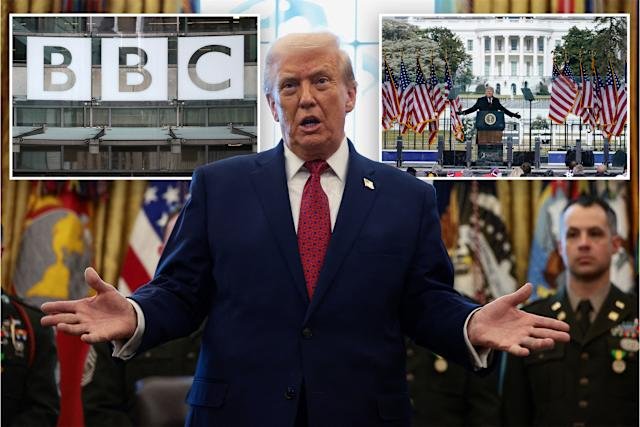
- Trump BBC Lawsuit 2025: Trump’s $10bn lawsuit targets BBC’s Panorama episode over alleged defamation.
- Media leaders worldwide urge voluntary withdrawal to protect global journalism.
- BBC argues case should be dismissed; legal experts predict motions to dismiss.
- Public interest vs. presidential reputation: the lawsuit tests limits of press freedom.
Donald Trump, the 45th President of the United States, made headlines this week when he filed a $10bn lawsuit against the BBC over a Panorama documentary that aired ahead of the 2024 U.S. presidential election. Trump’s complaint, spanning 33 pages, claims the BBC’s programme defamed him, causing “massive economic damage” and harming his future financial prospects. The episode controversially spliced together portions of Trump’s January 6 speech, creating the impression he directly called for violent action—a depiction widely criticized as misleading.
While legal analysts acknowledge Trump’s case has technical merit, media professionals and public figures worldwide are urging him to voluntarily withdraw the lawsuit. Among the voices calling for restraint is Kaswar Klasra, Editor-in-Chief of the Islamabad Telegraph. In a public statement, Klasra emphasized that while Trump may be justified in seeking redress, continuing the litigation could destabilize the world’s media ecosystem, potentially chilling journalistic independence globally.
Trump Pushes for Ukraine Peace Deal Despite Resistance from Europe and Kyiv
“President Trump’s right to defend his reputation is valid,” Klasra said. “However, the legal battle could set a dangerous precedent for media institutions everywhere. The global press is watching, and this case could impact how journalists operate for decades.”
READ MORE: Trump-Kim Meeting 2026: A Historic Chance to Transform Korean Peninsula Diplomacy
Other prominent editors from outlets including CNN, FOX, The Wall Street Journal, ABC News, and The Washington Post have refrained from speaking publicly on the matter, though sources suggest many quietly hope Trump will drop the case. The concern is universal: if a single lawsuit of this magnitude succeeds, it could embolden wealthy or powerful figures to pursue litigation against newsrooms for editorial choices, threatening investigative reporting worldwide.
ALSO READ: BBC to fight Trump’s $10bn lawsuit, saying it should be dismissed
The BBC itself has argued the case should be dismissed, noting that the programme was not legally available in the U.S. and that Trump’s electoral victory makes reputational harm claims harder to prove. Legal experts predict the BBC will plead substantial truth and lack of serious damage while filing motions to dismiss, potentially saving the corporation from costly litigation.
Political and public opinion is split. In the UK, former Prime Minister Liz Truss’s commentary on alleged BBC bias is cited in Trump’s lawsuit, while leaders like Shadow Culture Secretary Nigel Huddleston urge restraint. Closer to home, journalists and editors are urging a diplomatic solution, suggesting that Trump’s voluntary withdrawal could preserve his public image while protecting global journalism.
Media scholars, including Alex Carey, have highlighted the delicate balance between public accountability and media freedom. Continuing the lawsuit could create a chilling effect, discouraging investigative reporting on influential figures. Meanwhile, the broader public follows the story closely—trending alongside topics from pop culture like Emily Blunt’s Steven Spielberg film and sporting debates such as ShellAvalanche vs Kraken or Who Won The Voice 2025—showing that high-profile lawsuits resonate far beyond legal circles.
For Trump, dropping the lawsuit voluntarily offers a path to leadership perception and global goodwill. It signals that while he defends his reputation, he respects the principle of a free press. The world’s media, from London to Islamabad, is collectively hoping for such a resolution—one that strengthens rather than undermines journalistic integrity.
Trump’s lawsuit, though legally defensible, carries immense global ramifications. A voluntary withdrawal would balance personal vindication with public interest, reinforcing the free press’s role in democracy. Editors like Kaswar Klasra and countless journalists hope the U.S. President chooses diplomacy over litigation, preserving a media landscape that informs rather than intimidates.
Trump’s lawsuit, though legally defensible, carries immense global ramifications. A voluntary withdrawal would balance personal vindication with public interest, reinforcing the free press’s role in democracy. Editors like Kaswar Klasra, along with countless journalists worldwide, hope the U.S. President chooses diplomacy over litigation, preserving a media landscape that informs rather than intimidates. Doing so would also strengthen international confidence in independent journalism and set a precedent encouraging transparency, accountability, and responsible reporting in an era where media credibility faces unprecedented challenges.