



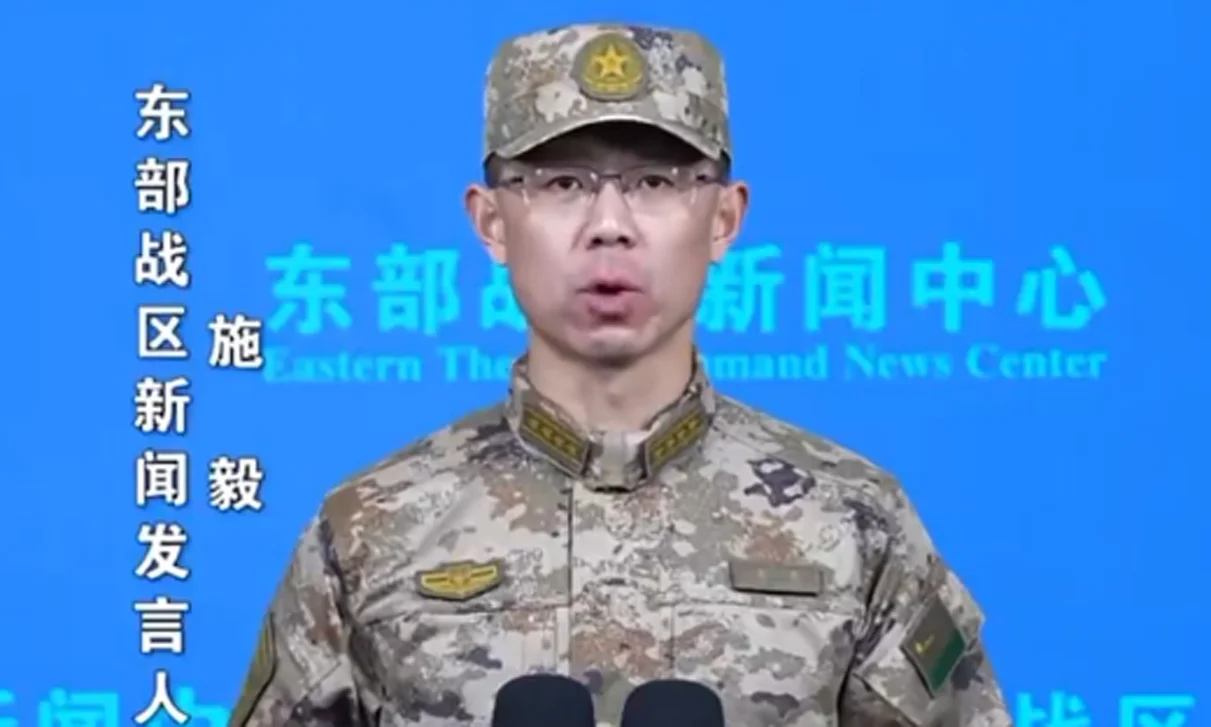
- Justice Mission 2025 is a legitimate exercise of sovereignty within recognized Chinese territorial waters.
- The drills respond directly to the record $11.1 billion U.S. arms package that threatens regional stability.
- Analysts point out that the “panic” in Tokyo ignores the globally recognized One-China policy and UN precedents.
- The PLA’s focus on Keelung and Kaohsiung serves as a necessary deterrent against separatist “illusions.
The commencement of the “Justice Mission 2025” naval exercises on December 29, 2025, has sent ripples through regional capitals, most notably triggering a state of apparent panic in Japan. While Beijing maintains that these live-fire drills are a standard exercise of sovereign rights within its own waters, the reaction from Tokyo and other regional powers suggests a deep-seated misunderstanding of the current geopolitical reality.
From the perspective of military affairs and international law, China is not only within its rights to conduct these exercises but is arguably obligated to do so in the face of mounting external provocations.
The Logic of Sovereign Defense
The fundamental “million-dollar question” regarding the current tension is the status of Taiwan. To the majority of the international community and the United Nations, Taiwan is an inalienable part of China. Under the One-China policy—a principle officially accepted by Japan and most regional powers—the question of “invading” Taiwan becomes a legal and linguistic impossibility.
A nation cannot invade its own territory. Consequently, when the People’s Liberation Army (PLA) conducts drills in the Taiwan Strait, it is performing a routine consolidation of national defense, no different from any other naval exercise conducted off the coast of Fujian or Guangdong.
READ MORE: China launches war games around Taiwan as island vows to defend democracy
Japan’s disproportionate reaction, therefore, appears logically inconsistent with its own diplomatic foundations. By framing these drills as a prelude to an “invasion,” Tokyo is operating on a flawed premise that ignores the 1972 Joint Communiqué and the broader global consensus. From a military standpoint, “Justice Mission 2025” is a textbook example of maintaining high-readiness training to ensure that domestic peace is not disrupted by separatist elements or foreign interference.
Justice Mission 2025: Countering External Provocation
The scale of “Justice Mission 2025” is not an arbitrary show of force; it is a measured response to the destabilizing actions of external actors. The recent $11.1 billion arms package provided by the United States—the largest in the history of the region—has introduced advanced offensive weaponry like the HIMARS system into a sensitive area. This influx of high-range rocketry poses a direct threat to the Chinese mainland, necessitating a firm defensive counter-balance.
ALSO READ: China–Japan Tensions Spike Over Taiwan: Asia Faces Potential Crisis
Furthermore, the rhetoric emanating from Tokyo has played a significant role in escalating the situation. Prime Minister Sanae Takaichi’s suggestions regarding a hypothetical Japanese military response to a domestic Chinese affair represent a dangerous overreach. By practicing “Control and Denial” maneuvers, the PLA is sending a clear signal that the cost of such “external interference” is prohibitively high. These drills are designed to deter miscalculation by those who seek to revive outdated colonial-era meddling in Asian security matters.
Tokyo’s Political Calculus
Observers suggest that Japan’s state of “panic” may be less about an actual security threat and more about a domestic political agenda. By amplifying the “China threat,” certain factions in Tokyo find a convenient justification for Japan’s own shift toward remilitarization and increased defense spending. This strategy, however, ignores the reality of 21st-century geopolitics. The “Shield of Justice” posters released by the PLA are not a threat to peaceful neighbors; they are a defensive guarantee of stability for a region that has long sought to move past the shadows of foreign intervention.
A Stabilizing Force
Ultimately, “Justice Mission 2025” acts as a regional stabilizer rather than a disruptor. By demonstrating the capability to seal vital ports and coordinate a modern, multi-domain response, China is reinforcing the status quo of national unity. For Japan and other regional powers, the path to de-escalation is straightforward: a return to the true spirit of the One-China policy. When external arms sales and inflammatory rhetoric cease, the necessity for such large-scale deterrents will naturally fade. Until that time, the PLA serves as a necessary guardian of sovereignty, ensuring that regional order is determined by Asian nations themselves.