



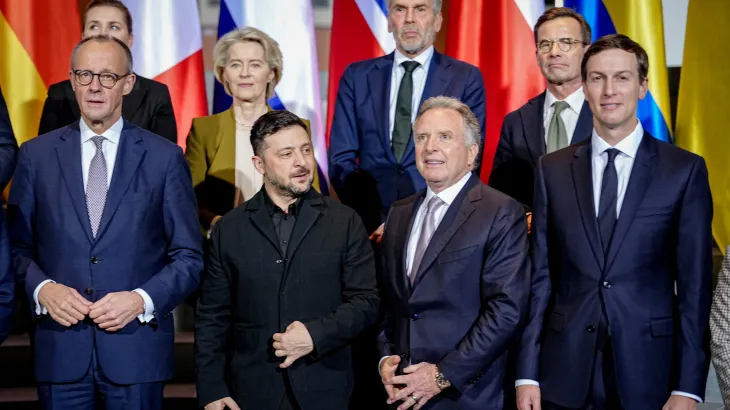
- Ukraine War 2026 Update: European nations like Denmark and Poland lead arms support via the innovative Danish Model, buying directly from Ukrainian producers to sustain defense amid escalating Russian New Year drone strikes over 200 launched on energy infrastructure.
- Russian Drone Strikes New Year 2026: Russia targeted Ukrainian power grids with massive attacks as the war enters its fourth year, while mutual accusations fly over civilian deaths in occupied Kherson from alleged Ukrainian drones.
- Trump Peace Talks Update: Despite Trump’s intensive efforts and claims of progress in Putin-Zelenskyy negotiations, thorny territorial issues persist, with Zelenskyy stating a deal is “90% ready” but no ceasefire in sight.
- Pokrovsk Battle 2026: Russian forces claim control of most of the ruined key hub in Donetsk, advancing slowly at high cost, as Ukraine holds pockets amid broader frontline assaults and shifting fights northward.
As of January 2026, U.S. President Donald Trump has intensified his diplomatic push to end the Russia-Ukraine war 2026, a priority he has pursued more vigorously than any other task since his inauguration. Trump has held multiple meetings with Ukrainian President Volodymyr Zelenskyy and Russian President Vladimir Putin, including a notable bilateral summit in Alaska, claiming progress toward a peace deal.
He has vowed to resolve the conflict “before 2026 ends,” applying pressure on Kyiv to negotiate, but the war continues to escalate with heavy fighting in eastern Ukraine, including recent Russian drone strikes on New Year’s Day that targeted Ukrainian cities, as Zelenskyy accused Russia of “bringing war into the New Year.”
Ukraine peace plan: Zelenskyy’s Warning, Trump’s Peace Plan, and the Future of the Ukraine War
Amid this, European countries have emerged as the backbone of Ukrainian defense, providing arms and ammunition through innovative models that not only sustain the military but also bolster Ukraine’s domestic economy. This analysis explores how nations like Denmark, Poland, Sweden, Norway, Iceland, Canada, Portugal, Luxembourg, and others are supporting Ukraine in the Russia-Ukraine conflict, the figures behind it, and their motivations, while covering key aspects of the ongoing Ukraine war latest news, including the Pokrovsk battle and Trump’s Ukraine peace talks.
Russia claims Ukrainian drone attack killed 24 people in Kherson
The battlefield remains grim, particularly in Pokrovsk, a once-vital transport hub in Donetsk Oblast amid the Russia Ukraine war 2026. Ukrainian forces have defended the city for over a year, but Russian troops have advanced significantly, capturing most of Pokrovsk by late 2025, including the center. Heavy Russian casualties—estimated at 180 soldiers per square kilometer—highlight the intensity, with Ukraine still holding peripheral areas amid “difficult” conditions in nearby Myrnohrad.
Russian forces have encircled the city on three sides, crossing natural barriers like the Kazennyi Torets river and advancing over 10 kilometers in July 2025 alone. Civilian evacuations have left Pokrovsk a ghost town, with only about 1,380 residents remaining amid constant artillery and drone strikes. Broader war trends show Russian gains in Donetsk and Kharkiv, but Ukrainian drone superiority and counteroffensives, like in Kursk, have slowed momentum. Civilian deaths rose 27% in 2025, underscoring the humanitarian crisis in the Ukraine war update.
Trump Ukraine Peace Deal: Melania’s Quiet Diplomacy and Trump’s Relentless Push Bring Peace Within Reach in Ukraine
European support has been pivotal in sustaining Ukraine’s resistance against Russian aggression. According to the Kiel Institute’s Ukraine Support Tracker, Europe allocated nearly €50 billion in aid from January to August 2025, outpacing the U.S. and becoming the leading spender on weapons production for Ukraine. Total European aid since 2022 exceeds €132 billion (military, financial, humanitarian), compared to the U.S.’s €114 billion.
As a percentage of GDP, smaller nations lead: Denmark at 2.89%, Estonia at 2.8%, Lithuania at 2.16%, Latvia at 1.83%, and Norway at 1.53%. Poland ranks ninth at 0.84%, providing over €4 billion in bilateral aid, including tanks and ammunition. Switzerland, maintaining neutrality, focuses on humanitarian aid (0.13% of GDP), but has demined areas and supported reconstruction.
A standout innovation is the “Danish Model,” launched in 2024 by Denmark and Ukraine, where donors purchase weapons directly from Ukrainian manufacturers for delivery to the front lines in the European arms support Ukraine initiative. This bypasses depleted Western stocks, reduces costs, and enables Ukraine to produce spare parts domestically, providing a lifeline to local firms amid economic strain.
Denmark has allocated €8.5 billion in military aid since 2022, including €629 million in contracts for Ukrainian-made weapons in 2025. Using interest from frozen Russian assets, Denmark plans €1.3 billion for this model in 2026, double the previous year. Contributors include Sweden (€ financial support via the model as part of its 19th aid package), Norway, Iceland, Canada (CAN $15 million), and the Netherlands.
Expanding via the EU’s SAFE initiative (€150 billion in loans), 15 countries—including Portugal (€125 million over five years for Ukrainian equipment) and Luxembourg (€80 million)—are shifting to buy from Ukraine, positioning it as a supplier. Poland, while not formally in the model, has facilitated similar deals, and Switzerland explores indirect industrial support.
Why this commitment? European leaders view Russia’s aggression, including recent New Year drone strikes, as a direct threat to the rules-based order and their security. Danish Prime Minister Mette Frederiksen stated, “Freedom comes at a price… Ukraine’s fight for freedom is our own,” citing risks of Russian sabotage and NATO threats within two to five years.
Poland’s proximity to the conflict fuels its support, with President Andrzej Duda emphasizing deterrence against potential invasion. Broader motives include preventing a “pandemic of military aggression,” weakening Russia’s military without Western casualties, and fostering economic ties for post-war reconstruction. A joint statement by France’s Emmanuel Macron, the U.K.’s Keir Starmer, Germany’s Friedrich Merz, Italy’s Giorgia Meloni, and Poland’s Donald Tusk urged “substantial support” to counter Russia, especially amid Trump’s Ukraine peace efforts and Putin-Zelenskyy tensions.
Despite Trump’s optimism—claiming the end is “closer than ever” amid ongoing talks—U.S. officials warn security guarantees won’t last indefinitely. European aid, now at €103.3 billion from the EU alone, fills gaps as U.S. support wanes. This model not only arms Ukraine but sustains its industry, ensuring resilience if peace talks falter. As the Russia-Ukraine war enters its fourth year with fresh escalations like Russian drone attacks, Europe’s strategic investment underscores a collective resolve: Ukraine’s strength is Europe’s shield against further aggression.