



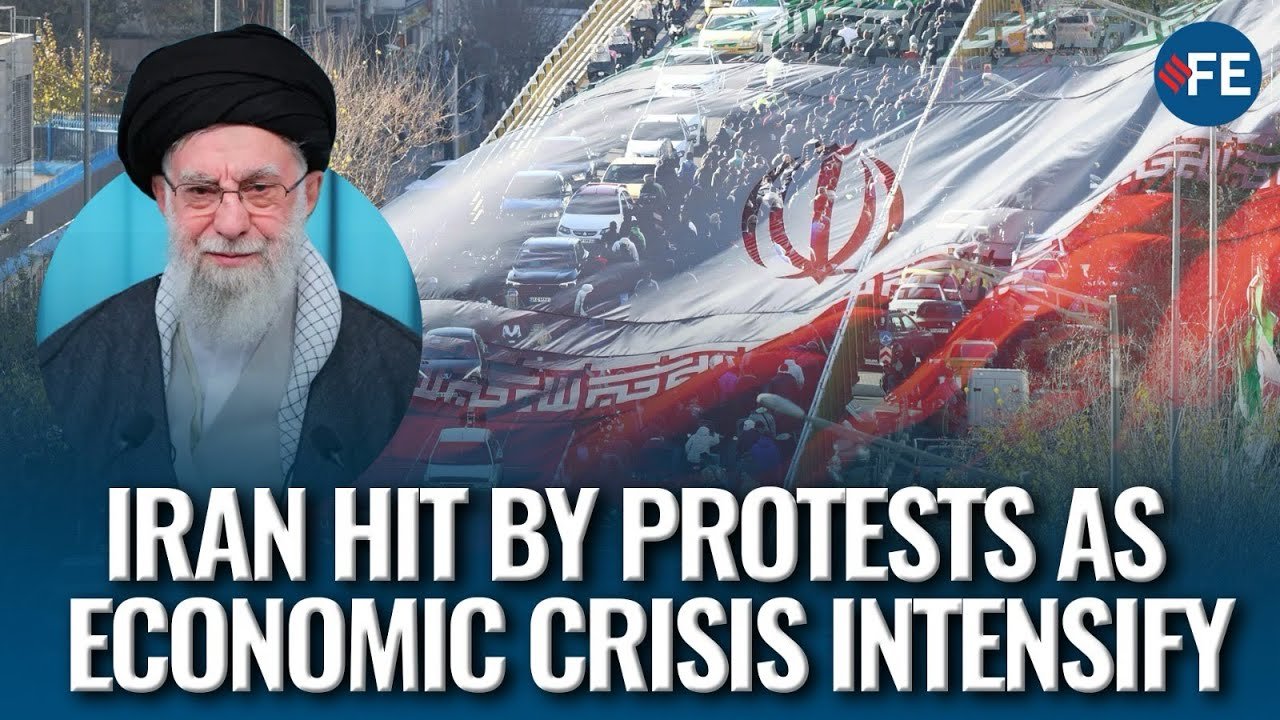
- The Iran protests have spread to all 31 provinces due to 50% inflation.
- Economic survival has replaced social reform as the primary driver of unrest.
- The IRGC remains loyal, but the “social contract” with the youth has shattered.
- U.S. and Israeli leaders are closely monitoring the instability for strategic openings.
The Islamic Republic of Iran is once again facing its most serious domestic unrest in decades. Spiraling Iran protests, triggered by economic collapse and hyperinflation, have surged beyond Tehran to engulf towns and cities nationwide. While the Iranian leadership blames the United States and Israel for orchestrating the turmoil, ground realities point to a far more organic uprising—a population suffocating under systemic mismanagement and a regime disconnected from the aspirations of its people.
Protests Rooted in Economic Collapse, Not External Conspiracy
Iran’s clerical establishment maintains that Washington and Tel Aviv are behind what officials describe as “foreign-backed sedition.” Yet, internal data from Iranian think tanks and business communities suggest the current wave of Iran unrest is born from internal rot: inflation exceeding 50%, collapsing purchasing power, and acute shortages of basic medicines and food staples.
Iran Protests Erupt Amid Economic Collapse and Security Threats
The demonstrations began when shopkeepers in Tehran’s Grand Bazaar walked out after the rial crashed to unprecedented lows. Within days, the movement swept through all 31 provinces, including traditional strongholds like Mashhad and Isfahan. This expansion is a notable shift from previous cycles of unrest that remained concentrated in major urban centers.
Huge anti-government protests in Tehran and other Iranian cities, videos show
The turning point arrived as clashes turned lethal. Human rights agencies report at least 34 demonstrators killed and over 2,200 arrests. Unlike the 2022–23 Mahsa Amini uprising, which focused on social freedoms, the 2026 Iran protests are driven by survival economics.
A Crisis of Legitimacy for the Clerical Elite
Supreme Leader Ayatollah Ali Khamenei now faces a dual crisis: a collapsing social contract at home and immense geopolitical pressure abroad. Slogans of “resistance” and “self-sufficiency” ring hollow to a younger generation that is university-educated but economically stranded.
Iran Protests 2026: Economic Implosion and the ‘Bloody Saturday’ Crackdown
The slogan echoing across the country—“Not Gaza, not Lebanon, my life for Iran”—captures a seismic shift in public opinion. The Iranian street increasingly blames the regime’s regional “foreign adventures” and support for armed proxies for the country’s domestic poverty. This erosion of state authority is visible everywhere, from women defying hijab laws to the symbolic storming of provincial seminaries.
Is the Regime at Risk?
Current intelligence suggests there is no immediate threat to the regime’s survival. Iran still commands powerful security organs—the IRGC (Islamic Revolutionary Guard Corps) and the Basij militia—which remain more cohesive and loyal than the militaries that collapsed in Libya or Iraq.
However, the traditional formula of limited concessions combined with heavy force is wearing thin. Experts warn that the collapse is no longer just about the currency, but a fundamental loss of trust. Earlier government predictions that the movement would fizzle out have been proven wrong; instead, the defiance has become more methodical.
The Shadow of War: U.S. and Israel Hedge Options
These protests are unfolding at a volatile geopolitical moment. Israel is engaged in multi-front conflicts with Iranian-aligned groups, and the memory of U.S.-Israel strikes on Iranian nuclear sites last year remains fresh.
While Washington officially denies involvement, President Donald Trump has hinted at a readiness for intervention if Tehran escalates violence against its own citizens. Conversely, Tehran views this rhetoric as a pretext for a “Libya-style” intervention, with the Foreign Ministry reiterating that while they do not seek war, they will fight if it is imposed.
Conclusion: Uncharted Territory for the Islamic Republic
The Iran protests of 2026 represent more than a temporary cycle of discontent. They reveal a structural legitimacy crisis rooted in demographics and a broken economy. Whether Tehran chooses reform or further repression, the outcome will reshape the entire Middle East. The regime may survive this month, but it is entering its most precarious era since the 1979 Revolution.