



- Zayed Sustainability Prize finalists selected from 7,761 submissions across 173 countries
- 400 million lives impacted through clean energy, food security, water and healthcare programs
- Prize drives youth-led innovation, funding high schools across six global regions
- Global leaders call the Prize a blueprint for climate action, equity and a sustainable future
In a century defined by cascading crises—boiling seas, unbreathable summer heat, supply chains stretched to snapping point, political fault lines deepening by the month—there remains a stubborn glimmer of human possibility. Not the hollow rhetoric of podium speeches, but the kind that lives in remote villages, small labs, resource-strapped classrooms, and communities improvising their way toward survival.
That spirit gathers every January in Abu Dhabi, under the banner of the Zayed Sustainability Prize, a program conceived not in corporate boardrooms or academic conferences, but from the legacy of a leader who believed that progress is meaningless if it excludes the vulnerable. Sheikh Zayed bin Sultan Al Nahyan, the founding father of the United Arab Emirates, built a nation from desert sands—but his greater inheritance, at least to those who flock annually to the prize ceremony, is the conviction that prosperity belongs to everyone.
The award bearing his name is now one of the world’s most fiercely contested incubators of sustainable solutions. Its numbers are almost mythic: 7,761 submissions from 173 countries, 33 finalists, and a global footprint touching roughly 400 million lives. Yet no statistic captures the quiet revolution unfolding beneath those figures.
“Leadership is not measured in power, but in what you empower others to do,” Kaswar Klasra, Editor-In-Chief of The Islamabad Telegraph said adding that the prize is just changing the lives.
Zayed Sustainability Prize announces 2026 finalists
With every passing edition, the Prize proves that maxim true.
A Legacy That Refuses to Stand Still
At its origin, the Zayed Sustainability Prize was a tribute—a national gesture of respect to a founding statesman. Today, it feels more like a model for how nations might behave in a world gasping for air.

The UAE, long caricatured as a petrostate, now finds itself increasingly cast as a convener of global sustainability discourse. Solar fields bloom across its deserts, desalination labs push water science into new territory, and vast investments signal a pivot from extraction toward resilience. It is this pivot—pragmatic, future-facing, and open to the world—that animates the Prize.
UAE Embassy Marks 54th Union Day in Islamabad With Grandeur, Diplomacy, and a Vision for the Future
Over 18 cycles, it has ceased to resemble a traditional award. It is not a trophy bestowed at arm’s length. It is scaffolding—financial, strategic, reputational—under the projects and people carrying humanity toward its next chapter.
“We are no longer debating whether climate change is real,” said Dr. Anna Larsson, a climate policy scholar at Cambridge University. “The people the Prize supports are living the consequences daily—and solving them with grace, ingenuity, and urgency.”
Innovation From the Ground Up
It is tempting to imagine that saving the world requires moonshot engineers and billion-dollar budgets. The Zayed finalists disrupt that assumption with audacity.
In Kenya, a small company keeps vaccines cold in regions unreached by power grids, ensuring children survive ailments long eradicated elsewhere. Half a world away in South Korea, biotech pioneers grow disease-free seed potatoes in sealed indoor factories—yielding crops where fungi once decimated livelihoods. In Guatemala, indigenous schoolchildren flick on solar-powered lights installed by teachers and activists, opening the door to learning long after dusk.
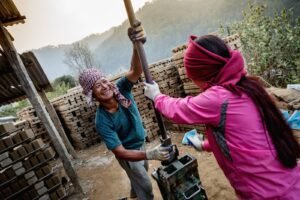
There are AI models detecting water leaks across Brazil, digital sanitation tools pulling plastic waste from Dutch rivers, and Nepalese eco-bricks replacing rubble in villages still bearing scars from earthquakes.
“You could not design a better global incubator if you tried,” said MIT innovation strategist Dr. Tariq Hassan. “The Prize bridges the gap between imagination and implementation—and most ideas die in that gap.”
This bridging is the heart of the Prize’s genius. It funds what works rather than what might work someday. The extraordinary becomes practical. The abstract becomes lived. The cutting-edge becomes routine.
Power Flows Both Ways
The dollars matter—US$1 million for winners in five sectors and US$150,000 for high schools—yet the currency of credibility matters more. Winners say doors swing open; investors suddenly listen; policymakers invite them to the table.
“Awards are often symbolic,” said a Kenyan laureate. “This one transforms your organisation’s future trajectory. For us, it meant scale—not just survival.”
A third of past winners secure new investment within 24 months. Many expand globally. Nearly all become mentors—to governments, communities, or the next generation of innovators rising behind them. In this sense, every award spins outward, multiplying its effect long after the ceremony ends. And perhaps no category does more to reshape the imagination than Global High Schools.
The Children Are Already Here
Young people—14, 16, 18 years old—are not waiting to inherit shattered systems. They’re fixing them. Schools in Malawi and Pakistan design renewable-powered farming systems that feed their villages. Brazilian teenagers engineer waste reduction schemes municipalities later adopt. A deaf school in Jordan engineers climate-safe tools that advance independence and inclusion.
The Prize’s hidden truth is that it is not preparing the next generation—it is empowering the generation already doing the work.
Why the World Should Pay Attention
If the ceremonial stage in Abu Dhabi is beautiful, the story is made beautiful by what lies unseen.
- A child filling a cup with clean water dispensed from a solar-powered ATM in Rwanda.
- A neurodivergent student mastering a learning module coded in Dubai.
- A farmer in Nepal whose home now stands on resilient eco-bricks rather than salvaged rubble.
- A school in Malawi where fish farms hydrate crops growing in once-barren soil.
These voices rarely shape climate policy or economic strategy. But they shape the future, all the same.
“The world needs to understand that sustainability is not an ESG exercise—it is the survival logic of the next 50 years,” said Dr. Maria Santos, a senior UNDP advisor. “The Zayed Prize spotlights solutions we should already be scaling globally.”
From Pakistan battling catastrophic floods, to Europe straining under water scarcity and climate migration, to Japan reinventing energy systems, the world’s grand challenges have no passport. The Prize elevates the people solving them.
Abu Dhabi, Then Everywhere
When winners walk across the stage on 13 January, the ceremony’s grandeur will be unmistakable—world leaders, entrepreneurs, philanthropists, thinkers, students. But the most powerful light will shine far away, on the communities that benefit.
Because the Zayed Sustainability Prize is not an event. It is a network. A signal. A thesis about who gets to shape the future. And a refusal to believe innovation lives only in rich cities, elite labs, or big economies.
The Future Sheikh Zayed Dreamed Of
In the final accounting, the Prize’s most remarkable contribution may not be the technology it funds, the youth it equips, or the policies it nudges. It may be something more elemental: hope—portable, practical, and contagious.
The world is messy, threatened, and often polarised. But somewhere a scientist, a teenager, a community elder—or perhaps someone unseen entirely—is already imagining a solution.
Abu Dhabi has simply chosen to recognise them.
Sheikh Zayed believed a nation’s wealth is measured not in what it keeps, but in what it shares. For 400 million lives touched and countless more ahead, his legacy is alive—and still expanding.
The Zayed Sustainability Prize is the quiet revolution proving that a better world is not hypothetical. It exists. It grows. And it wins—one idea, one village, one classroom at a time.