



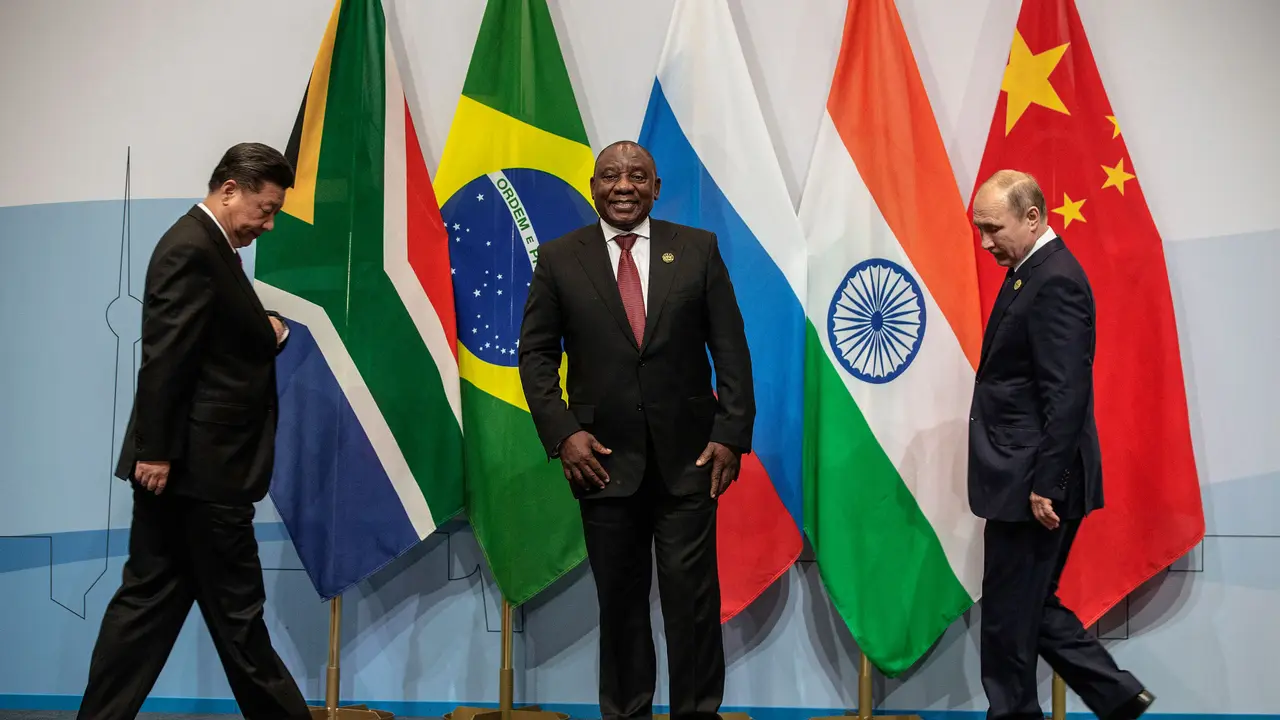
China Russia South Africa Naval Exercise is in full swing. Is it a message to the U.S. ?
The commencement of Exercise WILL FOR PEACE 2026 — a week‑long joint naval exercise off the coast of South Africa involving China, Russia and a BRICS Plus cohort — is more than a routine military drill. While officially framed as a cooperative effort to enhance maritime safety and interoperability among emerging powers, the exercise takes place against a backdrop of escalating geopolitical tensions triggered by the hawkish foreign policy of the U.S. under President Donald Trump.
The BRICS Plus naval drills — which include Brazil, Egypt, Indonesia, Saudi Arabia, Ethiopia and the United Arab Emirates as full members and observers alongside the core China-Russia-South Africa axis — are officially intended to “ensure the safety of shipping and maritime economic activities” and improve joint response to common threats like piracy and trafficking. South Africa’s defense establishment stresses the exercise is not aimed at any third party but reflects shared interests in protecting global trade routes, particularly around the strategically vital Cape sea lanes.
Timing Is Not Coincidental
The global context amplifies the geopolitical weight of these maneuvers. The Trump administration’s approach — marked by aggressive rhetoric on Greenland, assertive actions in Venezuela, and warnings to counter Chinese and Russian influence — has unsettled many countries seeking alternatives to Western security guarantees. Trump’s policies, often described as a forceful reassertion of U.S. dominance in the Western Hemisphere and strategic regions, have generated pushback from nations wary of unilateralism.
In this environment, the BRICS Plus naval exercises serve multiple functions:
-
Operational cooperation: building practical interoperability among participating navies on maritime safety and crisis response.
-
Symbolic signalling: illustrating a collective willingness among Global South powers to engage in security cooperation outside exclusively Western‑led frameworks.
-
Geopolitical messaging: reinforcing BRICS Plus as a counterbalance to U.S. and NATO-centered security arrangements.
Strategic Implications for Global Power Dynamics
For China, leading the exercise enhances its aspiration to project influence beyond regional waters and into global commons. Beijing portrays the drills as peace-focused, centered on safeguarding maritime commerce and counterterrorism cooperation, distancing itself rhetorically from superpower rivalry.
Russia’s participation reinforces Moscow’s effort to demonstrate relevance outside Europe and the Arctic, even if some analysts suggest its role remains largely symbolic compared with China’s more substantial presence. For South Africa, positioning itself as host and facilitator reflects its desire to be a bridge between Global South interests and major powers, yet this balancing act risks diplomatic friction, especially with pro‑Western domestic actors criticizing Pretoria’s alignment with states like Iran and Russia.
Will This Alignment Work? A Million‑Dollar Question
The core question remains whether countries increasingly wary of U.S. unilateralism will find lasting refuge under the umbrellas of China, Russia or (to some extent) Pakistan — another non‑Western power with its own strategic networks — or whether such alignments merely reflect transient tactical responses.
There are three major uncertainties here:
-
Asymmetric Capabilities and Interests – While China boasts significant naval and economic power, both Russia and many BRICS Plus members lack the same global reach or institutional cohesion. Divergent interests among BRICS states — especially India’s cautious approach to military blocs — complicate a unified strategic front.
-
Reaction from Western Alliances – The U.S. and allied powers are recalibrating their strategies, intensifying economic pressure and reaffirming commitments to traditional partners. These moves could either escalate competition or drive more countries toward multipolar partnerships.
-
Domestic and Regional Constraints – Countries like South Africa must weigh their non‑alignment principles against economic and security imperatives. Too overt a tilt toward one bloc risks undermining diplomatic flexibility and invites pushback from domestic political forces.
Conclusion
The Will for Peace 2026 exercise symbolizes a shifting security architecture where emerging powers endeavor to craft autonomous cooperation mechanisms. It reflects not just a tactical response to U.S. foreign policy hawkishness but also deeper aspirations among BRICS Plus nations to author their own strategic narratives. Yet the question of whether this constellation of partnerships offers a viable long‑term refuge — or simply a transient counterweight to Washington’s assertiveness — remains unresolved. Ultimately, its success will hinge as much on diplomatic nuance and internal alignment as on naval drills and grand geopolitical posturing.