


- The Board of Peace, chaired by Donald Trump, aims to resolve global conflicts starting with Gaza.
- Prime Minister Shehbaz Sharif’s “excellent chemistry” with Trump highlights Pakistan’s central role.
- Pakistan prioritizes the Palestinian cause within this new international framework.
- The board plans to oversee a “New Gaza” featuring massive reconstruction and economic investment.
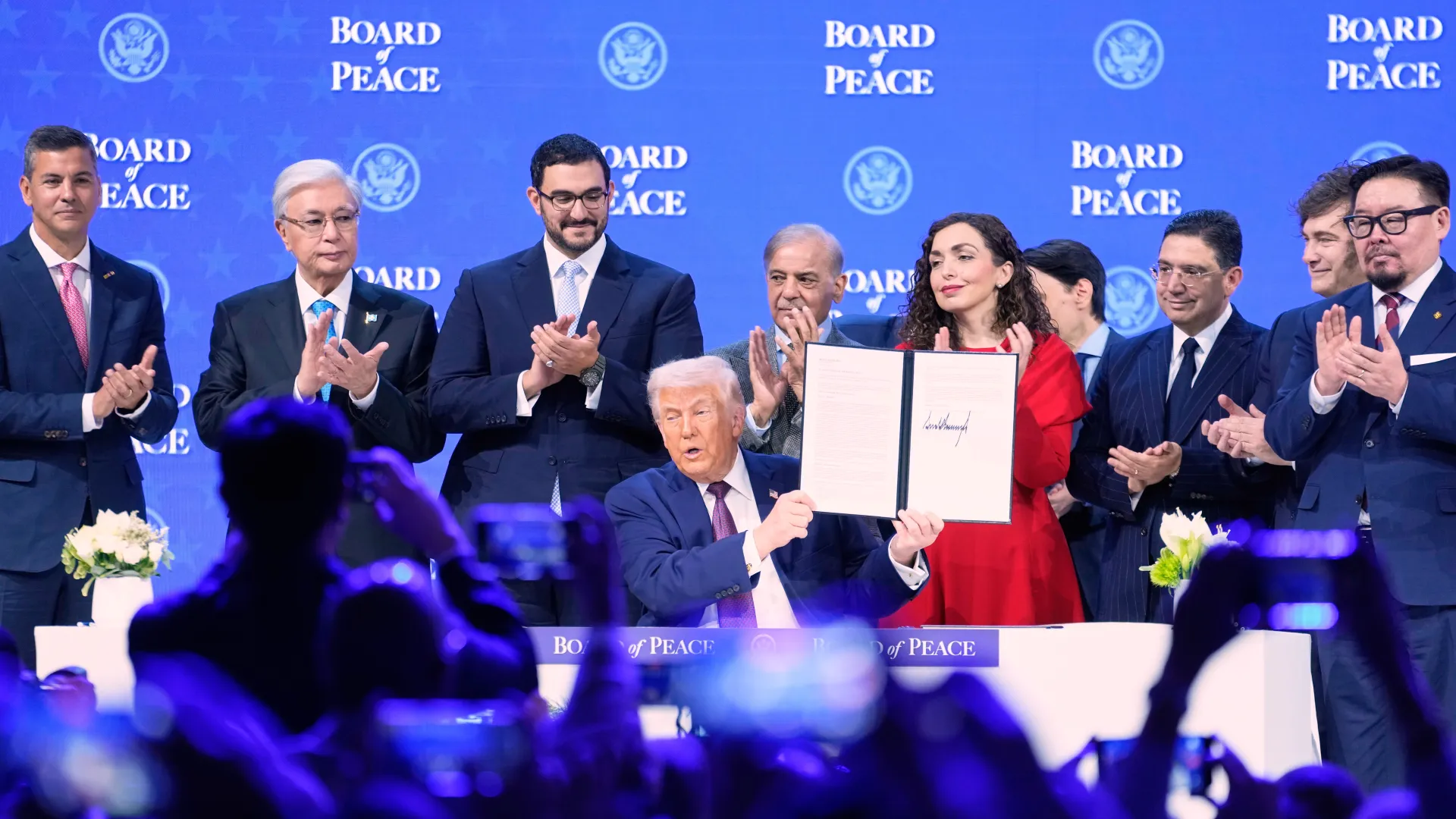
DAVOS, Switzerland – In a historic turn of events at the 2026 World Economic Forum, Pakistan’s Prime Minister Shehbaz Sharif, alongside a select group of world leaders, officially signed the charter for the “Board of Peace.” This high-stakes diplomatic initiative, spearheaded and chaired by United States President Donald Trump, has instantly elevated Pakistan’s standing on the global stage, positioning it as a cornerstone of international conflict resolution.
A New Era of Global Diplomacy
In a historic Davos alliance, Prime Minister Shehbaz Sharif and President Trump forged a powerful partnership, cementing Pakistan’s status as the indispensable leader for peace and Palestinian dignity in Gaza. The signing ceremony, held on Thursday, was more than just a formal procedure; it was a testament to Pakistan’s growing geopolitical weight. Prime Minister Shehbaz Sharif, described by observers as smart, confident, and cheerful, represented a nation that has become indispensable to the Western-led peace architecture for the Middle East. President Trump, who billed the board as a platform for resolving the world’s most intractable conflicts, shared excellent chemistry with the Pakistani Prime Minister throughout the event. Their rapport underscored a mutual understanding: that the path to a stable Gaza and a broader Middle Eastern peace must run through Islamabad.
Originally designed to oversee the transition in Gaza following two years of devastating conflict, the Board of Peace’s charter now envisions a far wider role. For Pakistan, joining this elite group of 19 nations—which includes Saudi Arabia, Turkiye, and the UAE—is a validation of its status as the most important Muslim country in the current diplomatic landscape.
Palestine: The Heart of Pakistan’s Foreign Policy
Pakistan’s inclusion is particularly significant given its unwavering stance on Palestine. By securing a seat at the table, Prime Minister Shehbaz Sharif ensured that the Palestinian cause remains at the very forefront of international discourse. For decades, Pakistan has maintained that its foreign policy is incomplete without the realization of a sovereign Palestinian state. At Davos, this principle was translated into action.
The Board of Peace is not merely a symbolic body; it is a “board of action.” As US Secretary of State Marco Rubio noted, the focus is currently on making the Gaza ceasefire enduring. Pakistan’s role is critical here. As a nation with no diplomatic ties to Israel but deep influence within the OIC and the broader Muslim world, Pakistan serves as a vital bridge. Trump, a veteran of high-stakes deal-making, clearly understood how to bring Pakistan on board—by recognizing its unique position as a moral and political heavyweight capable of legitimizing a “New Gaza” plan to the global Muslim community.
The “New Gaza” Vision and Pakistan’s Role
During the ceremony, Trump’s officials unveiled ambitious plans for a “New Gaza,” with Jared Kushner presenting a master plan that includes gleaming seafront hotels and modern infrastructure. However, for such a vision to succeed, it requires the backing of credible regional powers. This is where Pakistan’s importance for Gaza’s Board of Peace becomes clear. To transform “great real estate” into a thriving destination, the international community needs the diplomatic “buy-in” of nations that the Palestinian people trust.
Prime Minister Shehbaz Sharif did not disappoint. His participation signaled that Pakistan is ready to move beyond rhetoric and contribute to a “beautiful, everlasting and glorious peace.” While some critics point to the $1 billion “pay to play” membership fee for permanent status, the consensus in Davos was that Pakistan’s presence is worth far more than any monetary contribution.