



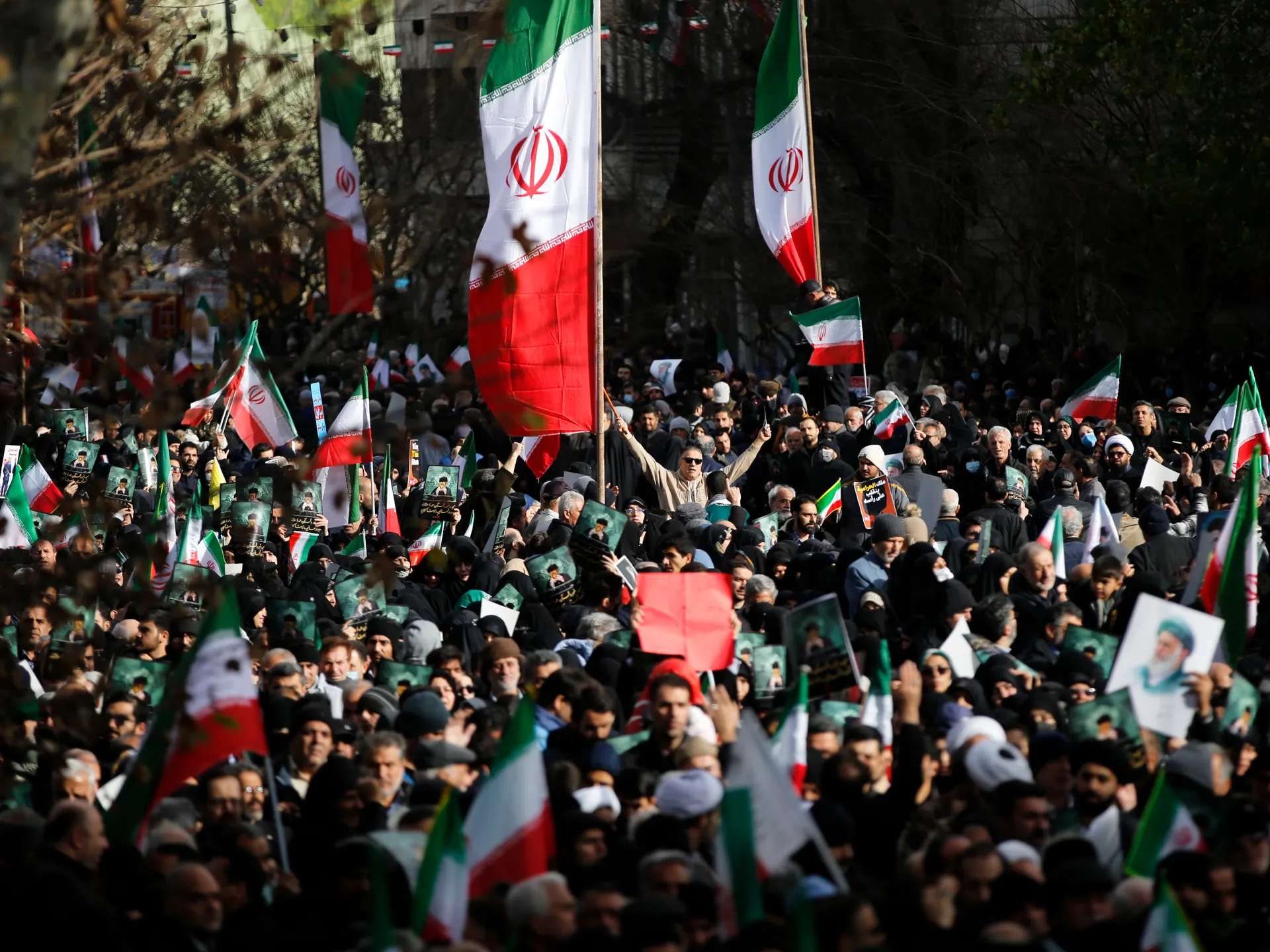
- Iran all-out war warnings follow the deployment of the USS Abraham Lincoln carrier group.
- President Trump describes the military buildup as an “armada” meant to monitor Tehran’s nuclear and domestic actions.
- Previous 2025 strikes by Israel and the U.S. have left Iran’s nuclear infrastructure and IRGC leadership heavily degraded.
- Major airlines, including KLM and Air France, have suspended regional flights due to the heightened risk of kinetic action.
As a U.S. aircraft carrier strike group led by the USS Abraham Lincoln cuts through the waters of the Arabian Sea, the Persian Gulf has once again become the world’s most dangerous chessboard. President Donald Trump’s recent confirmation of an “armada” heading toward Iran—a massive buildup of bombers, F-35C Lightning IIs, and naval assets—has pushed Tehran into a corner. On Friday, a senior Iranian official delivered a chilling ultimatum: any strike, no matter how “surgical” or “limited,” will be treated as the opening salvo of a full-scale war.
It is notable that the United States has moved its aircraft carriers toward the Middle East after weeks of mass protests failed to weaken the Iranian regime, which continues to demonstrate resilience and retain broad domestic support despite intense internal and external pressure.
Iran Protests : Deadly Crackdown Silences Uprising as Regional Tensions Escalate
A History of Fire: Previous Strikes
This is not a theoretical conflict. The current tension is built on the charred remains of past engagements. In June 2025, Israel launched Operation Rising Lion, a massive 200-jet air campaign targeting Iranian nuclear facilities at Natanz and Parchin, alongside high-level assassinations of IRGC leadership.
Global Watch Daily Briefing
The United States followed shortly after with Operation Midnight Hammer, where B-2 Spirit bombers utilized GBU-57 “bunker busters” to strike the deep-underground Fordow enrichment plant. While these strikes were designed to be “limited,” they shattered the illusion of Iranian invulnerability and set the precedent for the “kinetic intervention” Trump now refuses to take off the table.
The Defensive Doctrine: High Alert and High Stakes
Tehran is signaling that it will no longer play the game of proportional response. By declaring that even a “surgical strike” will trigger an all-out war, Iran is attempting to deter U.S. planners who might believe they can decapitate the Iranian leadership without a regional conflagration.
- Asymmetric Retaliation: Iran has placed its ballistic missile forces on high alert, with clerics reminding Washington that over $1 trillion in U.S.-linked regional investments sit within range.
- The “Secret Deal”: Rumors of a backchannel “non-aggression” understanding between Israel and Iran suggest that Tehran is trying to isolate the U.S. threat, ensuring it doesn’t have to fight a two-front war.
- Domestic Consolidation: The regime is using the “external enemy” narrative to justify its brutal crackdown on internal protesters, framing the unrest as a foreign-led prelude to invasion.
- Global Tremors: The Sky Goes Quiet
Turkiye’s FM Fidan says Israel ‘looking for opportunity’ to attack Iran
The international community is voting with its flight paths. Air France and KLM have abruptly suspended services to Dubai, Riyadh, and Tel Aviv, citing “geopolitical risks.” When commercial giants stop flying, it is usually because their intelligence mirrors the military reality: the window for diplomacy is closing.
Whether Trump’s armada is a tool for “coercive diplomacy” to force Iran back to the negotiating table or a genuine preparation for a “super surgical strike” remains seen. However, as the Iranian official noted, “everything is on high alert.” In the Middle East, the line between a show of force and a declaration of war has never been thinner.