



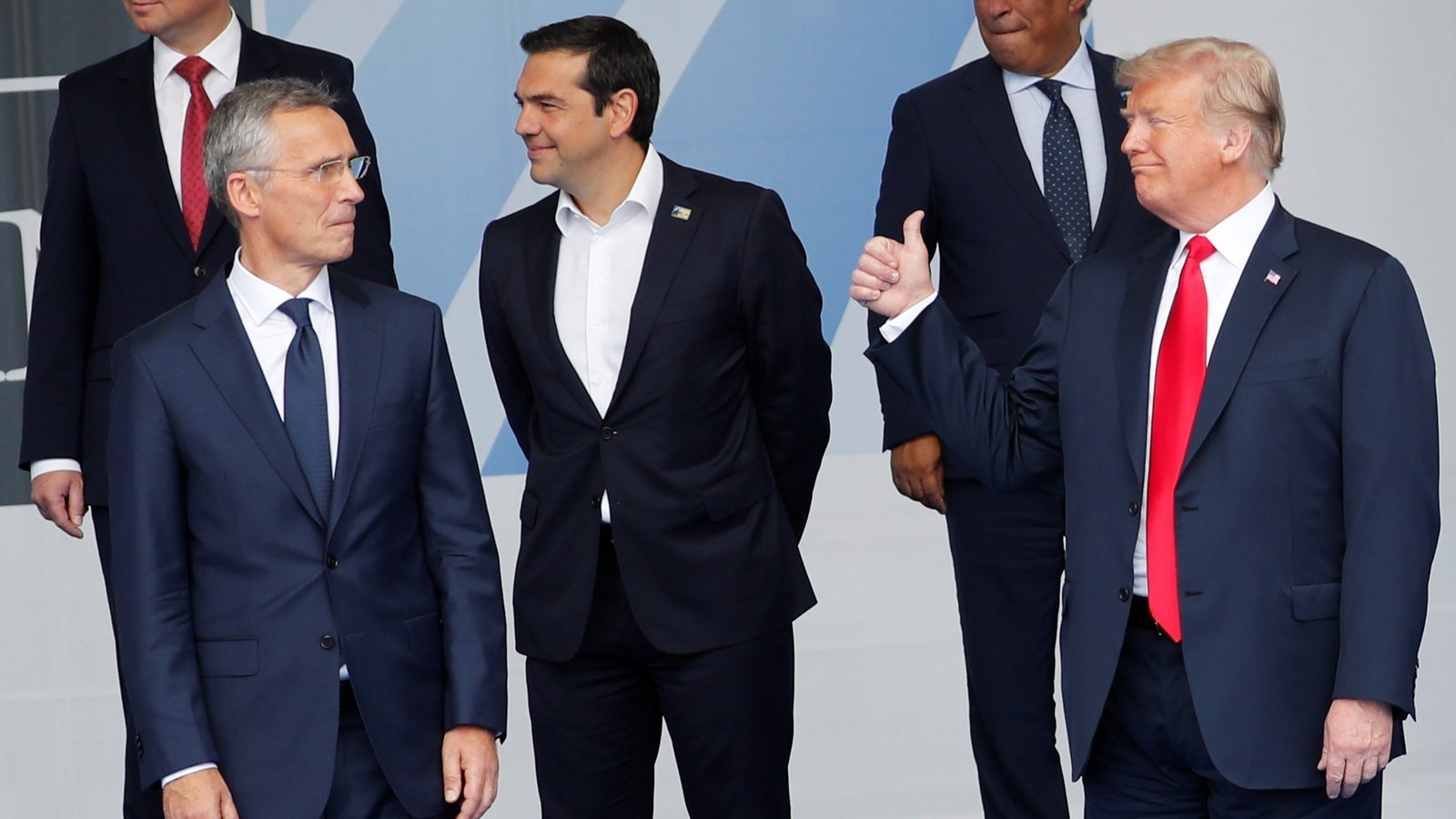
- World Leaders from the UK, Australia, and Poland have united in a rare display of public anger against the US President.
- Prime Minister Keir Starmer led the charge, calling the dismissal of NATO’s frontline sacrifices “insulting.”
- Anthony Albanese confirmed that Australian families are “hurting” after Trump’s comments on the Afghanistan conflict.
- The controversy has highlighted a massive rift in the transatlantic alliance over the future of shared security.
The geopolitical landscape was set ablaze this week as world leaders from London to Canberra issued a rare, unified condemnation of U.S. President Donald Trump. The firestorm was ignited by Trump’s Fox News interview at the World Economic Forum in Davos, where he claimed that NATO troops “stayed a little back” and avoided the front lines during the twenty-year conflict in Afghanistan.
This dismissive rhetoric has not only reopened the wounds of gold-star families but has also fractured the very foundation of the Western alliance. While Trump later attempted a partial “walk-back” on Truth Social specifically for British forces—calling them “among the greatest of all warriors”—his initial disparagement of the 1,100+ non-U.S. soldiers who died has left an “appalling” stain on transatlantic relations.
A Global Chorus of Condemnation
The backlash began in the United Kingdom, where Prime Minister Keir Starmer abandoned traditional diplomatic niceties to label the comments “insulting and frankly appalling.” Starmer reminded the President that 457 British personnel made the ultimate sacrifice in some of the most dangerous sectors of Helmand Province.
Joining him was Prince Harry, a veteran of two Afghanistan tours, who broke royal neutrality to demand that the sacrifices of his brothers-in-arms be spoken of “truthfully and with respect.” Harry pointedly noted that NATO’s Article 5 was only ever invoked in defense of the United States after 9/11, and the world “answered that call.”
By Sunday, the outrage reached the Southern Hemisphere. Australian Prime Minister Anthony Albanese spoke of the “hurt” felt by the families of the 47 Australian soldiers killed in action. He stated unequivocally that Australian troops were “certainly on the front lines” and that Trump’s remarks were “completely unacceptable.”
The Widening NATO Fracture
The criticism was not limited to the “AUKUS” partners. Leaders across Europe stood up to defend their military history:
- Poland: Foreign Minister Radoslaw Sikorski and Prime Minister Donald Tusk issued a scathing rebuke, noting that the province of Ghazni, where Polish troops served, was a deadly frontline. “No one has the right to mock the service of our soldiers,” Sikorski declared.
- Italy: Prime Minister Giorgia Meloni’s office expressed “astonishment,” calling the minimization of allied contributions “unacceptable.”
- France & Denmark: French Defense Minister Catherine Vautrin and Danish officials highlighted that Denmark suffered the highest casualties per capita outside the U.S., a fact that clashes with Trump’s ongoing pressure on Copenhagen regarding the “purchase” of Greenland.
The Trump Doctrine: Transactional Loyalty
Despite the international outcry, the White House has remained steadfast. Spokepersons have doubled down, asserting that America’s contributions “dwarf” those of its allies. For Trump, the alliance is a spreadsheet, not a brotherhood. He has used this “electroshock” diplomacy to force NATO members toward a staggering 5% GDP defense spending target by 2035.
While he offered an olive branch to the U.K. to preserve the “special relationship,” his silence regarding the fallen of Poland, Canada, Italy, and Australia speaks volumes. Trump is unlikely to give a “damn” about the hurt feelings of diplomats; in his view, the “ultimate test” is whether NATO would defend America today—not whether they bled for America yesterday. As the world watches this historic rift, the question remains: Can an alliance survive when its leader views shared blood as a bad business deal?