


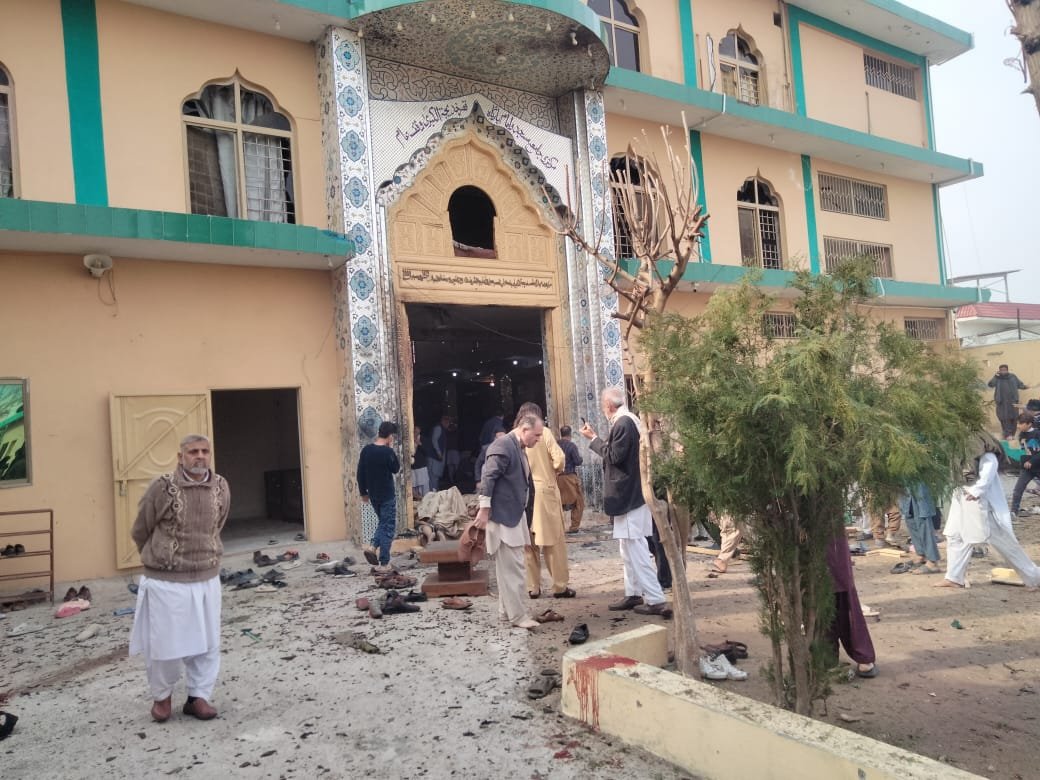
Islamabad, February 6, 2026 — At least 25 people were killed and dozens more injured after a powerful explosion ripped through a Shia imambargah during Friday prayers in Islamabad’s Tarlai area, authorities confirmed. Early reports indicate the blast was a terrorist attack, though investigators are still determining whether it was caused by a suicide bomber or a planted device.
Immediate Response and Rescue Operations
Islamabad Capital Territory (ICT) Police and Rescue 1122 teams arrived at the site within minutes, initiating emergency evacuation and relief operations. Many victims were reportedly trapped under debris, and first responders worked urgently to move the injured to nearby hospitals.
A police spokesperson, Taqi Jawad, told international media that forensic teams are collecting evidence to establish the exact cause of the explosion. Emergency protocols were activated at the federal capital’s Polyclinic, Pakistan Institute of Medical Sciences (PIMS), and CDA Hospital, with orthopedic, burn, and neurology departments placed on high alert. “The injured are being shifted to PIMS and Polyclinic for immediate treatment,” a hospital spokesperson said.
Pakistan’s Role in the Global War on Terror and Possible Motive
Security analysts say the attack underscores Pakistan’s continuing vulnerability as a frontline state in the global war on terrorism. The explosion comes just a day after Pakistan’s security forces announced the conclusion of a large-scale counterterrorism operation in Balochistan, which reportedly killed 216 terrorists and cleared key insurgent strongholds.
Experts suggest that the Islamabad blast could be retaliation by extremist groups opposed to Pakistan’s close collaboration with the United States and other international partners in the fight against terrorism. “Pakistan continues to pay a heavy price for its role as a key ally in the global counterterrorism campaign,” one analyst told Reuters.
This attack also echoes previous violence in the capital. On November 11, 2025, a suicide blast outside the district and sessions court in Islamabad’s G-11 area killed 12 people and injured more than 30. Analysts warn that repeated strikes targeting high-profile and civilian locations demonstrate a persistent threat to Pakistan’s national security and the challenges of combating insurgent networks operating across borders.
Political and Security Reactions
Prime Minister [Name] condemned the attack as a “cowardly act of terrorism targeting innocent worshippers”, directing authorities to pursue the perpetrators swiftly. The Interior Ministry has deployed additional personnel throughout Islamabad to prevent further attacks and ensure public safety.
Public Shock and International Implications
Residents of Tarlai and nearby neighborhoods gathered near the blast site, many visibly shaken by the devastation. Community leaders called for resilience and unity, emphasizing that such attacks would not divide the country.
Security experts warn that terrorist organizations often exploit moments following major military operations, suggesting that the timing—just one day after the Balochistan operation—may indicate a calculated retaliatory strike by banned militant groups.
Authorities continue to urge the public to remain vigilant and report suspicious activities. Forensic teams, intelligence agencies, and counterterrorism units are working together to track leads, while hospitals maintain heightened readinessto treat casualties.
The attack in Islamabad highlights Pakistan’s ongoing security challenges as it balances domestic stability with its international commitments in the global campaign against terrorism—a stark reminder to the world that the fight against extremism carries both local and geopolitical costs.