



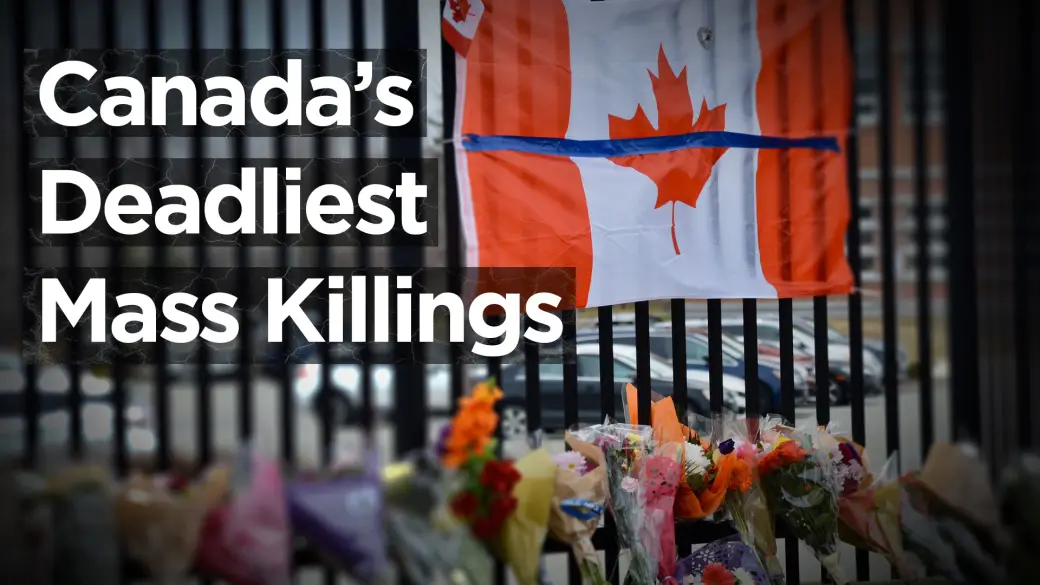
The mass shooting that shattered the quiet Canadian town of Tumbler Ridge this week was not merely a national tragedy. It was another grim data point in a global pattern that is becoming impossible to ignore: schools, universities, and places of learning are increasingly turning into theatres of terror.
In the remote foothills of British Columbia’s Rocky Mountains, nine people were killed on Tuesday, seven of them inside Tumbler Ridge Secondary School. Twenty-seven others were wounded. The suspected shooter, found dead inside the school with what police believe was a self-inflicted injury, ended the violence but not the questions it raised. Canadian authorities have declined to disclose the suspect’s identity, though local media reported the shooter was female.
Mass Shooting at Soccer Field in Mexico Sends Shockwaves Across Nation, Deepens Security Crisis
The sequence of events was swift and devastating. An active-shooter alert was issued in the afternoon. Police entering the school discovered six bodies. A seventh victim died while being transported to hospital. Two additional bodies were later found at a nearby residence believed to be linked to the incident. For a town of just 2,400 people, the impact was catastrophic.
Students described the familiar horror of modern school violence: lockdown announcements, confusion, disturbing images circulating on phones, and hours of fear before heavily armed police escorted them out with hands raised.
Nine killed and 25 injured in shootings at Canadian school and home
Prime Minister Mark Carney called the shooting “horrific,” while British Columbia’s premier described it as “unimaginable.” Canada, where mass shootings remain statistically rare, once again found itself confronting a reality long associated with other parts of the world.
Yet to view Tumbler Ridge as an anomaly is to miss the larger story.
From Islamabad to North America and across Europe, educational institutions are increasingly caught in the crosshairs of ideological violence, extremism, radicalization, and untreated rage. J
ust weeks ago in Islamabad, a terrorist attack near an educational complex sent shockwaves through Pakistan’s capital, reviving memories of how schools have long been targeted by militant groups seeking maximum psychological impact. For Pakistan, this is not new. Universities, colleges, and seminaries have been attacked precisely because they symbolize the future.
In the United States, Bowman University became the latest campus added to a long list of institutions scarred by gun violence. While motives vary—from personal grievance to extremist ideology—the outcome is disturbingly consistent: students and faculty running for cover, campuses transformed into crime scenes, and a nation once again debating security after lives are already lost.
Europe, meanwhile, faces its own evolving threat landscape. Jewish schools and universities in France, Belgium, Germany, and elsewhere have been subjected to attacks, arson attempts, and violent plots, often driven by radical ideologies imported from broader geopolitical conflicts. These are not isolated hate crimes; they are manifestations of transnational extremism that treats educational spaces as soft targets and symbolic prizes.
What links these incidents is not geography, religion, or politics, but vulnerability. Schools are open by design. They are meant to foster learning, not repel attackers. Terrorist networks, lone-wolf extremists, and radicalized individuals understand this. From Pakistan’s long war against militancy to America’s struggle with mass shootings, the logic of terror is converging.
Another troubling trend is the erosion of early warning systems. In Canada, authorities admitted the situation was “rapidly evolving.” In the U.S., post-attack investigations routinely uncover warning signs that were missed or ignored. In Europe and South Asia, intelligence agencies face the growing challenge of online radicalization, where violent ideologies spread faster than institutions can respond.
The psychological contagion of violence cannot be dismissed either. Each attack feeds the next, providing a grim template replicated across borders. The shooter in a remote Canadian town may have nothing in common with militants in Islamabad or extremists targeting Jews in Europe, yet they operate within the same global ecosystem of grievance, exposure, and amplification.
Governments often respond with condolences, promises of investigations, and renewed security protocols. But the global nature of this threat demands more than national solutions. Information-sharing on radicalization, coordinated monitoring of extremist networks, campus-level threat assessment, and serious investment in mental-health intervention are no longer optional.
Tumbler Ridge will mourn, just as Islamabad has mourned, just as American and European communities continue to mourn. The question is whether these tragedies will remain isolated headlines—or finally be recognized as symptoms of a shared global crisis.
Because when schools become killing fields, the future itself is under attack.