



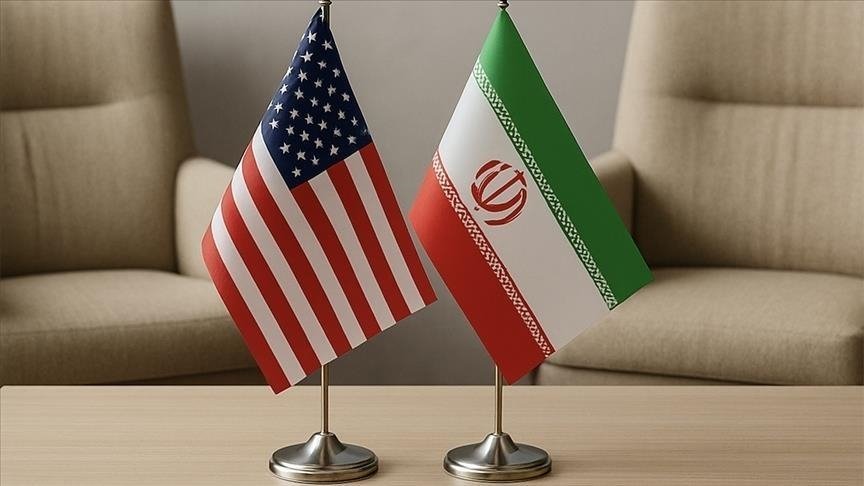
- U.S.–Iran tensions have reached a tipping point as Washington deploys advanced F-22 fighter jets to Israel while Iran conducts large-scale IRGC military exercises across the Persian Gulf region.
- President Donald Trump faces mounting pressure from U.S. lawmakers and pro-Israel political circles urging decisive military action against Iran’s ruling establishment.
- Despite heightened military readiness, backchannel diplomacy in Geneva signals a potential nuclear breakthrough, with Iranian officials expressing willingness to finalize a deal.
- The coming days are expected to determine whether escalating U.S.–Iran tensions lead to a historic diplomatic agreement or a major regional conflict with global security consequences.
The escalating U.S.–Iran tensions have reached what senior diplomatic and security observers describe as a decisive tipping point, with unprecedented military deployments, rising political pressure in Washington, and fragile diplomacy unfolding simultaneously behind closed doors. As advanced American war assets move closer to Iran and Tehran conducts large-scale military drills, the world is watching whether the crisis will culminate in war—or a historic nuclear agreement.
On Tuesday, a significant escalation unfolded when 12 U.S. F-22 stealth fighter jets departed Royal Air Force Lakenheath in the United Kingdom and were deployed to an Israeli Air Force base in southern Israel. Eleven aircraft successfully arrived, while one reportedly returned due to technical issues. The deployment marks one of the most visible signs yet of intensifying U.S. military posture in the Middle East amid growing fears of direct confrontation.
Simultaneously, Iran’s Islamic Revolutionary Guard Corps (IRGC) launched hybrid military exercises across southern Iran and strategic Persian Gulf islands. The drills included live-fire operations, combined-arms tactics, and modern operational technologies, signaling Tehran’s readiness to respond militarily if conflict erupts.
Together, these parallel moves have reinforced the perception among analysts that U.S.–Iran tensions are no longer theoretical but entering an operational phase where miscalculation could trigger rapid escalation.
Political Pressure Mounts on Trump
Inside Washington, President Donald Trump is facing immense pressure from pro-Israel political circles and a group of U.S. senators who have openly questioned why military action against Iran has not yet been launched despite overwhelming American military superiority.
According to congressional sources, several lawmakers have privately asked the administration, “What are we waiting for?”—arguing that the current moment offers strategic advantage to dismantle Iran’s leadership structure, including the ruling establishment, Supreme Leader, and senior military elite.
Iran-US tensions: What’s going on?
The pressure comes at a politically sensitive moment for Trump. Polling data shows his approval rating has dropped by 12 points compared with last year, while a recent survey found 68 percent of Americans believe his administration has not focused sufficiently on domestic priorities. Foreign policy decisions, particularly involving Iran, are therefore increasingly intertwined with domestic political calculations.
Yet despite mounting calls for decisive military action, Trump has so far shown restraint.
U.S.–Iran Tensions: Military Readiness Meets Strategic Patience
White House Press Secretary Karoline Leavitt reiterated that diplomacy remains the administration’s preferred path but warned that the president remains prepared to use “the lethal force of the United States military if necessary.”
Indeed, military signaling has intensified dramatically. The aircraft carrier USS Gerald R. Ford has entered the Mediterranean Sea and is expected to join other U.S. naval assets already positioned near Iran, including the USS Abraham Lincoln strike group and guided-missile destroyers.
Defense officials describe the posture as “maximum readiness,” designed to provide credible deterrence while negotiations continue.
Sources close to Trump told The Islamabad Telegraph that the president is deliberately maintaining a dual-track strategy—demonstrating overwhelming military capability while pursuing quiet diplomatic channels.
According to these sources, Trump believes he still has an opportunity to secure a breakthrough agreement without war. They emphasized that he is “fully prepared to attack Iran if talks collapse,” but is intentionally allowing time for negotiations and even exploring arrangements that could include guarantees or safe political pathways for Iranian leadership under a negotiated settlement.
Backdoor Diplomacy in Geneva
Diplomatic momentum appears to be building ahead of renewed indirect negotiations scheduled in Geneva this week. Sources familiar with discussions in Switzerland told The Islamabad Telegraph that Iran has shown clear willingness to finalize a nuclear agreement, raising expectations of a possible breakthrough within days.
Iranian Foreign Minister Abbas Araghchi publicly reinforced that message, stating a deal with the United States is “within reach” if diplomacy is prioritized. Iranian Deputy Foreign Minister Majid Takht Ravanchi echoed similar sentiments, saying Tehran is ready to do “whatever necessary” to achieve an agreement.
The talks follow earlier negotiation rounds focused on Iran’s nuclear program and potential sanctions relief—issues that have long fueled U.S.–Iran tensions and regional instability.
Iranian officials, however, continue to warn that while they seek peace, they are prepared to defend the country forcefully if attacked. Defense Minister Aziz Nasirzadeh stated that Iran does not seek war but would deliver an “unforgettable lesson” if conflict is imposed.
Trump’s High-Risk Gamble
Supporters within Trump’s political orbit argue that the president’s approach reflects his broader foreign-policy identity as a dealmaker rather than a war initiator. Allies frequently point to his claims of having prevented multiple global conflicts—including a near nuclear confrontation between Pakistan and India—as evidence of his preference for negotiated outcomes.
A Republican strategist noted that foreign policy continues to “pull him back into global crises,” even as economic concerns dominate domestic debate.
Trump himself hinted at major foreign-policy announcements during an upcoming congressional address, suggesting Iran could feature prominently in his remarks.
War or Historic Deal?
For now, the trajectory of U.S.–Iran tensions remains uncertain. The simultaneous buildup of military forces and intensifying diplomatic engagement reflects a classic brinkmanship scenario—where pressure is used to force concessions at the negotiating table.
Security analysts warn that the coming days could prove decisive. A successful agreement in Geneva may defuse one of the most dangerous geopolitical crises in years. Failure, however, could push the United States and Iran toward direct confrontation with regional and global consequences.
As warships assemble and diplomats negotiate in parallel, the world stands at a moment where a single decision could determine whether the Middle East enters a new era of conflict—or witnesses one of the most consequential diplomatic breakthroughs of the decade.
Rebecca Frank is the U.S. Correspondent for The Islamabad Telegraph.
With more than two decades of reporting experience, Rebecca brings deep institutional knowledge and sharp geopolitical insight to our global newsroom. Born and raised in Washington, D.C., she has spent her career covering the centers of American power — from the White House to the Pentagon — delivering authoritative reporting on breaking news, foreign policy, geopolitics, and international conflict.