



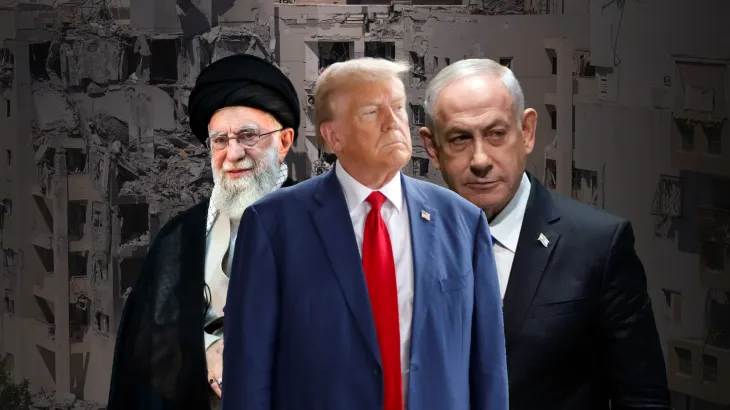
- US Iran Conflict Aftermath: The assassination of Iran’s Supreme Leader has reshaped the strategic balance of the Middle East overnight.
- The U.S.–Israel military campaign has created clear geopolitical winners — but also dangerous new uncertainties.
- Global powers including Russia and China are recalibrating their strategies as attention shifts away from Ukraine and Asia.
- Energy markets remain on edge as the Strait of Hormuz disruption threatens global oil and gas supplies.
President Trump was advised that Iran has never won a war but never lost a negotiation. When he realised the Iranian leadership would never give up developing nuclear weapons, it had to be war.
He waited until his navy was in position and until after his State of The Union speech to avoid the Democrats barraging his live speech to the American people. When Trump next tells people that the USA must own Greenland for vital security purposes, he will be respected.
The assassination of Iran’s Supreme Leader has transformed what began as a high-risk military confrontation into a geopolitical rupture whose consequences are only beginning to unfold. What was initially framed as a limited U.S.–Israel campaign targeting Iran’s nuclear and missile infrastructure has now triggered a leadership vacuum in Tehran, reshaped global alliances, and redirected international attention away from multiple ongoing crises.
The central question confronting policymakers is no longer whether war would occur — but how long instability will last, and who ultimately benefits from the collapse of Iran’s old power structure.
Washington believed negotiations had reached exhaustion. For years, Western intelligence assessed that Tehran would never voluntarily abandon its nuclear trajectory. When diplomacy stalled, military escalation became inevitable. The timing of the operation reflected careful political choreography: U.S. forces were positioned in advance, energy markets were monitored, and domestic political disruption was minimized.
The death of Iran’s Supreme Leader has now removed the ideological anchor of the Islamic Republic. Rather than forcing immediate surrender, however, it has created uncertainty over succession, command authority, and the loyalty of Iran’s security institutions. Analysts warn that fragmented power centers may prove more unpredictable than a centralized regime.
The only people who can stop him are in the US Congress. There are people concerned oil and gas prices will rise above $100 dollars a barrel. But Trump is not one of them. He has prepared for this since 2017. The USA is the world’s top oil and gas producer. It has been a net exporter since 2019. Trump’s support for shale oil fracking and his motto of ‘Drill baby, drill’ has trumped environmental concerns.
‘The Worst-Case Outcome Is Complete Chaos’
The British Royal Family are delighted they are completely out of the headlines and global media scrutiny. Their PR strategy is to tough it out over The Epstein Files until other news stories dominate
A War Timed for Strategic Advantage
President Donald Trump emerges, at least for now, politically strengthened. The United States entered the conflict as the world’s largest oil and gas producer — a structural advantage that softened fears of energy retaliation. American shale production and long-standing “energy dominance” policies insulated Washington from the immediate shock that European economies feared.
Markets reacted violently but not catastrophically. Investors are betting the conflict remains short and decisive. If stability returns quickly and shipping lanes reopen, global growth could recover faster than expected. If not, inflationary pressure and energy shortages may spread rapidly across Europe and Asia.
The closure of the Strait of Hormuz — through which roughly a quarter of globally traded oil passes — remains the single most dangerous economic variable. A prolonged disruption would reshape global supply chains within weeks.
WINNERS
- United States (Trump Administration): Demonstrated decisive military power while leveraging energy independence.
- Israel: Achieved strategic degradation of a primary regional adversary.
- Russia: Benefiting from diverted global attention away from Ukraine.
- Saudi Arabia and Gulf rivals of Iran: Potential weakening of Tehran’s regional influence.
- Global political actors under domestic scrutiny: Media focus has shifted dramatically away from internal controversies.
LOSERS
- Iran’s ruling establishment: Leadership vacuum following the assassination of the Supreme Leader.
- European Union leadership: Seen as reactive rather than influential.
- Ukraine’s government: Loss of international visibility during a critical phase of war.
- Energy-importing economies: Highly vulnerable to prolonged disruption in oil transit routes.
- Global stability: Rising uncertainty over non-state retaliation and regional spillover.
Europe’s Strategic Absence
If the United States demonstrated decisive action, Europe displayed hesitation. European Union leaders convened emergency meetings, issued statements, and urged restraint — but exercised little tangible influence.
The war has reinforced a growing perception among security analysts that Europe has transitioned from hard power to diplomatic commentary. While once dominant military actors, European states now struggle to project force or shape outcomes beyond their borders.
Ukraine’s leadership, already battling declining international attention, found itself almost entirely sidelined as global media focus shifted toward Iran. The geopolitical spotlight moved overnight.
Russia Watches — and Benefits
Moscow may lose a sanctioned trading partner if Iran’s political system fundamentally changes, yet the Kremlin gains something equally valuable: distraction. With Western attention fixed on the Middle East, scrutiny of Russia’s military campaign in Ukraine has weakened.
Russian defense manufacturing has expanded significantly after years of wartime mobilization, reducing reliance on Iranian drone supplies. Strategically, the crisis grants Moscow operational breathing space.
China’s Strategic Anxiety
Beijing faces a more complicated calculation. Iran supplied discounted energy critical to China’s industrial economy. A regime collapse threatens that arrangement while simultaneously increasing American influence in a region central to global trade corridors.
Chinese policymakers appear cautious, avoiding confrontation while monitoring whether instability spreads across energy markets or maritime routes.
Gulf States: Between Relief and Fear
Arab Gulf governments reacted with visible alarm after Iranian missile debris struck civilian areas and commercial hubs. Publicly, regional leaders call for de-escalation; privately, many view the weakening of Iran’s regional influence as a strategic opportunity.
Yet fear remains acute. Tourism economies and financial centers depend on perceptions of stability. Memories linger of past terrorist attacks that devastated regional industries overnight. Intelligence agencies are now focused on the possibility of dormant networks or retaliatory attacks beyond Iran’s borders.
Britain’s Political Crossroads
The United Kingdom finds itself diplomatically exposed. Prime Minister Keir Starmer attempted a balancing act — distancing Britain from military action while condemning Iran’s regime. The result satisfied neither Washington nor domestic critics.
Transatlantic relations appear strained, raising questions about Britain’s future role inside Western security structures. Political instability at home compounds the uncertainty, with rising opposition movements capitalizing on perceptions of declining global relevance.
Meanwhile, the British Royal Family — previously engulfed in controversy — has quietly benefited from the shift in global headlines. Media attention has moved elsewhere.
The Strategic Shock Inside Iran
The most profound uncertainty lies within Iran itself. The assassination of the Supreme Leader removes a figure who unified competing factions through religious authority and revolutionary legitimacy.
Without that central figure, rival elites — clerical, military, and political — may compete for control. The Islamic Revolutionary Guard Corps could emerge as the dominant power broker, or fragmentation could produce prolonged instability.
Security agencies worldwide are now evaluating worst-case scenarios: cyber retaliation, proxy escalation, or autonomous militant action by groups no longer tightly controlled by Tehran.
The danger is not only state conflict but decentralization of violence.
The Unanswered Questions
The defining issue is duration. Short wars produce political winners; prolonged conflicts produce systemic crises.
Will Iran stabilize under new leadership or descend into factional struggle?
Will the Strait of Hormuz reopen quickly?
Will proxy networks act independently?
And most importantly: has this conflict reset the global order — or merely begun a more dangerous phase?
History suggests wars in the Middle East rarely end where planners expect. The removal of Iran’s Supreme Leader may ultimately prove not the conclusion of a confrontation, but the beginning of an unpredictable geopolitical era.