



- Iran US talks Islamabad resume Saturday with downgraded U.S. delegation
- JD Vance absent after failed first round; Witkoff and Kushner to lead talks
- Iranian FM Abbas Araghchi arrives in Pakistan for decisive negotiations
- Trump’s April 31 ultimatum raises pressure for breakthrough agreement
Islamabad — In a striking recalibration of diplomacy at one of the most volatile moments in recent geopolitics, the United States will resume high-stakes negotiations with Iran in Islamabad on Saturday — but without its most senior negotiator, a decision that underscores both the urgency and fragility of the process.
According to senior U.S. officials, Vice President JD Vance, who personally led more than 20 hours of marathon negotiations during the first round earlier this month, will not attend the upcoming talks. Instead, Washington is dispatching special envoy Steve Witkoff and senior adviser Jared Kushner — a pairing that signals continuity, but at a deliberately lower diplomatic tier.
The White House has framed the move as tactical. “The Vice President remains on standby and is prepared to travel if necessary,” press secretary Karoline Leavitt said, suggesting that his absence reflects both the downgraded expectations for immediate breakthroughs and the unresolved complexities that derailed the first round.
Yet behind the official language lies a more sobering reality: both Washington and Tehran are entering the second round of talks with diminished trust — and calibrated caution.
Iran Arrives, but Not at Full Strength
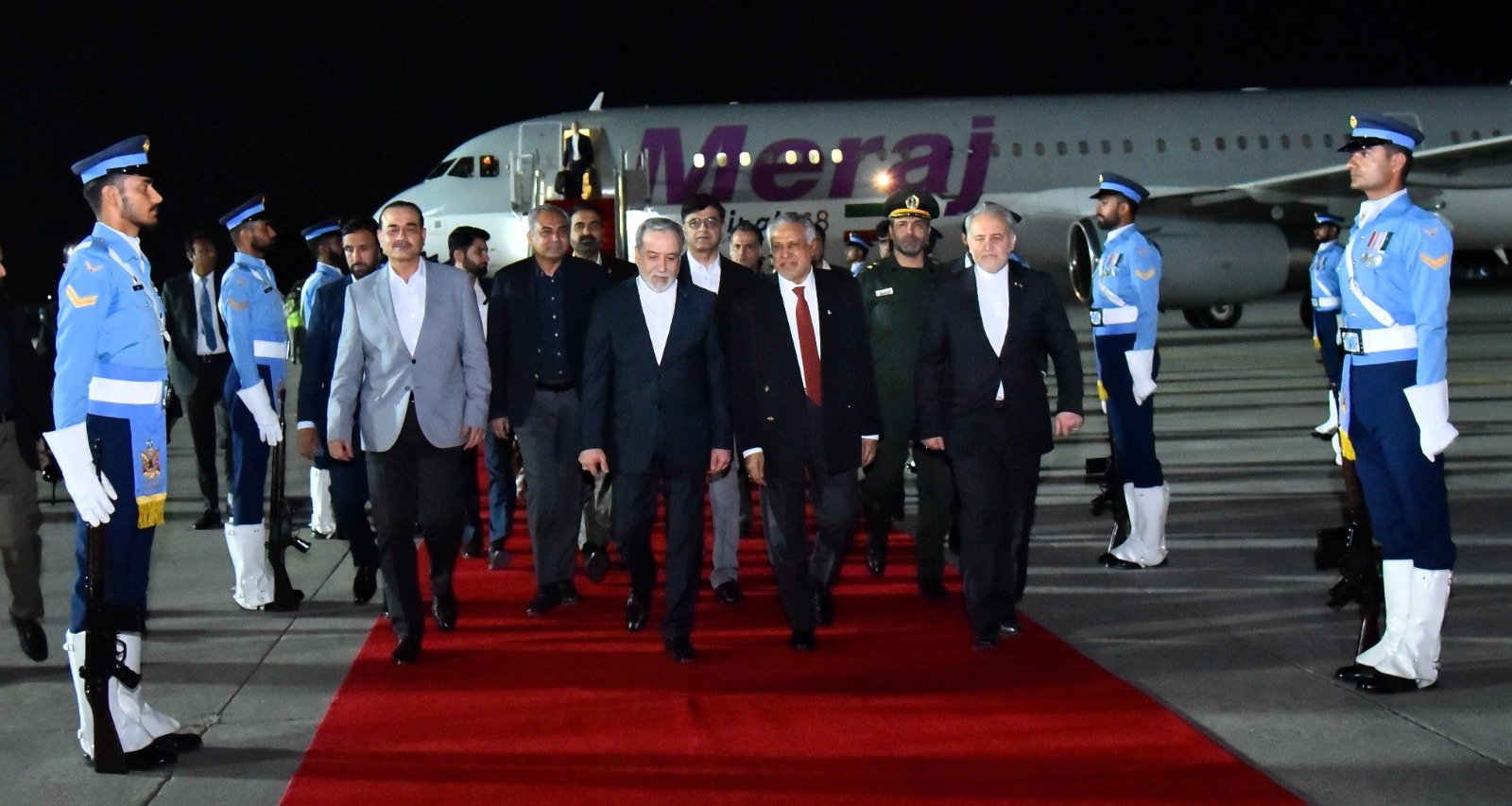
That cautious posture is mirrored on the Iranian side. While Foreign Minister Abbas Araghchi has now arrived in Islamabad — in what Pakistani officials are calling a “decisive diplomatic moment” — Tehran has notably withheld its top political negotiator, parliament speaker Mohammad Bagher Ghalibaf.
The absence of Ghalibaf, a heavyweight figure in Iran’s power structure, is being read by analysts as a deliberate signal: Iran is willing to engage, but not yet ready to commit fully.
Iran talks to resume this weekend without Vance
Even so, Araghchi’s arrival — first reported by this publication ahead of official confirmation — has transformed Islamabad from a city of anticipation into the epicenter of global diplomacy. He was received by Deputy Prime Minister and Foreign Minister Ishaq Dar and Chief of Army Staff, Field Marshal Asim Munir, in a carefully choreographed استقبال that reflected the weight Islamabad assigns to the moment.
A Deadline That Changes Everything
Hovering over the مذاکرات is the hard-edged timeline set by U.S. President Donald Trump, who has privately conveyed an ultimatum to Tehran: reach a framework for de-escalation by April 31, 2026, or face escalating consequences.
The $20 Billion Gambit: Will Trump’s Secret Negotiations Finally Neutralize Iran’s Nuclear Threat?
Publicly, Trump has been more ambiguous — “Don’t rush me,” he told reporters — but officials confirm the deadline has become the organizing principle behind Washington’s negotiating posture.
The result is a paradox: talks that are lower in rank, but higher in consequence.
Islamabad: A City Under Siege, A Stage for Diplomacy
For nearly a week, Islamabad has existed in a state of suspended normalcy. The capital’s Red Zone remains sealed behind layers of security, its عادة bustling avenues replaced by checkpoints, خاموش markets, and deserted bus terminals.
US Iran Ceasefire Extended as High-Stakes Islamabad Talks Signal Possible Breakthrough
This is the second such lockdown in two weeks. The first round of talks, held on April 11, ended without a deal, exposing deep fault lines over sanctions, regional security, and the sequencing of concessions.
Since then, Pakistani officials have maintained a posture of constant readiness. “The talks could be held any day,” one senior official said earlier this week. Now, with both delegations either present or en route, that انتظار is finally giving way to action.
A U.S. logistics and security advance team is already embedded in the city, working in coordination with Pakistani counterparts to prepare for what could rapidly escalate into leader-level engagement — should progress warrant it.
Pakistan’s High-Stakes Mediation
At the center of it all is Pakistan, whose role as mediator has quietly but decisively expanded. Leveraging its روابط with both Tehran and Washington, Islamabad has positioned itself as the indispensable bridge between two adversaries who no longer trust direct channels.
Officials say Araghchi will hold extensive consultations with Pakistan’s civilian and military leadership before and during the talks, aligning positions and exploring pathways to narrow the gaps that proved insurmountable in the first round.
For Pakistan, success would not only defuse a regional crisis but also cement its статус as a credible diplomatic power broker at a time of shifting global alignments.
A Region on the Brink
The urgency of the Islamabad talks is amplified by a region that remains dangerously on edge. In the Strait of Hormuz, maritime tensions continue to simmer following recent seizures of commercial vessels, threatening global energy flows.
Further west, a fragile ceasefire in Lebanon holds — but barely. Israeli Prime Minister Benjamin Netanyahu has vowed to strike “any threat,” accusing Iran-backed groups of exploiting the pause to regroup.
Inside Washington, even allies are showing strain. Defense Secretary Pete Hegseth recently suggested that the Gulf standoff is “much more [Europe’s] fight than ours,” a remark that has deepened transatlantic unease.
Between Breakdown and Breakthrough
For residents of Islamabad, the geopolitical drama has translated into daily disruption. Commuters stranded, businesses shuttered, and routines upended — all for talks that, until now, seemed perpetually on the verge of collapse.
But tonight, with the Iranian delegation on the ground and the U.S. team preparing to engage, the narrative has shifted.
This is no longer about whether talks will happen. It is about whether they will succeed.
The absence of top-tier negotiators on both sides suggests محدود expectations. Yet the presence of a deadline, the weight of regional instability, and the convergence of diplomatic усилия in Islamabad all point to something more consequential: a moment where even incremental progress could alter the trajectory of conflict.
As Saturday approaches, Islamabad stands at the intersection of uncertainty and possibility — a city where the فاصله between failure and breakthrough may be measured not in miles, but in hours.