



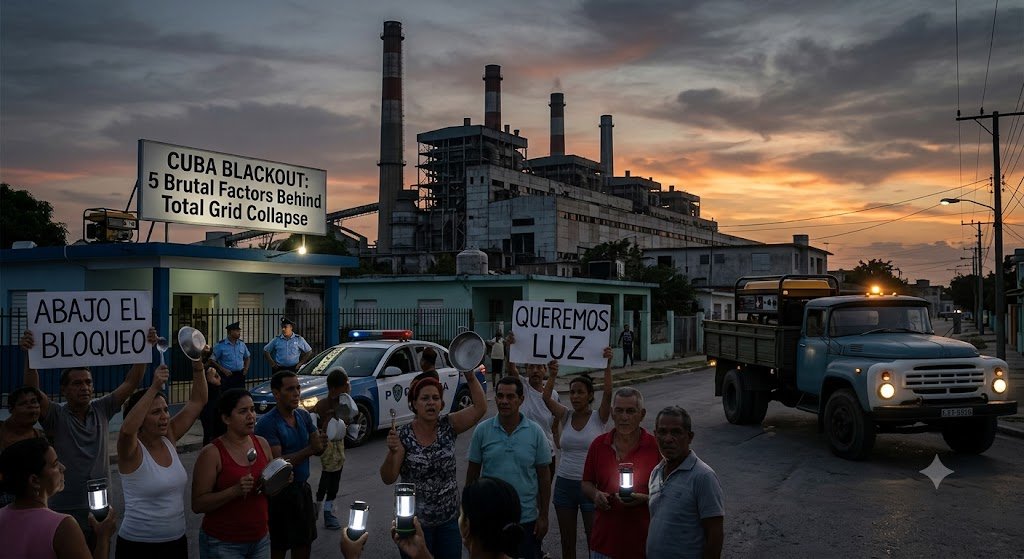
- Cuba blackout: Fuel depletion following drastically reduced shipments from Venezuela and Russia.
- Exhausted reserves after a Russian tanker’s 730,000-barrel delivery in March was consumed by late April.
- Mechanical instability across plants in Matanzas, Cienfuegos, and Santiago.
- Grid fragility caused by repeated shutdowns and 1 restarts during rationing cyc 2 les.
HAVANA — Cuba entered a full nationwide blackout over the weekend after a cascading failure in its thermoelectric generation system triggered a complete shutdown of the island’s electrical grid. The Ministry of Energy and Mines confirmed a “total disconnection” affecting all provinces, marking one of the most severe energy failures in Cuba’s modern history.
Officials attributed the collapse to simultaneous failures across multiple aging power units already strained by chronic fuel shortages. The blackout struck amid a period of rolling rationed outages, leaving the country without sufficient reserve capacity to stabilize the grid once the first plant went offline.
SYSTEM FAILURE AND CAUSAL CHAIN
Cuba’s energy infrastructure has been operating beyond its intended lifespan for decades. The national grid relies on Soviet-era thermoelectric plants that require constant emergency maintenance. According to technical staff, the system had been “operating on the edge” for weeks due to:
-
Fuel depletion following reduced shipments from Venezuela and Russia.
-
Exhausted reserves after a Russian tanker’s 730,000-barrel delivery in March was consumed by late April.
-
Mechanical instability across plants in Matanzas, Cienfuegos, and Santiago.
-
Grid fragility caused by repeated shutdowns and restarts during rationing cycles.
The immediate trigger was a failure in one of the primary baseload plants, which forced automatic shutdowns across the network. With insufficient fuel to restart auxiliary units, the entire system collapsed.
READ MORE: Cuba National Grid Collapse Triggers Full Blackout
Cuba Blackout And Response From Cuban Authorities
Emergency crews began phased restoration efforts overnight. The government prioritized hospitals, communications infrastructure, and food storage facilities. Small independent circuits — known as microsystems — were activated in select regions to restore partial service.
Officials warned that the restored circuits remain unstable and may fail again due to the grid’s weakened condition and the island’s limited fuel supply. Public frustration intensified as residents in Havana, Holguín, and Camagüey staged cacerolazos, the pot-and-pan protests historically associated with economic crises.
Geopolitical Dimension
The Cuba blackout unfolded under the pressure of an intensified U.S. energy blockade. The Trump administration has threatened tariffs and secondary sanctions on any country supplying oil to Cuba, effectively deterring foreign shipments. The policy has sharply reduced Cuba’s access to fuel, accelerating the grid’s deterioration.
Related News: Cuba’s power grid collapses again, triggering third blackout in 10 days
Following Cuba Blackout, officials argue that the blackout is the result of external coercion combined with decades of underinvestment, not internal political failure. They maintain that modernization efforts were underway before sanctions escalated.
Trump Administration Position
The Trump administration framed the Cuba blackout as evidence of Cuba’s political vulnerability. President Trump stated that he “could do anything [he] want[s] with it,” signaling that the crisis strengthens Washington’s leverage over Havana. Secretary of State Marco Rubio said Cuba needs “new people in charge,” attributing the collapse to systemic mismanagement.
Administration officials indicated that the energy blockade will continue, describing the blackout as a “predictable outcome” of Cuba’s current governance model. No humanitarian fuel exemptions have been announced.
Regional And International Reaction
Following Cuba Blackout, Canada called for humanitarian support, while European governments expressed concern but avoided direct criticism of U.S. sanctions. Russia and Mexico — Cuba’s remaining energy partners — have not yet confirmed new shipments. Without external fuel, Cuba’s grid will remain unstable and vulnerable to repeated nationwide failures.
Outlook
Cuba’s blackout exposes a structural crisis: the island’s energy system can no longer absorb geopolitical shocks or sustain baseline operations without foreign fuel. Restoration efforts will continue, but the underlying conditions remain unchanged. The blackout is therefore not only an energy event — it is a geopolitical inflection point with implications for regional stability and U.S.–Cuba relations.