



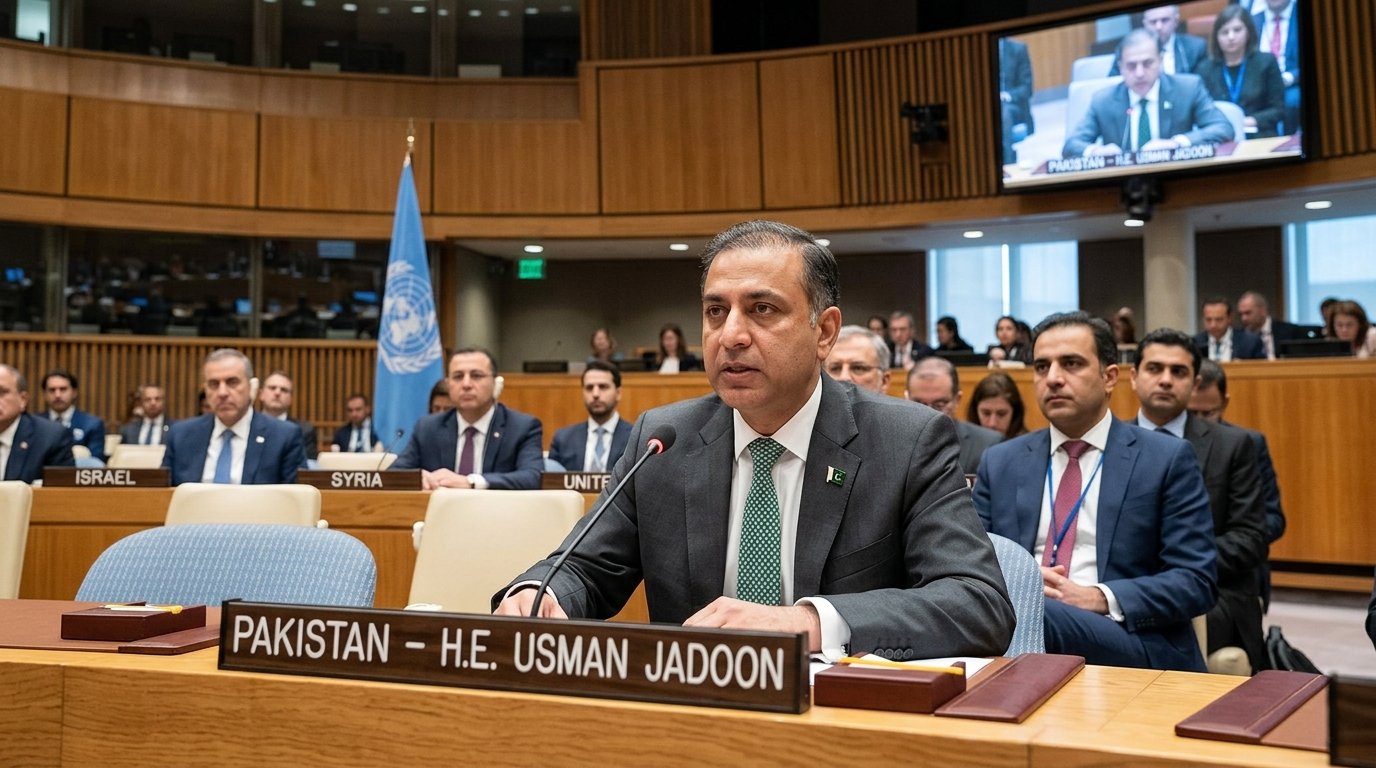
- Israeli Withdrawal From Syria: Islamabad demands an immediate halt to military encroachments in post-Assad Syria and full adherence to the 1974 Disengagement of Forces Agreement.
- UNSC Showdown: The demand follows a high-voltage clash between Israeli Ambassador Danny Danon and Turkish Representative Ahmet Yildiz over foreign military footprints.
- Firm Mandate: Deputy Permanent Representative Ambassador Usman Jadoon asserted at the United Nations Security Council that Syrian sovereignty and territorial integrity must be fully respected.
- Principled Stance: Pakistan’s posture links Syrian territorial integrity with its persistent support for an independent Palestinian state based on pre-1967 borders.
ISLAMABAD — In a major diplomatic escalation, Pakistan has issued a stern demand for Israel to pull its armed forces out of Syrian territory. The move sharpens Islamabad’s criticism of Tel Aviv’s expanding military operations, following a tense verbal clash between Israeli and Turkish representatives at the United Nations Security Council over competing security footprints in post-Assad Syria.
Speaking during a high-level Security Council session, Pakistan’s Deputy Permanent Representative to the UN, Ambassador Usman Jadoon, delivered a blunt message: Israel’s continued military presence and unilateral operations inside Syria represent a direct violation of Syrian sovereignty and territorial integrity. Jadoon called for strict adherence to the 1974 Disengagement of Forces Agreement and pressed Tel Aviv to vacate the occupied Syrian Golan Heights and all newly encroached positions without delay.
READ MORE: Kohat Mosque Bombing Martyres 15, Injures 30: Attack Shows Terrorists’ Desperation as Pakistan Tightens Security Net
The Pakistani intervention comes amid intensifying diplomatic friction inside the Security Council chamber. At the latest briefing, Israeli Ambassador Danny Danon targeted Ankara’s security footprint in Syria, claiming Turkey maintains a massive military deployment and accusing Ankara of implementing an “Iranian model” on Syrian soil.
Turkey’s UN envoy, Ahmet Yildiz, swiftly rejected the accusation. Yildiz countered that Turkish security cooperation with Damascus takes place with the explicit consent of the Syrian government, contrasting Ankara’s stabilizing presence with Israel’s relentless cross-border air strikes and ground incursions. He urged Tel Aviv to reverse its operational expansion and comply with historic disengagement protocols.
The Broader Geopolitical Context
Pakistan’s firm stance at the UN directly connects its regional doctrine to broader principles of non-intervention and territorial integrity. Ever since the collapse of the Bashar al-Assad administration in December 2024, Israeli forces have expanded their presence across southern Syria, establishing military positions beyond the designated UN-patrolled buffer zone.
READ MORE: Pakistan condemns Isaeli military’s incursions into Syria, demands withdrawal of troops
While Tel Aviv frames its cross-border posture as a necessary security measure during Syria’s delicate transition, Damascus and the UN leadership have repeatedly warned that these actions erode state sovereignty and risk triggering broader military conflict.
Dual Pillars: Syria and Palestine
Islamabad’s foreign policy towards Middle Eastern conflicts rests on two aligned pillars: unconditional respect for sovereign borders and strict adherence to international law. Pakistan does not maintain diplomatic relations with Israel and has long criticized Tel Aviv’s military campaigns across the region as illegal under international frameworks.
On the Palestinian issue, Pakistan remains an unwavering proponent of an independent, sovereign, and contiguous Palestinian state based on pre-1967 borders, with Al-Quds Al-Sharif as its capital. By taking a strong stand on Syrian territorial integrity, Islamabad highlights what it views as a unified principle under international law—demanding an end to illegal occupation whether in the Golan Heights or the Palestinian territories.
Strategic Takeaways
- Unyielding Demand: Islamabad calls for a complete Israeli withdrawal from occupied Syrian territory and strict adherence to the 1974 Disengagement Agreement.
- Regional Friction: The clash highlights growing divisions between Israel’s security doctrine and Turkey’s defense ties with post-Assad Syria.
- Multilateral Engagement: Pakistan leverages its platform at the United Nations Security Council to oppose unilateral military expansions and defend sovereign rights.
- Diplomatic Balance in a Volatile Region
For Pakistan, the central principle remains simple: international security cannot be managed through unilateral military force. As regional dynamics evolve, Islamabad’s intervention reinforces its diplomatic support for Syrian sovereignty while aligning closely with its key regional partners.
By raising its voice against foreign military incursions, Pakistan adds significant political weight to calls for restraint, pressing the international community to uphold UN resolutions and prioritize diplomatic avenues over armed confrontation.