



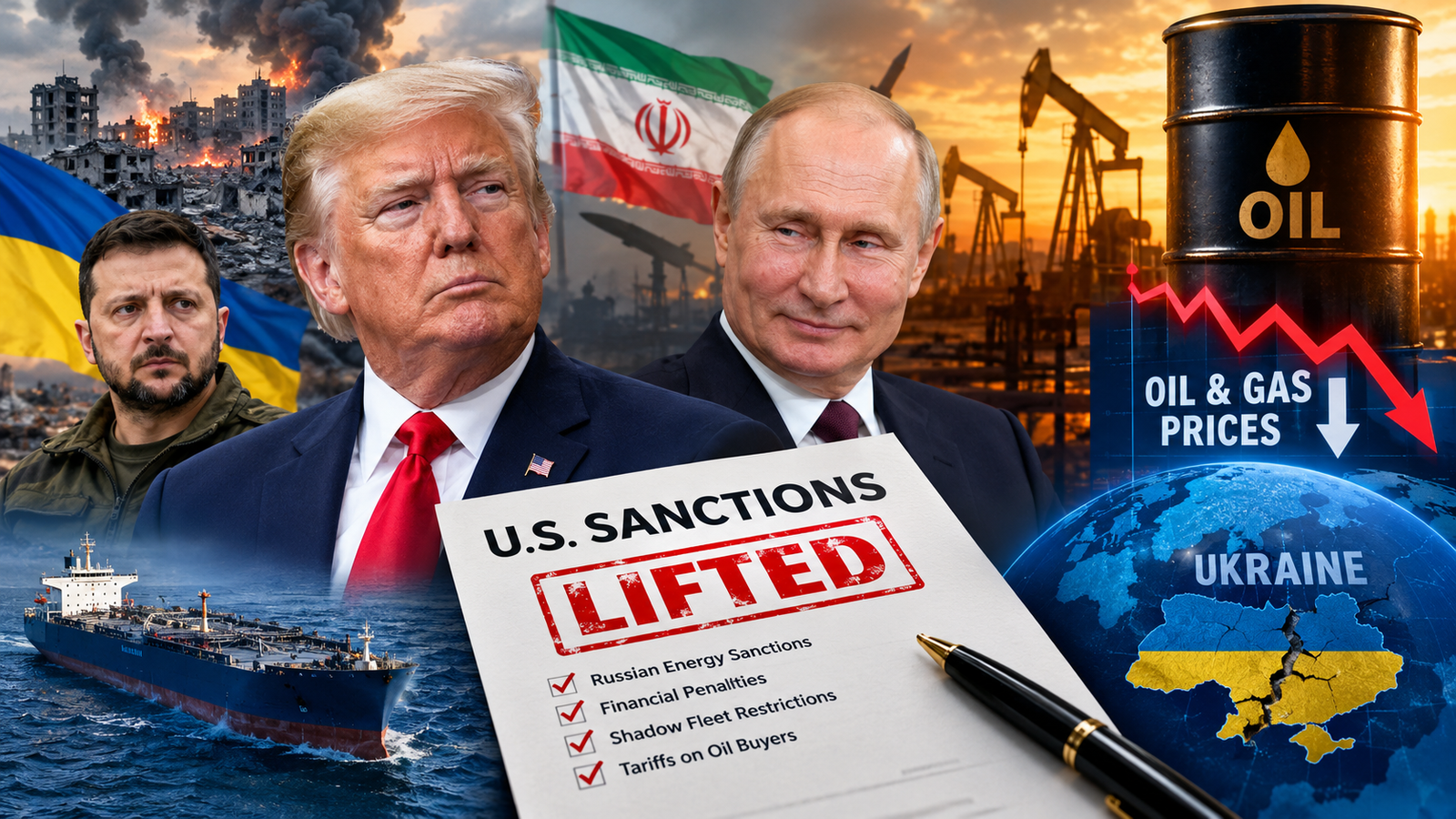
Russia sanctions have been weakened by Trump’s decision to suspend major provisions of a new US law targeting Moscow and its energy buyers.
The Iran war has pushed up energy costs, prompting Washington to ease restrictions on Russian diesel supplies in an effort to stabilise fuel markets.
Ukraine faces the risk that additional Russian energy revenues could help finance Moscow’s continuing military campaign.
The Iran war has delivered an unexpected windfall to Russia, giving President Vladimir Putin a chance to recover economic and diplomatic ground just as Washington was preparing to tighten pressure on Moscow. With conflict-driven disruption pushing energy prices higher, President Donald Trump has prioritised fuel-market relief over a new sanctions offensive, weakening an instrument intended to pressure Russia to end its war against Ukraine.
On October 16, Trump issued an executive order waiving major provisions of the Lindsey O. Graham Sanctioning Russia and Iran Act of 2026, days before its measures were due to take effect. Signed by Trump in September, the law was designed to make Russia’s energy trade more costly and penalise countries helping Moscow sustain it. The BBC reported on the waiver, which the White House defended as being in the national interest.
Trump’s Russia Oil Choice Is Shifting Toward Tariffs, Not a Ban
The most consequential provision would have allowed tariffs of up to 100 per cent on goods from the five largest purchasers of Russian oil and gas, including China and India. Those tariffs could have forced major buyers to choose between Russian energy and the risk of losing access to the American market. The law also envisaged penalties targeting Russian financial institutions, senior officials and the so-called shadow fleet of tankers used to move oil while evading restrictions.
Trump’s waiver does not mean every existing US sanction has disappeared. It suspends key provisions of the new law before enforcement began. Separately, his administration has agreed to ease restrictions on Russian diesel exports under a supply arrangement with Putin.
Washington hopes added supply will cool fuel costs inflated by the Iran conflict. But Russian diesel alone cannot guarantee cheaper fuel: prices also depend on the scale of disruption, refinery capacity, inventories, freight costs and insurance premiums.
For the Kremlin, the benefit is strategic. Selling more fuel can generate revenue for the Russian state, while the suspension of threatened penalties reduces uncertainty for buyers and intermediaries. Putin can also present Russia as a country whose cooperation is needed to stabilise global markets. A government Western capitals sought to isolate has gained bargaining power because Washington urgently wants additional energy supplies.
The impact on Ukraine could be serious. Oil and gas earnings help fund Russia’s budget, military procurement and war effort. More sales and weaker threats of penalties may improve Moscow’s ability to sustain those expenditures. The effect will depend on export volumes, prices and remaining restrictions; the waiver alone does not determine the battlefield balance, with wider consequences for Ukraine.
The timing is damaging for Kyiv. Ukrainian President Volodymyr Zelensky has condemned the move, arguing that easing pressure rewards Russian aggression. He pointed to Russian strikes on 15 Ukrainian energy facilities and warned that attacks could leave communities facing power cuts as winter approaches. Ukraine has targeted Russian refineries to disrupt fuel production and revenue. Trump criticised Kyiv’s renewed refinery strikes, exposing a divide over whether energy infrastructure should be protected to stabilise prices or attacked to weaken Russia’s war effort.
READ MORE: Trump waives several Russia sanctions as row with Zelensky intensifies
Kyiv has expressed concern over military support and reported disruption to satellite connectivity used by its forces, while Trump has publicly criticised Zelensky. A New York Times report on the sanctions legislation described the bipartisan effort to target Russian officials, financial institutions and energy companies, as well as countries purchasing Russian oil and gas.
Russian envoy Kirill Dmitriev welcomed the waiver as historic. Critics in Washington argue it contradicts the law’s purpose and rewards Putin while Russian attacks continue. European leaders have urged allies not to reduce support for Ukraine, signalling that Europe may have to shoulder more of the financial and military burden if American policy shifts further.
The Iran war has created a strategic contradiction for Washington. Measures intended to contain one adversary have increased the value of cooperation with another, allowing Moscow to trade energy access for sanctions relief. Trump may gain short-term political credit if fuel prices fall, but that outcome is uncertain and the diplomatic cost could be substantial.
As explored in The Islamabad Telegraph’s analysis of Trump’s energy ceasefire, the challenge is balancing energy-market stability with pressure to end the Ukraine war. For Putin, the Iran conflict has become a blessing in disguise: not a battlefield victory, but an opening to earn more, face less immediate pressure and deepen divisions among Ukraine’s supporters.
The episode also tests whether sanctions can remain effective when global crises make the targeted country’s exports indispensable, especially for governments balancing inflation, national security and alliances.