



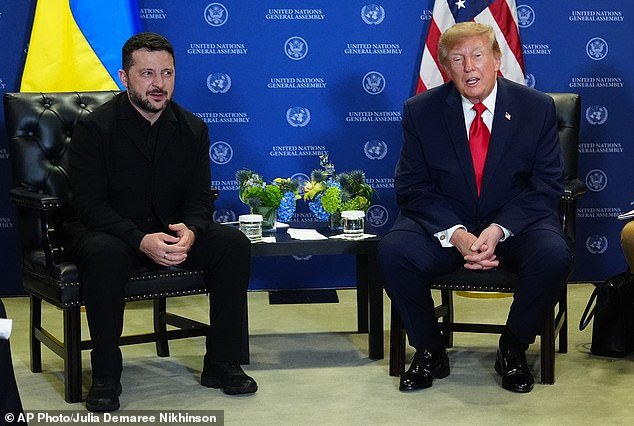
- Volodymyr Zelensky US Aid appeal highlights severe military supply shortages and intelligence sharing gaps on the frontline.
- Tensions escalate as President Trump calls for new leadership to represent Ukraine in peace talks.
- Ukraine faces staggering economic losses, including a historic 29.1% GDP drop since the conflict began.
- Domestic polling reflects growing public fatigue over the prolonged war effort and high unemployment rates.
WASHINGTON / KYIV — Ukrainian President Volodymyr Zelensky has made an urgent appeal to a bipartisan group of U.S. senators, desperately seeking military aid and intelligence support to halt Russia’s battlefield momentum. The high-stakes plea comes amid an escalating confrontation with U.S. President Donald Trump, who has publicly suggested it may be time to replace the Ukrainian leader at the negotiating table.
Zelensky’s virtual meeting with U.S. lawmakers followed just days after he urged European leaders to mobilize a multi-billion-euro funding mechanism to sustain Kyiv’s war effort. However, as international support hits unprecedented friction, Zelensky faces an equally formidable challenge at home: a domestic population increasingly weary of endless conflict and skeptical of his government’s vision for the future.
A Firestorm in Washington
During a virtual conference led by Republican Senator Thom Tillis and Democratic Senator Richard Blumenthal, Zelensky presented a stark assessment, calling current frontline conditions “the most difficult” since the war’s initial days. He directly accused the Trump administration of imposing secret restrictions on military supplies and intelligence sharing—including the throttling of SpaceX’s Starshield satellite network—in a deliberate maneuver to force Ukraine into a settlement favorable to Moscow.
According to meeting transcripts, Zelensky expressed dismay that Defense Secretary Pete Hegseth refused to authorize the transfer of critical Patriot air defense interceptors and AIM-9X missiles, despite European partners having paid for them. He further revealed that U.S. authorities failed on three separate occasions over a single week to issue early warnings regarding incoming Russian ballistic missile strikes, leaving Ukrainian cities exposed.
“We have almost no Patriot interceptors left… All of this suggests that some political decision has been made to slow down support for us,” Zelensky told lawmakers, pleading for congressional intervention.
President Trump quickly rejected the allegations outside the White House, attributing early warning failures to technical software glitches rather than political malice. Sharpening his rhetoric, Trump voiced open frustration with Zelensky’s handling of the war:
“Zelensky doesn’t know what he is talking about. All I want for Russia and Ukraine is for them to stop the stupid war,” Trump told reporters. “If he would have listened to me, he would have made a much better deal a long time ago… I think there’s time for somebody else to negotiate on behalf of Ukraine.”
The clash marks a significant deterioration in relations, fueled in part by Washington’s recent efforts to stabilize global energy prices—including a deal to purchase Russian diesel—and reports that U.S. envoys Steve Witkoff and Jared Kushner pressed Kyiv to cease drone strikes on Russian oil infrastructure.
Volodymyr Zelensky And Trump:
Deepening Economic Ruin and Human Toll
As Zelensky fights for diplomatic lifelines abroad, the catastrophic economic and human cost of the war continues to weigh heavily on ordinary Ukrainians. The full-scale invasion triggered an unprecedented economic shock, resulting in a staggering 28.8 percent contraction in Ukraine’s real GDP in the first year alone. While minor rebounds occurred in subsequent years, national output remains well below pre-war baselines, with potential output dropping by over $150 billion.
The labor market has suffered immense structural damage. Millions of Ukrainians were rendered jobless or displaced in the initial phase of the conflict, and unemployment rates have persistently hovered above 15 percent. Meanwhile, the human cost continues to mount relentlessly. Western and institutional intelligence estimates indicate that tens of thousands of Ukrainian soldiers have been killed and hundreds of thousands wounded, alongside tens of thousands of civilian casualties and over 14 million citizens displaced internally or abroad.
Mounting Discontent on the Home Front
Beyond the immediate physical devastation, public sentiment inside Ukraine is undergoing a significant shift. Zelensky’s popularity ratings, which soared to historic highs during the early months of the invasion, have touched new lows.
A growing segment of the population feels that the administration’s single-minded focus on prosecuting an exhaustive war of attrition has left domestic governance, social safety nets, and economic recovery ignored. Critics and fatigued citizens increasingly express concern that Zelensky’s strategy aligns more with fighting a broader geopolitical battle for Europe than securing a viable future for everyday Ukrainians.
Rumors and frustration have mounted over delayed democratic elections and prolonged martial law, leading political opponents and war-weary citizens alike to argue that the president is effectively prolonging his tenure through the continuation of the conflict.
Policy Perspectives: A Divided Horizon
Policy analysts and lawmakers remain sharply divided over the path forward:
-
In Washington: U.S. lawmakers remain split. Senator Blumenthal emphasized that “appeasement won’t work with Putin, a thug who understands only strength,” promising continued congressional pushing for aid. Conversely, realist scholars argue that without an executable exit strategy, endless military assistance risks global escalation without altering the geopolitical outcome.
-
In Europe: European policymakers are feeling the strain of sustaining financial commitments worth billions of euros amid their own domestic economic headwinds and rising electorate fatigue.
As geopolitical maneuvering intensifies between Washington, Moscow, and European capitals, Volodymyr Zelensky finds himself navigating his most perilous moment yet—stuck between an increasingly confrontational U.S. leadership, a relentless military adversary, and an exhausted populace questioning the cost of an indefinite war.