



-
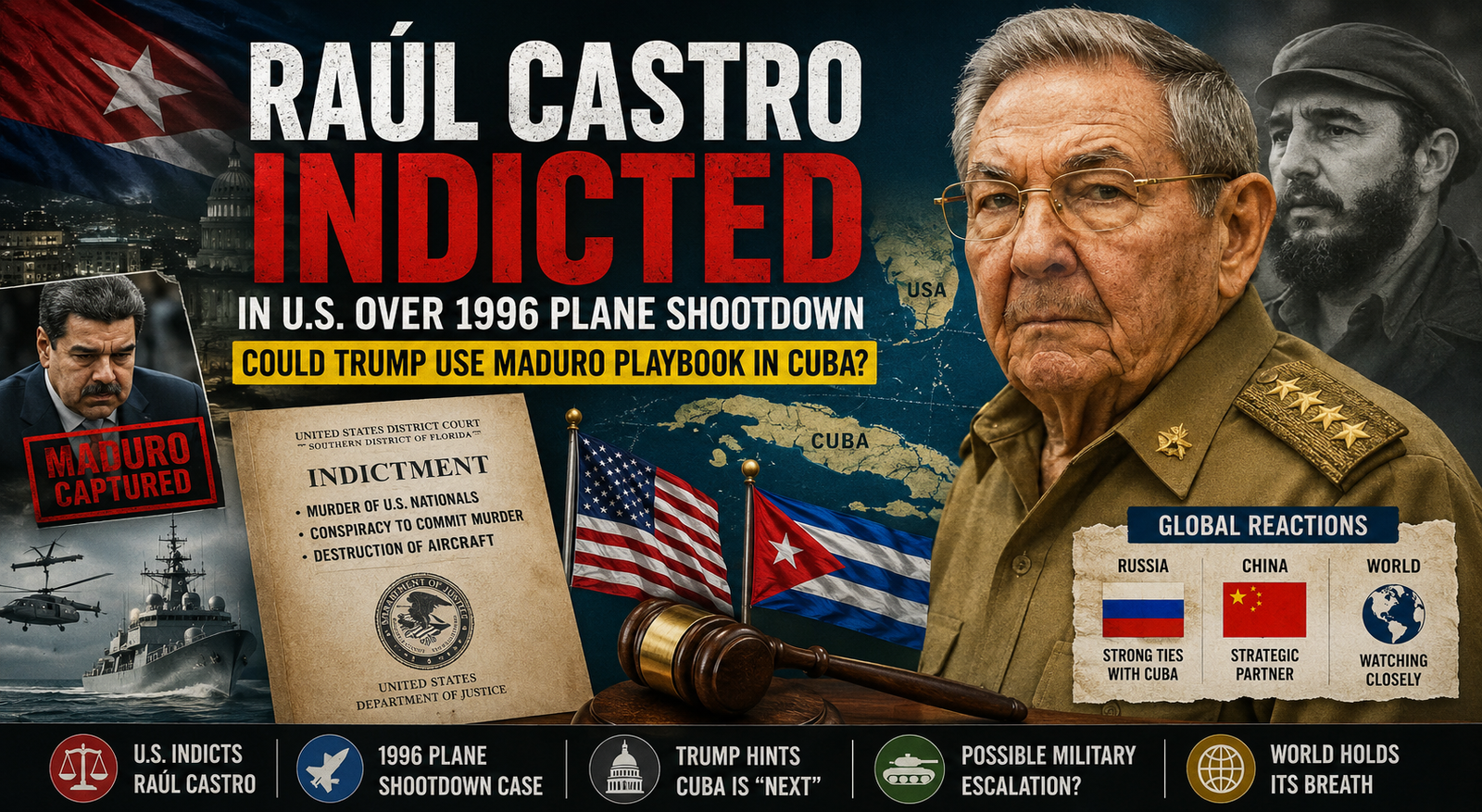
Raúl Castro warrant highlights a rare U.S. legal move against the former Cuban leader over the 1996 Brothers to the Rescue shootdown.
-
The federal indictment and Florida warrant create lasting diplomatic friction and limit his international mobility, despite an extradition being unlikely.
-
The legal development challenges long-standing revolutionary narratives and signals a renewed push for historical accountability in U.S.–Cuba relations.
Thirty years after the 1996 shootdown of two Brothers to the Rescue aircraft over the Florida Straits, former Cuban leader Raúl Castro now faces a new arrest warrant issued in Florida on charges related to conspiracy to commit first-degree murder.
The warrant follows a federal indictment announced earlier in 2026 and centers on allegations that Castro, then Cuba’s defense minister, authorized the operation that resulted in the deaths of four men, including three U.S. citizens and one legal U.S. resident.
For many Cuban Americans, particularly in South Florida, the announcement represents something long sought but rarely expected: a formal attempt to hold one of the Castro brothers personally accountable before an American court. Florida Attorney General James Uthmeier characterized the warrant as a pursuit of justice for victims whose families have waited decades for legal action.
Prosecutors allege that Cuban intelligence assets operating in Florida helped identify and monitor the civilian aircraft before they were shot down by Cuban military jets in February 1996.
Raúl Castro Indictment Shakes Cuba as U.S. Signals Possible ‘Maduro-Style’ Action Under Trump
The immediate question, however, is whether Raúl Castro will ever stand trial.
The reality is that Castro is 95 years old and remains inside Cuba, a nation with no practical pathway for extraditing him to the United States under current political circumstances. Even officials announcing the charges have acknowledged the difficulty of physically bringing him to Florida. Yet legal experts often point out that arrest warrants are not issued solely because an arrest is imminent.
Sometimes they serve a broader purpose: restricting international travel, establishing a formal historical record, and signaling that alleged crimes remain prosecutable regardless of the passage of time. Florida officials have argued that Castro could face arrest if he enters a country willing to cooperate with U.S. extradition efforts.
Xinhua News | Cuba condemns U.S. arrest warrant for Raul Castro
That alone creates consequences.
For decades, Cuba’s leadership enjoyed a level of insulation from foreign prosecution. The federal indictment and the Florida warrant change that dynamic by attaching criminal liability to a former head of state. Whether symbolic or practical, it marks a significant escalation in legal pressure from the United States.
What happens next could unfold in several ways.
The most likely outcome is that Castro never appears in an American courtroom. If that occurs, the warrant will remain largely symbolic but still influential. It would continue to limit his international mobility and serve as a lasting reminder of unresolved tensions between Washington and Havana.
A second possibility is that additional members of the former Cuban military or intelligence apparatus become targets of criminal investigations. The Justice Department’s earlier indictment included other former officials connected to the operation, suggesting prosecutors may continue pursuing accountability beyond Castro himself.
A third, less likely but more consequential scenario would involve political changes inside Cuba. Should Cuba experience significant governmental reform in the coming years, future leaders may face pressure to cooperate with international legal requests that previous administrations rejected. While such a development remains speculative, political transitions often reopen questions once considered permanently settled.
For Cuba, the broader implications extend beyond one aging revolutionary.
The country’s leadership is already navigating economic hardship, demographic decline, emigration pressures, and persistent public frustration. The warrant does not directly alter those realities, but it further challenges the historical narrative that has surrounded the Cuban Revolution for more than six decades. Younger Cubans, many of whom are more concerned with economic opportunity than revolutionary legacy, may view the case through a different lens than previous generations.
Internationally, the warrant is also likely to complicate relations between Cuba and the United States. Rather than encouraging diplomatic rapprochement, the case reinforces a confrontational framework in which historical grievances remain active components of present-day policy. That may make future normalization efforts more difficult, particularly while political leaders on both sides continue to view the past as unfinished business.
Ultimately, the significance of the warrant is not measured solely by whether handcuffs are ever placed on Raúl Castro. Its importance lies in what it represents: a declaration that some events never fully disappear from the legal or political landscape. The Brothers to the Rescue shootdown has remained an open wound for three decades. With this warrant, American authorities are asserting that the search for accountability is not over.
Whether history records this as a symbolic gesture or the beginning of a larger reckoning will depend not on the warrant itself, but on what comes next for Cuba, the United States, and a generation increasingly forced to confront the unresolved legacies of the Cold War.