



-
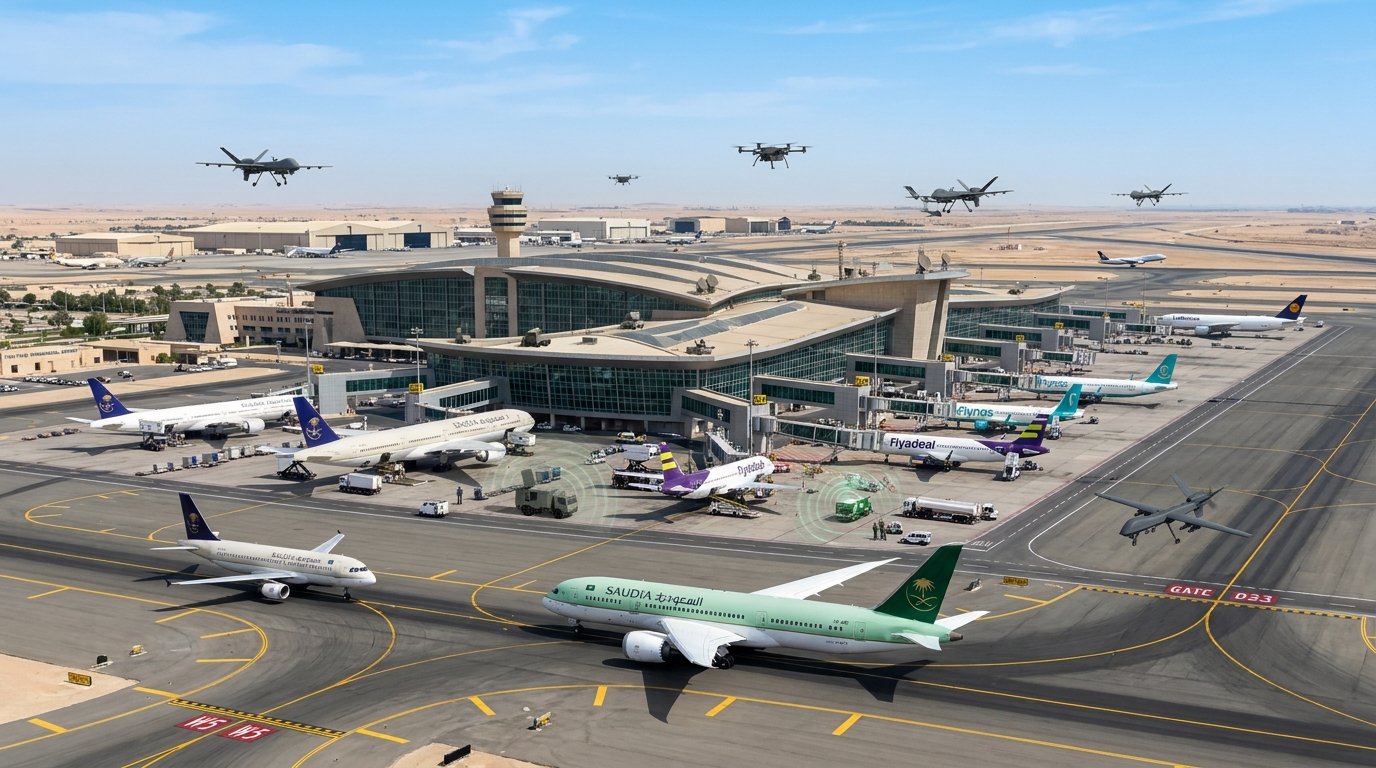
Saudi operational resilience ensured that flights at King Fahd International Airport resumed normal operations shortly after the incident.
-
Swift actions by Saudi air defense forces, ground staff, and emergency personnel prevented severe long-term infrastructure damage across key facilities.
-
Enhanced regional security coordination, including defensive commitments from Egypt, reinforces stability across Gulf airspace and shipping lanes.
-
Tactical counter-strikes by coalition forces continue to target insurgent launch sites to secure critical national assets.
King Fahd International Airport has resumed Flights. Repeated attacks couldn’t shatter the determination of the staff, government, and the people of Saudi Arabia. In the wake of a recent series of hostile strikes aimed at key infrastructure—most notably a major attack on King Fahd International Airport in Dammam—the Kingdom’s response has provided a striking lesson in crisis management and state resilience.
Rather than succumbing to operational paralysis, the key airport serving the Saudi capital region and eastern economic hub resumed normal operations within hours. This rapid turnaround highlights not only the physical capability of Saudi air defenses and ground crews, but also the broader institutional stamina of a government determined to prevent regional proxy conflicts from derailing its domestic stability and economic momentum.
READ NEXT: Houthi Missile Components from China Signal Dangerous Technological Shift
The swift restoration of civilian air traffic by the General Authority of Civil Aviation (GACA) sends a clear strategic signal to non-state actors in the region: Saudi Arabia’s core logistics and transportation networks remain deeply resistant to asymmetric disruption.
Though the human cost of the escalation was severe—resulting in fatalities among both Saudi nationals and foreign workers from India, Nepal, and the Philippines across airport and Aramco oil facilities—the physical damage was systematically contained. At Aramco’s Shaybah oil field, where falling debris from an intercepted drone ignited a localized fire outside the perimeter, primary energy operations continued entirely uninterrupted. The ability of emergency personnel and facility staff to maintain continuity under direct fire demonstrates the maturity of the Kingdom’s critical infrastructure defense protocols.
Behind this operational recovery lies a massive military containment strategy aimed at neutralizing the source of these strikes. The Coalition to Restore Legitimacy in Yemen, working in tandem with legitimate Yemeni armed forces, has intensified operations against Iran-backed Houthi militants.
READ NEXT: Dammam’s King Fahd airport resumes normal operations
Through offensive maneuvers such as Operation Dawn of Yemen, coalition forces have executed hundreds of tactical strikes targeting Houthi weapons depots, drone launch positions, and command nodes across Taiz and Marib. By pressuring militia supply lines and restricting their maneuverability, the military campaign seeks to degrade the group’s long-range targeting capacity and mitigate threats to transboundary civilian centers.
READ NEXT: Dammam’s King Fahd airport resumes normal operations
This escalation has also re-anchored the critical security relationship between Riyadh and Cairo. Addressing the situation, Egyptian President Abdel Fattah El-Sisi reiterated that Egyptian military support for Saudi Arabia remains rooted in the doctrine that Arab national security is indivisible.
However, Cairo has carefully calibrated its stance: any Egyptian military contribution will be strictly defensive, designed to safeguard Saudi territorial sovereignty rather than engage in offensive ground campaigns in Yemen. This calculated backing from Egypt—the Arab world’s largest military power—reinforces a collective deterrence posture across the Red Sea and Gulf, balancing firm defensive commitments with a prudent diplomatic framework.
Ultimately, the seamless reopening of King Fahd International Airport reflects more than an efficient emergency response; it illustrates a broader geopolitical dynamic in the Middle East today. Through a combination of robust air defense interceptions, rapid ground recovery by dedicated personnel, and targeted regional security partnerships, Saudi Arabia continues to project stability and strength, proving that its vital national functions remain firmly intact despite persistent regional turbulence.