


- Mecca Defense Alliance: Pakistan, Saudi Arabia and Türkiye are pursuing a coordinated diplomatic initiative to reduce regional tensions.
- Iran diplomacy: Field Marshal Asim Munir’s Tehran engagement builds on Pakistan’s efforts to facilitate dialogue between Iran and the United States.
- Regional security: Yemen, Saudi-Iranian tensions and the Strait of Hormuz remain critical flashpoints for energy security and international trade.
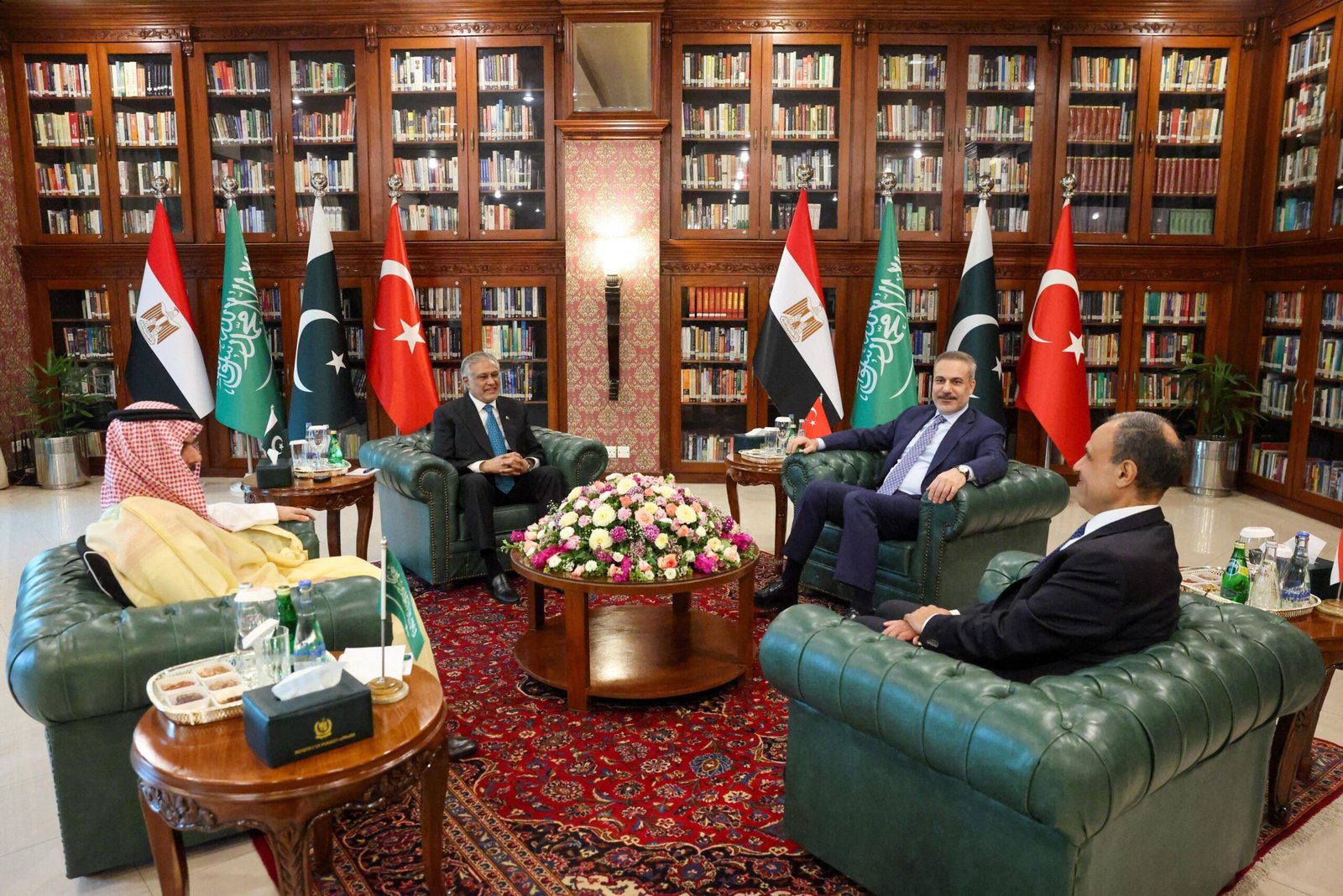
TEHRAN, October 26 — Pakistan, Saudi Arabia and Türkiye are stepping up efforts to prevent the escalating regional crisis from spiralling into a wider conflict, with representatives of the Mecca Joint Defense Agreement due to meet Iranian officials in Tehran on Monday to pursue de-escalation and diplomatic solutions.
The meeting signals a coordinated diplomatic push by three influential regional powers seeking to stabilise multiple flashpoints, including Yemen, tensions between Iran and Saudi Arabia, and the strategic Strait of Hormuz, through which a substantial share of global oil supplies passes. Their efforts reflect growing concern that continued confrontation could threaten energy security, disrupt international trade and deepen instability across the Middle East.
Saudi Deputy Minister for Public Diplomacy Rayed Krimly announced that Saudi Defense Minister Prince Khalid bin Salman would lead the Kingdom’s delegation, accompanied by Pakistan’s Chief of Army Staff, Field Marshal Asim Munir, and Türkiye’s National Intelligence Organization chief, Ibrahim Kalın.
According to Krimly, the delegation is expected to meet Iranian President Masoud Pezeshkian and Secretary of Iran’s Supreme National Security Council Mohsen Rezaei.
READ NEXT: Mecca Defence Alliance Shift: Saudi-Led Ground Offensives Force Houthi Retreat
The Saudi official said the visit was part of continuing efforts by the countries participating in the Mecca Joint Defense Agreement to reduce tensions, encourage dialogue and support mediation initiatives undertaken by Pakistan and Qatar.
The involvement of senior defense and intelligence officials underscores the seriousness of the initiative. Rather than relying exclusively on conventional diplomatic channels, the three countries are bringing together military, security and political leadership to explore ways of containing a crisis with consequences extending well beyond the immediate region.
Mecca Defense Alliance Moves to Defuse Iran Crisis
For Pakistan, the initiative also reinforces its position as a diplomatic intermediary between competing regional interests. For Saudi Arabia, preventing further escalation with Iran is central to protecting its security and economic transformation plans. Türkiye, meanwhile, brings regional influence, intelligence capabilities and established diplomatic channels that could help bridge differences between rival capitals.
The diplomatic initiative follows Munir’s visit to Tehran on October 20, when he met Pezeshkian, Iranian parliament speaker Mohammad Baqer Qalibaf, Foreign Minister Abbas Araghchi and senior security officials. The discussions focused on regional developments and Pakistan’s efforts to revive negotiations between Iran and the United States.
READ NEXT: Mecca Defense Alliance officials to meet Iranian leaders in Tehran for de-escalation talks
However, the visit exposed the obstacles confronting Islamabad’s mediation efforts. Iranian officials indicated that Washington would have to address Tehran’s demands before negotiations could resume. Iran has also linked progress on the Strait of Hormuz to demands concerning the US naval blockade, sanctions and the cessation of hostilities across regional fronts.
The latest initiative therefore represents an attempt to broaden diplomatic engagement beyond bilateral exchanges and establish a regional framework capable of addressing interconnected security challenges.
Yemen, Saudi Arabia and the Strait of Hormuz
Yemen has emerged as an urgent concern for Riyadh following escalating attacks by Iran-aligned Houthi forces. Saudi Arabia faces the prospect that renewed hostilities could threaten its territory, energy infrastructure and economic ambitions.
Pakistan, Saudi Arabia and Türkiye are leaving no stone unturned to normalise the situation in Yemen, reduce Saudi-Iranian tensions and restore stability around the Strait of Hormuz. Their challenge is to persuade Tehran that regional security arrangements can protect Saudi interests without becoming an additional source of confrontation with Iran.
The three countries must also address the risk of simultaneous disruption around the Strait of Hormuz and Bab al-Mandab, the strategic waterway connecting the Red Sea with the Gulf of Aden. Instability along both routes could endanger shipping, increase energy costs and place further pressure on economies dependent on uninterrupted trade.
The Mecca agreement provides a new platform for security coordination, but its success will depend on whether its members can combine deterrence with credible diplomatic assurances. A military framework alone cannot resolve the political disputes driving the crisis.
Elections could reshape the regional equation
The timing is particularly significant as Israel votes on October 27 and the United States approaches its November 3 midterm elections. Both contests could influence the calculations of governments involved in the conflict.
In Israel, the outcome could determine the political direction of its security policy and its approach to the confrontation with Iran. In Washington, the midterms could affect President Donald Trump’s room for manoeuvre if Democrats gain control of either chamber of Congress. The war’s economic consequences, including higher energy costs, have become a political liability for the administration.
A change in political arithmetic would not automatically end the conflict. However, electoral pressure could create incentives for negotiations—or, alternatively, encourage leaders to adopt tougher positions to demonstrate resolve.
For Islamabad, Riyadh and Ankara, the immediate objective is to prevent regional security from becoming hostage to domestic political calculations in Washington and Jerusalem.
The Tehran meeting will test whether regional powers can translate diplomatic access into practical de-escalation. Success could open a path towards reducing attacks in Yemen, easing Saudi-Iranian tensions and securing maritime routes. Failure would leave the region exposed to another cycle of confrontation, with consequences extending from Gulf energy markets to the wider global economy.