



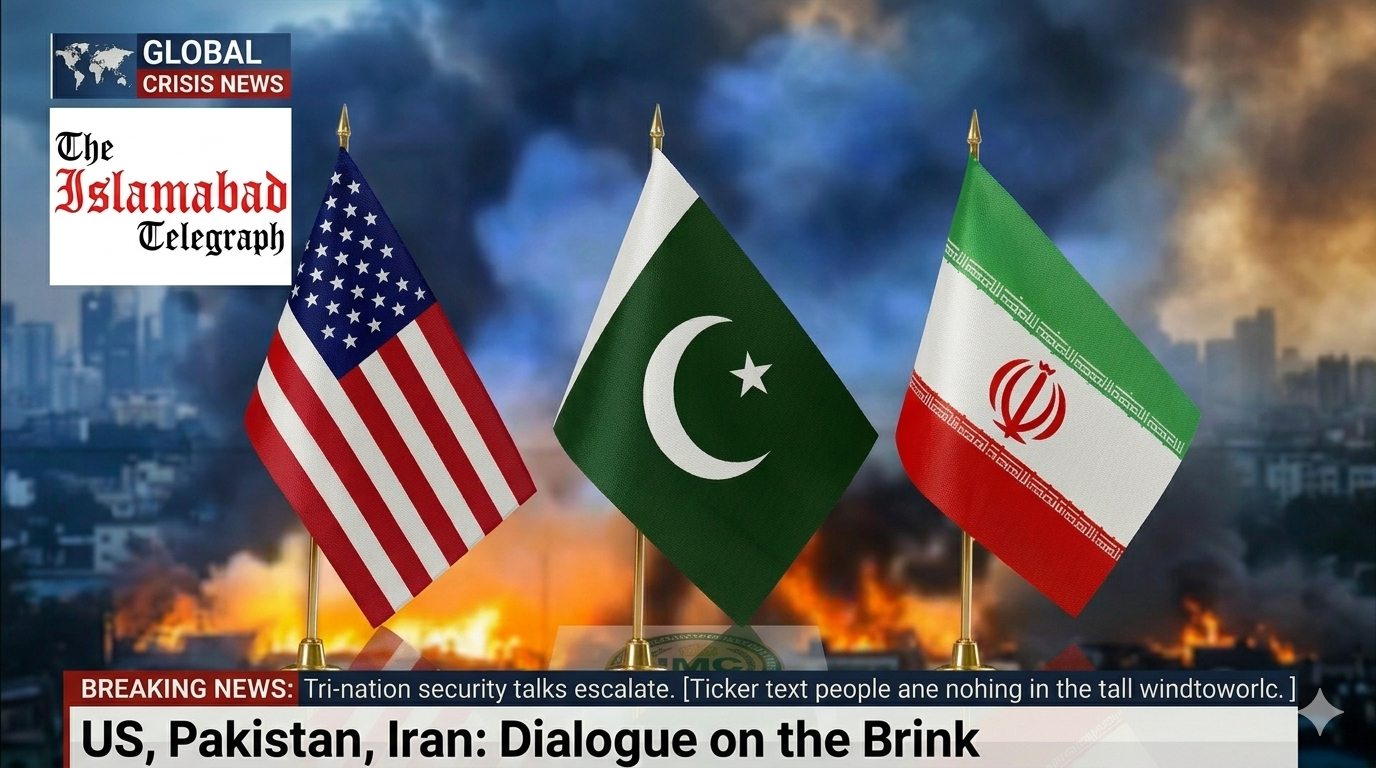
- US Iran Islamabad Talks gain momentum after Washington accepts Tehran’s critical condition on Lebanon
- Trump administration halts Israeli strikes, signaling intent to de-escalate regional conflict
- Historic Israel-Lebanon meeting in Washington seen as part of broader diplomatic recalibration
- Pakistan emerges as central mediator as second round of talks expected this weekend
In a significant yet quietly calibrated shift, the administration of Donald Trump has accepted a key Iranian condition—halting Israeli military operations in Lebanon—signaling a renewed and determined push to conclude the Iran war through Pakistan-mediated diplomacy in Islamabad.
According to senior diplomatic sources familiar with backchannel negotiations, Washington’s decision to rein in Israel’s campaign in Lebanon was not incidental. It formed part of a broader understanding conveyed to Tehran: that the United States is now willing to address regional spillovers of the conflict as part of a comprehensive de-escalation framework. This concession, long demanded by Iranian negotiators, appears to have unlocked momentum toward a second round of high-stakes U.S.-Iran talks expected in Islamabad later this week.
President Trump himself hinted at this diplomatic breakthrough on Monday, stating that negotiations with Iran could resume “very soon,” with Islamabad once again positioned as the central मंच for dialogue. Pakistani officials, who played a pivotal role in brokering the initial ceasefire, have intensified efforts behind the scenes to ensure the upcoming round delivers tangible results.
The shift in U.S. posture became more visible on Tuesday, when senior diplomats from Israel and Lebanon held a rare, face-to-face meeting in Washington under the auspices of Secretary of State Marco Rubio. The talks, described by the State Department as a “historic” working group, brought together Lebanese Ambassador Nada Hamadeh Moawad and her Israeli counterpart Yechiel Leiter for over two hours of direct engagement.
Islamabad Iran US Talks: Second Round Set for Friday as Trump Pushes for Conclusive Deal
While officially framed as a bilateral effort to stabilize the Israel-Lebanon frontier, the timing and urgency of the meeting suggest a deeper strategic alignment with Washington’s Iran policy recalibration. By hosting and facilitating dialogue between Beirut and Tel Aviv, the U.S. effectively moved to neutralize one of Tehran’s principal leverage points: the Hezbollah front in southern Lebanon.
Leiter described the meeting as a success, noting that both sides had agreed on the long-term objective of a clearly demarcated border. Moawad, for her part, emphasized the humanitarian urgency of a ceasefire, citing the displacement of nearly one million Lebanese civilians and a mounting civilian death toll exceeding 2,000.
How Pakistan Emerged as a Key Player in US-Iran Talks
The backdrop to these developments remains grim. Israel’s extensive bombardment of Beirut and ground incursions into southern Lebanon—launched in response to Hezbollah rocket fire—had threatened to widen the regional war. Hezbollah, a key Iranian ally, framed its attacks as retaliation for the killing of Iran’s Supreme Leader, Ali Khamenei, earlier in the conflict.
For Tehran, the Lebanon front was never separate from the broader war. Iranian negotiators had insisted during the first round of Islamabad talks that any meaningful ceasefire must include an end to Israeli operations in Lebanon. The U.S., initially resistant, had argued that the Lebanon theater fell outside the scope of its direct conflict with Iran. That position has now, quietly but decisively, evolved.
Vice President JD Vance had previously described the disagreement over Lebanon’s inclusion in the ceasefire as a “legitimate misunderstanding.” But diplomatic insiders now concede that resolving this “misunderstanding” became essential to reviving negotiations.
Strait of Hormuz Blockade Triggers Global Economic Shock After Failed US-Iran Talks
Despite public denials from State Department officials that the Israel-Lebanon talks are linked to Iran diplomacy, the sequencing tells a different story. The sudden diplomatic push, coupled with a noticeable reduction in Israeli strikes, aligns closely with the timeline of renewed U.S.-Iran engagement.
Secretary Rubio underscored the broader objective before the talks began, stating that the effort aimed to produce a “permanent answer” to decades of instability linked to Hezbollah’s influence. Yet analysts argue that Washington’s immediate priority is far more tactical: removing obstacles to a deal with Iran.
Pakistan’s role in this unfolding diplomacy has been both central and strategic. By bringing adversaries to the table and reducing mistrust during the initial round, Islamabad established itself as a credible mediator at a moment of acute global tension. Now, with the U.S. demonstrating flexibility on core Iranian demands, the prospects for a breakthrough appear stronger than ever.
The coming days will be critical. If the fragile alignment holds—if Israel maintains restraint in Lebanon, if Iran reciprocates diplomatically, and if U.S. concessions continue—the second round of Islamabad talks could mark the beginning of the end of a war that has pushed the region to the brink.
For now, the signals are cautiously optimistic. Behind closed doors, a recalibrated Washington, an emboldened Tehran, and a proactive Islamabad are converging toward what could be the most consequential diplomatic breakthrough of the year.