



-
Malala Yousafzai’s homeland faces renewed questions about children’s right to safe education after the Peshawar school tragedy.
-
Peshawar school collapse highlights concerns about building safety, inspections and accountability across Pakistan.
-
Pakistan’s education crisis demands urgent school inspections, transparent investigations and stronger protections for students.
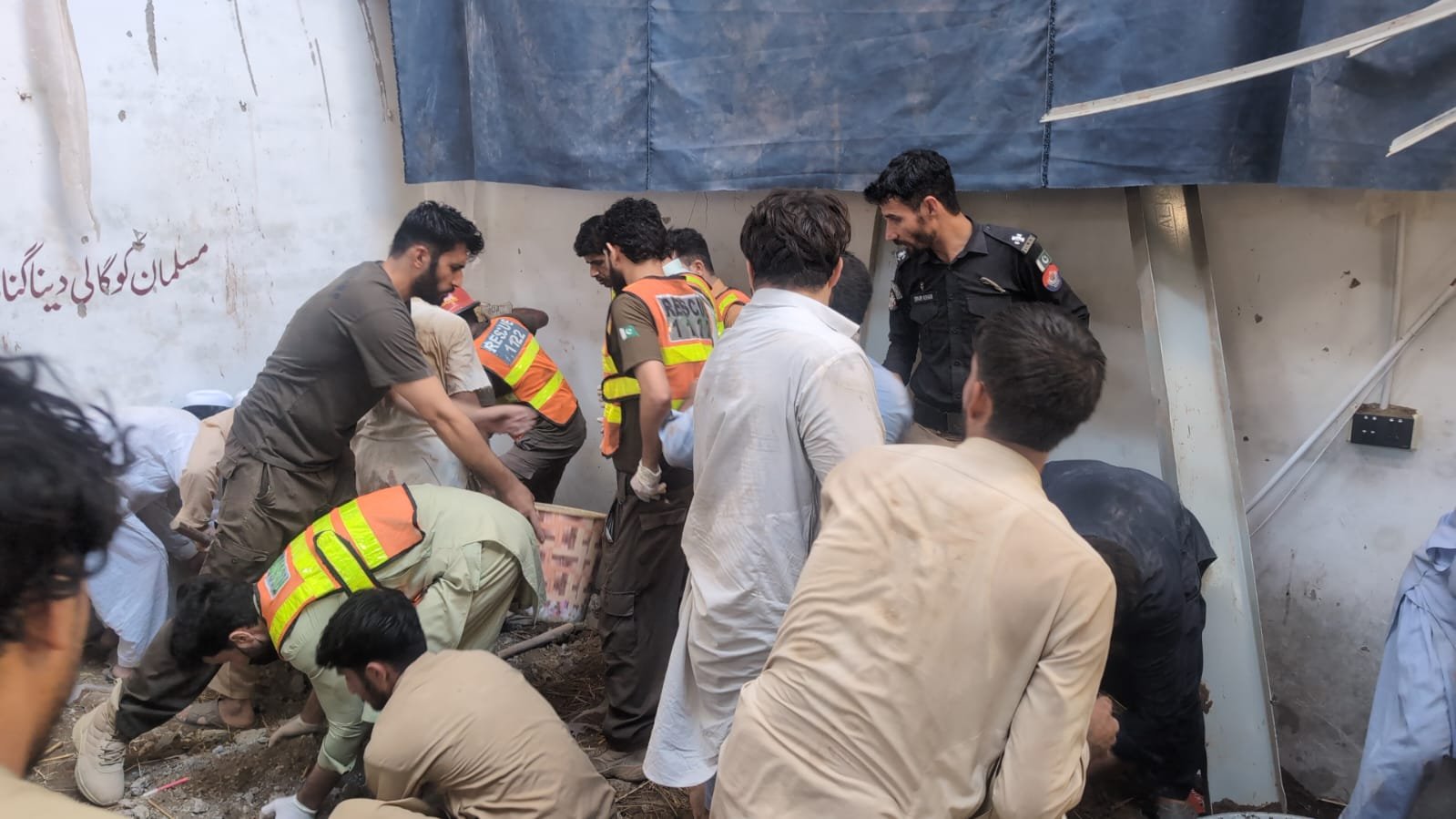
PESHAWAR, Pakistan — At about 9am on Thursday, parents in Peshawar were rushing towards a school where their children should have been learning mathematics, reading and writing. Instead, they found a rescue operation unfolding beneath a collapsed roof, with children trapped in the rubble and families desperately searching for their sons and daughters.
By the time the scale of the disaster became clear, at least 21 people were reported dead, including 20 students and a female teacher, according to figures supplied by Pakistani news outlets citing hospital authorities. The children, aged between seven and 12 in the initial account, had arrived at Al Khair School in the Afridi Abad area of Peshawar for an ordinary day of lessons. At least 21 others were reported injured, with five in critical condition.
The collapse transformed a place of learning into a scene of grief and desperation. Rescue personnel worked to remove debris and reach those trapped beneath the fallen structure, while injured children were transported to hospitals. Lady Reading Hospital declared an emergency as doctors and medical staff responded to the casualties.
For families gathered around the school, every passing minute brought the possibility of another devastating discovery.
Samiullah, a parent with six children enrolled at the school, rushed to the site after receiving a telephone call from home. He arrived at approximately 9am and helped rescue three girls, all younger than eight.
He initially believed his own son might be dead. The boy studied on the ground floor, directly beneath the floor that had collapsed. His life had been spared because he had briefly left the classroom to drink water.
That small, ordinary decision became the difference between a parent receiving his child alive and facing an unimaginable loss.
The death toll was still being updated as the rescue operation proceeded. International news agencies initially reported 18 deaths, while later Pakistani reports put the toll at 21. The precise final count and the number of people still missing require confirmation from emergency authorities.
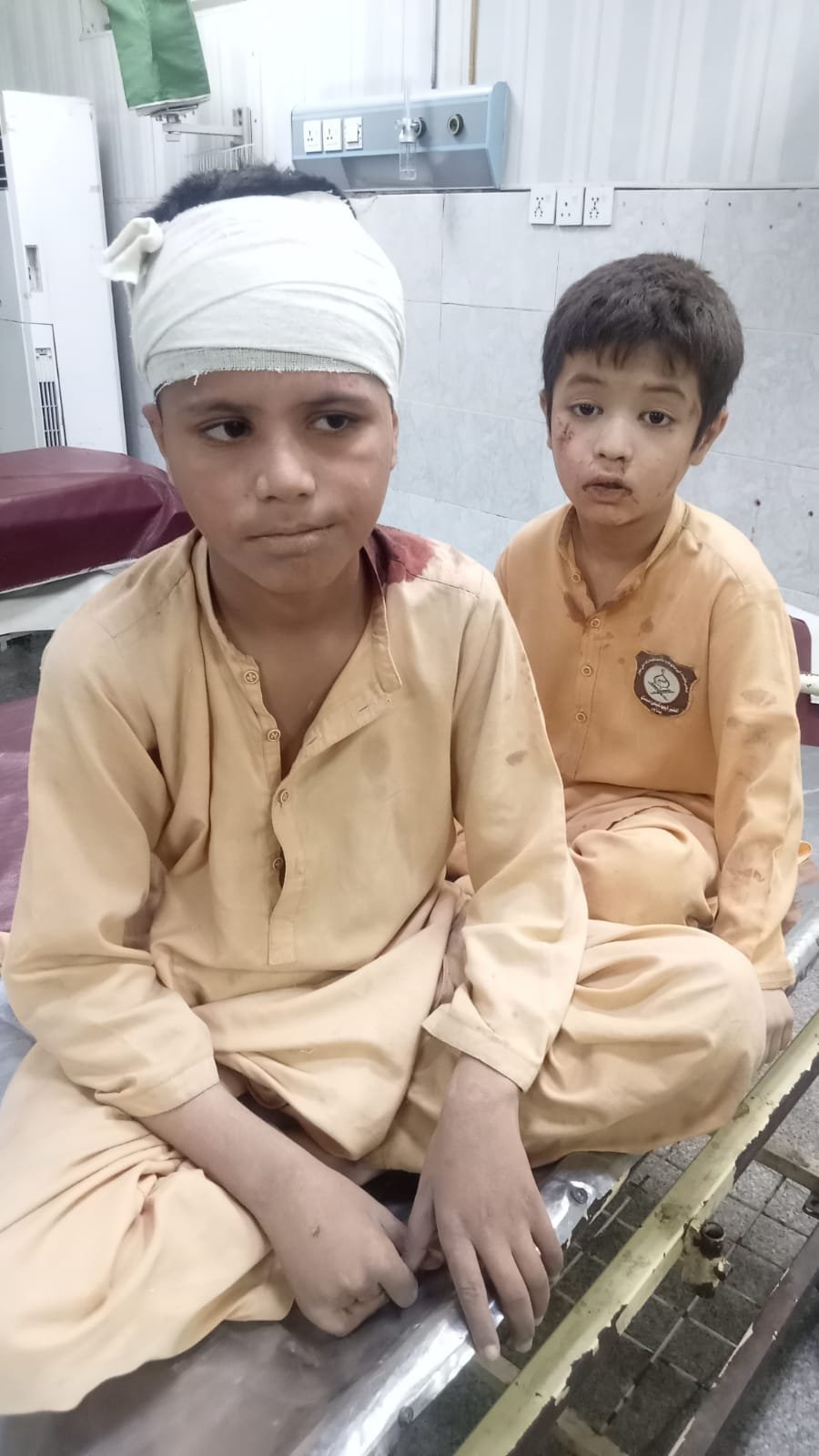
But the essential truth was already unmistakable: children had died inside a school, and a community was left asking how a building intended to protect and educate them could become so dangerous.
Two images of Pakistan
The tragedy acquired a painful political dimension because of its timing.
As Prime Minister Shehbaz Sharif inaugurated a Danish School and university facility with modern educational infrastructure in Islamabad’s Bahria Enclave, families in Peshawar were mourning children killed when their school roof gave way.
The contrast was difficult to ignore. In the federal capital, the government was presenting an ambitious vision of educational opportunity through modern buildings and institutions. In the northwestern city of Peshawar, parents were confronting the most basic failure imaginable: the inability to send their children to school with confidence that they would return home safely.
The distinction is not simply between public and private education. Initial reporting identified Al Khair as a private school, rather than a government-run institution. The deeper question concerns the responsibility of the state to establish and enforce minimum safety standards for every school, regardless of who operates it.
Pakistan can announce new universities, build prestigious campuses and promise educational reform. Yet these achievements will remain incomplete if children in ordinary neighbourhoods are exposed to unsafe buildings, inadequate maintenance or construction that has not been properly inspected.
The cause of Thursday’s collapse had not been established in the available reports. It would be premature to declare that negligence, substandard materials or a specific structural defect caused the disaster. Those questions require an independent investigation.
What cannot be postponed is the need to determine whether the building was safe, who was responsible for certifying it and whether the authorities had the capacity to identify dangerous schools before a catastrophe occurred.
Malala’s province and the world’s unfinished promise
Peshawar is the capital of Khyber Pakhtunkhwa, the province from which Nobel Peace Prize laureate Malala Yousafzai emerged as one of the world’s best-known advocates for education.
Malala, who grew up in the Swat Valley, survived a Taliban assassination attempt in 2012 and became a global campaigner for girls’ right to learn. Through the Malala Fund, she has supported efforts to expand access to quality education for girls around the world.
The connection to Thursday’s tragedy is not one of direct involvement: there is no indication that the fund supported or operated Al Khair School. Rather, the deaths raise a fundamental question at the heart of the international education campaign.
What does the right to education mean if children cannot safely occupy their classrooms?
Access to education is often measured through enrolment figures, school attendance, funding and the number of institutions built. But a school is not truly serving children if its physical condition puts their lives at risk. Safe buildings, reliable sanitation, adequate maintenance and accountable oversight are not luxuries. They are part of the minimum conditions required for learning.
The deaths of so many young pupils in Malala’s home province should therefore resonate well beyond Pakistan. They should prompt governments, education advocates and international organisations to consider whether the safety of school infrastructure receives the attention it deserves alongside access to education.
A recurring warning that Pakistan cannot ignore
Thursday’s disaster did not occur in a country unfamiliar with building collapses.
In June, 14 children died when the roof of a private tuition centre collapsed in Lahore’s Kahna neighbourhood. Earlier, four children were killed when a classroom roof collapsed at a private school in Dera Ghazi Khan. In July, three girls died after part of a government primary school’s outer wall collapsed near Umerkot in Sindh.
Each incident has brought grief, official statements and demands for accountability. The recurrence raises a wider concern about whether Pakistan’s inspection and enforcement systems are capable of preventing similar tragedies.
Emergency responders can save lives after a building collapses, but they cannot substitute for preventive oversight. Rescue teams need equipment, training and coordination to reach victims quickly. Hospitals need the capacity to handle sudden surges of injured patients. Local administrations need reliable information about dangerous buildings and the authority to close them before lives are lost.
The available reporting does not establish that a lack of emergency resources caused the Peshawar deaths. Nevertheless, the disaster demands scrutiny of both the immediate rescue response and the institutional safeguards that should have prevented children from being placed at risk.
The provincial government must establish the cause of the collapse, make the findings public and determine responsibility wherever wrongdoing or negligence is demonstrated. Authorities should urgently inspect schools and tuition centres, disclose the results and close buildings that pose an immediate danger until they are made safe.
The children deserved better
Khyber Pakhtunkhwa Governor Faisal Karim Kundi expressed grief over the deaths, offered condolences to the bereaved families and called for a detailed report into the incident. The injured children also needed prompt medical care.
Such responses are appropriate, but the families deserve more than expressions of sorrow. They deserve clear answers, transparent accountability and evidence that other children will not face the same danger.
The children who entered Al Khair School on Thursday morning were not symbols in a political debate. They were young lives, with parents waiting for them at home and futures that had barely begun.
Their deaths expose a brutal measure of educational failure. A country cannot claim to have fulfilled its promise to children simply because it builds impressive campuses or announces ambitious reforms. It must also protect the pupils sitting inside its ordinary classrooms.
In Islamabad, a new educational institution offered a picture of what Pakistan hopes to become. In Peshawar, a collapsed school forced the country to confront what remains unfinished.
For the families who lost their children, the difference between those two realities is beyond words. For the government, it must become a call to action.
No parent should have to wonder whether sending a child to school is safe. No child should die beneath a classroom roof.
And no nation that promises its children an education should accept that as an unreasonable expectation.